AnalysisBatteries and supply chain
Battery packs reached a record low price. What LFP, NMC and sodium-ion mean for EV prices in 2026
The latest full-year survey put the average lithium-ion pack at $108/kWh, with LFP packs far cheaper than NMC. Metal prices pushed cell quotes up in the first half of 2026, and sodium-ion is still a small business with more announcements than deliveries.
By Charjin Editorial Desk4 minutes11 sources

Are EV batteries still getting cheaper, and will that make electric cars cheaper?
The short answer. On the latest full-year data, yes: BloombergNEF put the 2025 average pack at $108/kWh and battery-electric car packs at $99/kWh, with LFP packs averaging $81/kWh against $128/kWh for NMC. Lithium and cobalt rose into 2026 and cell quotes climbed in the first half, so how much of the saving reaches buyers depends on chemistry, region and carmaker pricing rather than the survey headline.
Three things to take from this year's battery data.
- LFP made up more than half of EV batteries deployed in 2025 and its packs are much cheaper per kWh than NMC, but the gap partly reflects cheaper stationary-storage packs in the same average.
- On a 58.3 kWh pack, the average LFP–NMC price gap is worth roughly $2,700 at pack level. That is a cost to the carmaker, not a promised discount.
- Sodium-ion cells exist and have been shown in a production car, but the IEA puts sodium-ion manufacturing capacity at just over 1% of lithium-ion.
What the latest survey measured
BloombergNEF's 2025 battery price survey, published on 9 December 2025, put the global average lithium-ion pack at $108/kWh. That was 8% lower than in 2024 and 93% below 2010. Packs for battery-electric vehicles averaged $99/kWh, the second year in a row below $100/kWh.1,6
The survey covers several end uses, from different vehicle types to stationary storage, and each uses different cells and packs. Stationary storage became the cheapest segment at $70/kWh, down 45% in a year. A single headline figure therefore blends products a car buyer never sees.1,6
Location matters as much as chemistry. China averaged $84/kWh, while packs in North America and Europe were 44% and 56% more expensive respectively. The IEA, using its own method, puts Chinese packs 30% below North America and 35% below Europe in 2025, a wider gap than in 2022.1,2,6
LFP is now the majority chemistry
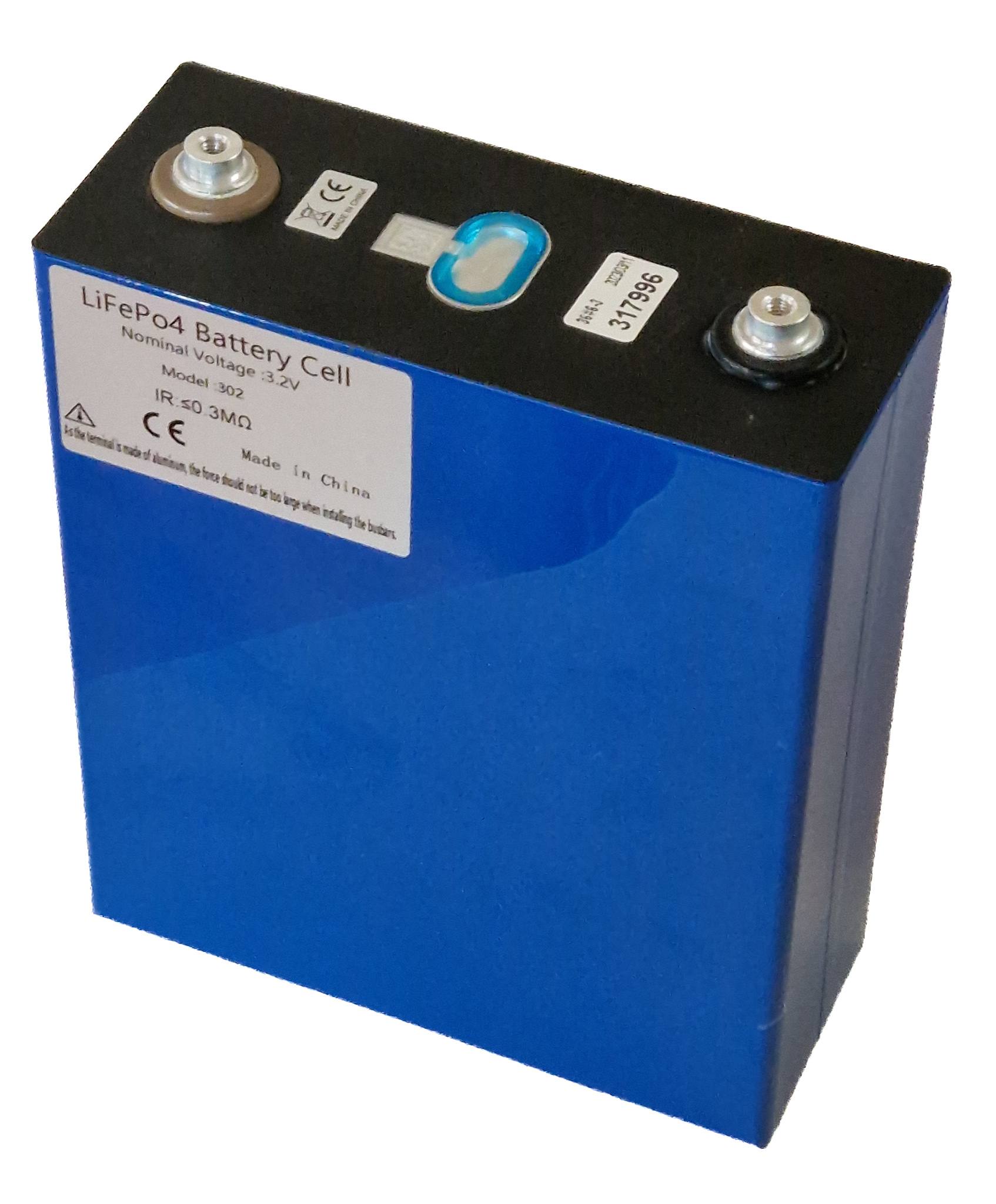
Lithium iron phosphate (LFP) accounted for more than 55% of EV batteries deployed worldwide in 2025, up from nearly 50% in 2024, according to the IEA. It powers about two-thirds of electric car sales in emerging and developing economies. The picture is different in the West: LFP stayed just above 10% of EU EV battery demand, and its share in the United States almost halved from a low base.2
The price gap is large. BloombergNEF averaged LFP packs at $81/kWh and nickel manganese cobalt (NMC) packs at $128/kWh across all segments. The IEA puts LFP packs more than 40% cheaper per kWh, but notes that part of the gap reflects stationary storage, where LFP makes up over 90% of installations and needs less energy density.1,2,6
NMC keeps its place because it stores more energy per kilogram. The IEA gives the latest NMC cells up to 265 Wh/kg against up to 205 Wh/kg for LFP. Outside China, almost 80% of EV batteries in 2025 still used nickel-containing chemistries.2
2026 so far: metal prices pushed back
Battery metals rose in 2025, and BloombergNEF says the industry absorbed this through more LFP, long-term contracts and hedging. The IEA reports lithium prices at the start of 2026 more than double a year earlier, though still about 70% below the 2022 peak. Cobalt roughly doubled after the Democratic Republic of Congo imposed an export ban and then quotas.1,2
Cell quotes followed. TrendForce reported average EV cell prices rising 1–3% a month through March 2026, with LFP cells at CNY 0.38/Wh against CNY 0.58–0.59/Wh for ternary (NMC-type) cells, and expected the second quarter to be stable with an upward bias.4
The pressure has since eased in part. Benchmark Mineral Intelligence assessed battery-grade lithium carbonate in China at RMB 127,750 per tonne at the end of September, down 20.8% over the third quarter, with hydroxide down 19.2%. BloombergNEF still expected pack prices to fall again in 2026; the size of any fall will not be known until its next survey.1,5
Sodium-ion: real cells, small volumes
Sodium-ion avoids lithium altogether. The IEA puts the latest cells at up to 175 Wh/kg, says they keep about 90% of nominal capacity at −40°C, and estimates that an average SUV with a sodium-ion battery would manage up to 350 km against 400–600 km for lithium-ion. Sodium-ion manufacturing capacity is just over 1% of lithium-ion capacity, and announced projects reach about 7% of committed lithium-ion capacity by 2030.2
The most visible car is Changan's Qiyuan A06, sold as the Nevo A06 outside China. CATL and Changan showed a version with a 45 kWh sodium-ion pack in February 2026, claimed more than 400 km on China's CLTC cycle, and planned a market launch in mid-2026. The same car is already sold with LFP packs of 51.5 and 63.2 kWh rated at 510 and 620 km CLTC.7,8
Charjin found no confirmed retail price or delivery figures for the sodium-ion version by 18 October. Until those appear, sodium-ion in passenger cars should be treated as started but unproven at volume.8
What the chemistry gap is worth in a real car
To put the averages in context, Charjin multiplied official battery capacities by BloombergNEF's 2025 pack averages. The Kia EV3's smaller battery is 58.3 kWh. At the LFP average of $81/kWh that pack would cost about $4,720; at the NMC average of $128/kWh, about $7,460. The difference is roughly $2,740.1,9
The gap grows with size. BYD lists the Seal with up to 82.5 kWh, which works out at about $6,680 at the LFP average and $10,560 at the NMC average, a difference near $3,880. Region matters too: BYD's 43.2 kWh Dolphin Surf battery would cost about $3,630 at China's $84/kWh average and about $5,660 at the European level, 56% higher.1,10,11
These are illustrations, not what any carmaker pays. The survey averages mix segments, the chemistry of each version is not part of this comparison, and contract prices differ. The IEA also says that without public support, battery production in Europe and the US costs as much as 50% more than in China.1,2
What it means for EV prices
Where cheap LFP and local manufacturing meet, car prices have already moved. The IEA says 70% of battery-electric cars sold in China in 2025 were cheaper than the average conventional car, and electric cars have largely displaced petrol models in China's small-car segment. In Thailand electric car prices have matched combustion cars for two years, and in Indonesia the average premium fell from over 50% in 2024 to around 40% in 2025.3
Elsewhere the link is weaker. The IEA says European carmakers introduced more affordable models to meet tighter CO2 targets, while in the United States the end of EV tax credits coincided with a fall in sales. Cheaper packs give carmakers room; regulation, tariffs and competition decide whether buyers see it.3
For a buyer, the practical checks are the exact battery capacity and chemistry of the version on offer, the range figure and its test cycle, and the battery warranty. The next data point is BloombergNEF's 2026 survey, which will show whether this year's metal price rise slowed the decline.1,9
Common questions
What was the average EV battery pack price in the latest survey?
BloombergNEF's survey published in December 2025 put battery-electric vehicle packs at $99/kWh on average in 2025, and the all-segment average at $108/kWh. China averaged $84/kWh across segments, with North America 44% and Europe 56% higher.
Is LFP always cheaper than NMC?
On average, yes: $81/kWh against $128/kWh across segments in 2025, and more than 40% cheaper per kWh according to the IEA. Part of that gap reflects cheap stationary-storage packs, which are mostly LFP, so the difference within cars alone is likely smaller. NMC stores more energy per kilogram.
Can I buy a sodium-ion electric car now?
A sodium-ion version of Changan's Qiyuan A06 was shown in February 2026 with a mid-2026 launch planned for China. Charjin could not confirm retail prices or deliveries by 18 October 2026, and no sodium-ion passenger car has been confirmed for Europe or North America.
Evidence register
The material behind the conclusion. Bracketed numbers in the text point here.
- 01
data accessed 18 October 2026
Lithium-Ion Battery Pack Prices Fall to $108 per Kilowatt-Hour, Despite Rising Metal Prices
BloombergNEF. BloombergNEF's 2025 survey results: average, BEV, stationary, LFP and NMC pack prices, regional gaps, metal price comment and 2026 outlook.
- 02
primary accessed 18 October 2026
Global EV Outlook 2026: Electric vehicle batteries
International Energy Agency. IEA figures on LFP share by region, LFP–NMC price gap, energy densities, sodium-ion capacity and performance, metal prices and regional cost gaps.
- 03
primary accessed 18 October 2026
Global EV Outlook 2026: Executive summary
International Energy Agency. IEA statements on electric car affordability in China, Europe, the United States, Thailand and Indonesia.
- 04
data accessed 18 October 2026
Rising Costs to Drive Further Increases in EV Cell Prices in 2Q26, Says TrendForce
TrendForce. First-quarter 2026 EV cell prices by chemistry and the second-quarter outlook.
- 05
data accessed 18 October 2026
Lithium price reversal gets respite, then deepens: Q3 2026 Lithium Price Review
Benchmark Mineral Intelligence. End-September 2026 lithium carbonate and hydroxide prices in China and their quarterly change.
- 06
reference accessed 18 October 2026
ESS News. Independent report confirming the BloombergNEF headline, segment, chemistry and regional figures.
- 07
reference accessed 18 October 2026
CATL's sodium-ion batteries begin deployment in production-ready passenger vehicles
CnEVPost. CATL and Changan's February 2026 unveiling, 45 kWh pack, range claim and planned mid-2026 launch.
- 08
reference accessed 18 October 2026
Changan Qiyuan A06 receives sodium-ion batteries from CATL
electrive. Separates the planned sodium-ion version from the LFP versions already on sale, with CLTC range figures.
- 09
manufacturer accessed 18 October 2026
Kia. Official battery capacities of 58.3 and 81.4 kWh used in the worked example.
- 10
manufacturer accessed 18 October 2026
BYD Europe. Official battery capacities of 61.4 and 82.5 kWh used in the worked example.
- 11
manufacturer accessed 18 October 2026
BYD Europe. Official battery capacities of 30 and 43.2 kWh used in the worked example.
No corrections recorded. Last checked 18 October 2026.