AnalysisElectric cars
EU car CO2 rules: what the ITRE and TRAN vote would change for EV prices and plug-in hybrids
Two European Parliament committees backed a compromise on 22 October 2026 that would loosen the 2035 car target further than the Commission proposed. None of it is law yet. The committee responsible has not voted, the plenary date is unclear, and governments still have to agree. Plug-in hybrids look set to stay on sale after 2035. The effect on EV discounts is a reasonable inference, but we found no source that measures it.
By Charjin Editorial Desk6 minutes17 sources
If carmakers face softer CO2 targets, will EVs in Europe get fewer discounts and will plug-in hybrids stay on sale longer?
The short answer. Plug-in hybrids: probably yes. The Commission says its proposal would let them stay on sale after 2035, and every version on the table sets the 2035 fleet target below a 100% cut. Discounts: possibly, but we found no hard evidence. Softer targets reduce the fines that push carmakers to sell more EVs. The proposed super-credits pull the other way for small, EU-built EVs, which would count for more in the fleet average. Current law applies until Parliament and governments agree a final text. Do not delay a purchase on the strength of a committee vote.
Key points
- ITRE and TRAN adopted the EPP/S&D/Renew compromise on 22 October 2026. Both committees only give opinions. ENVI is the committee responsible and had not voted when we checked.
- The amendment wording sets a 2035 car target of 87.5% against 2021. That is conditional on steel credits covering remaining emissions up to 95%. On this reading, 5% of the 2021 target would never need offsetting.
- The Commission proposed 90% with the remaining 10% offset. France and Germany back 90% with no offsetting at all.
- The Commission's legal text does not change how plug-in hybrid CO2 is counted. We could not confirm whether the committee compromise does.
- We found no primary source that measures how far fleet targets have driven EV discounts. Treat claims that discounts will shrink as unproven.
- The plenary date is indicative: 23 November 2026 in Parliament's file, with reports pointing to December or later.
Where the file stands
On 22 October 2026, the Industry committee (ITRE) adopted the EPP/S&D/Renew compromise by 49 votes to 27, with 5 abstentions. The Transport committee (TRAN) adopted it by 27 to 18, with 1 abstention. TRAN had first scheduled its vote for 5 October and postponed it to give the centre parties more time to agree.1,2
Neither committee is in charge of the file. Parliament's procedure file, 2025/0420(COD), lists ITRE and TRAN as committees for opinion. The Environment committee (ENVI) is responsible, with Massimiliano Salini (EPP) as rapporteur since 19 March 2026. Parliament therefore has no position yet.3
ENVI is reported to be voting in early November. The procedure file gives 23 November 2026 as an indicative plenary date. electrive, citing Der Spiegel, expects December. Pascal Canfin has said the plenary must wait for a Parliament agreement on the automotive part of the Industrial Accelerator Act, and ITRE's vote on that act is expected in December.1,3,4
After Parliament votes, it must agree a common text with EU governments. Parliament needs a simple majority. The Council needs a qualified majority of at least 15 member states representing at least 65% of the EU population. Until that process ends, current law applies.1,5,6
What current law says
Regulation 2019/631, as amended, sets an EU-wide car fleet target of 93.6 g CO2/km for 2025-2029 and 49.5 g/km for 2030-2034. From 2035 the target is 0 g/km, a 100% cut. For vans the targets are 153.9 and 90.6 g/km.7
Carmakers can already average their 2025-2027 results over three years under Regulation (EU) 2025/1214, adopted on 17 June 2025. A credit for zero- and low-emission vehicles (0-50 g/km) applies in 2025-2029. Each point of share above a 25% benchmark eases a carmaker's target by 1%, up to a maximum of 5%.7
A carmaker that misses its target pays €95 for each g/km of exceedance, multiplied by every new car it registered that year. For context, zero-emission cars took 14.5% of new registrations in the EU, Norway and Iceland in 2024. Average new-car CO2 fell 28% between 2019 and 2024.7
2035: three ways to loosen the target
The Commission's proposal, COM(2025)995 of 16 December 2025, cuts the 2035 target from 100% to 90%. Carmakers would have to offset the remaining emissions with credits. Credits for EU-made low-carbon steel would be capped at 7% of the 2021 target, and renewable fuel credits at 3% (1% for fuels from Part B Annex IX feedstocks). The steel methodology would be set later by delegated act.3,8
The committee compromise sets 87.5% against 2021 for cars, 'on condition' that steel credits offset remaining emissions up to 95%. Some reports describe this as 87.5% plus a 7.5-point steel credit. Others call it 95% with up to 7.5 points from steel. Both descriptions give the same arithmetic: an 87.5% tailpipe floor, a 95% total, and 5% of the 2021 target left unoffset.1,4,5
France and Germany agreed on 16 October to back 90% with no offsetting. Each position loosens the rules differently. The Commission keeps the full 100% through credits. The committees allow a lower tailpipe cut but require partial offsets. Paris and Berlin want a higher tailpipe cut but no offsets at all.4,8
The compromise also counts cars running on 'eligible' renewable fuels as zero-emission vehicles. Salini's ENVI draft report had proposed reclassifying vehicles that run only on alternative fuels as zero-emission, and raising the 3% fuel-credit cap. We could not confirm whether the compromise changes that cap.4,9
Before 2035: averaging, super-credits and vans
The Commission would add a second three-year averaging period, 2030-2032, with compliance judged at the end of the period. This gives carmakers room to fall short in 2030 and catch up by 2032. We have not confirmed whether the compromise keeps, lengthens or alters this period, or whether it changes the 49.5 g/km figure.7,8
Until 2034, each new zero-emission car classed as a 'small electric vehicle' under Regulation 2018/858 and made in the EU would count as 1.3 vehicles in the fleet average. A carmaker selling 100 such cars would book them as 130 zero-emission cars, which pulls its average down further. The Commission would define 'made in the EU' later. T&E reads the rule as covering BEVs up to 4.2 m long in 2030-2034. The final drafting will decide whether the multiplier also counts before 2030.8,10
The compromise extends super-credits to 'particularly efficient' EVs as well as affordable small ones. The coverage we retrieved did not give the multipliers or the eligibility rules.4
Vans now have three versions. Current law sets a 50% cut for 2030. The Commission proposes 40%. The compromise sets 35% for 2030 and 80% for 2035, against the Commission's 90%.4,7
Plug-in hybrids
The Commission says its proposal would let plug-in hybrids, range extenders, mild hybrids and combustion cars stay on sale after 2035. The ICCT reads the text the same way. Any 2035 target below 100% leaves room for some cars with tailpipe emissions in a carmaker's fleet.7,8,11
The Commission's legal text mentions plug-in hybrids only in a recital about possible future labels showing real-world electric-mode driving. The operative articles we reviewed do not change how PHEV CO2 is counted. We could not confirm whether the ITRE/TRAN compromise changes PHEV accounting. Our separate piece on the French and German push over PHEV correction factors covers that fight.8
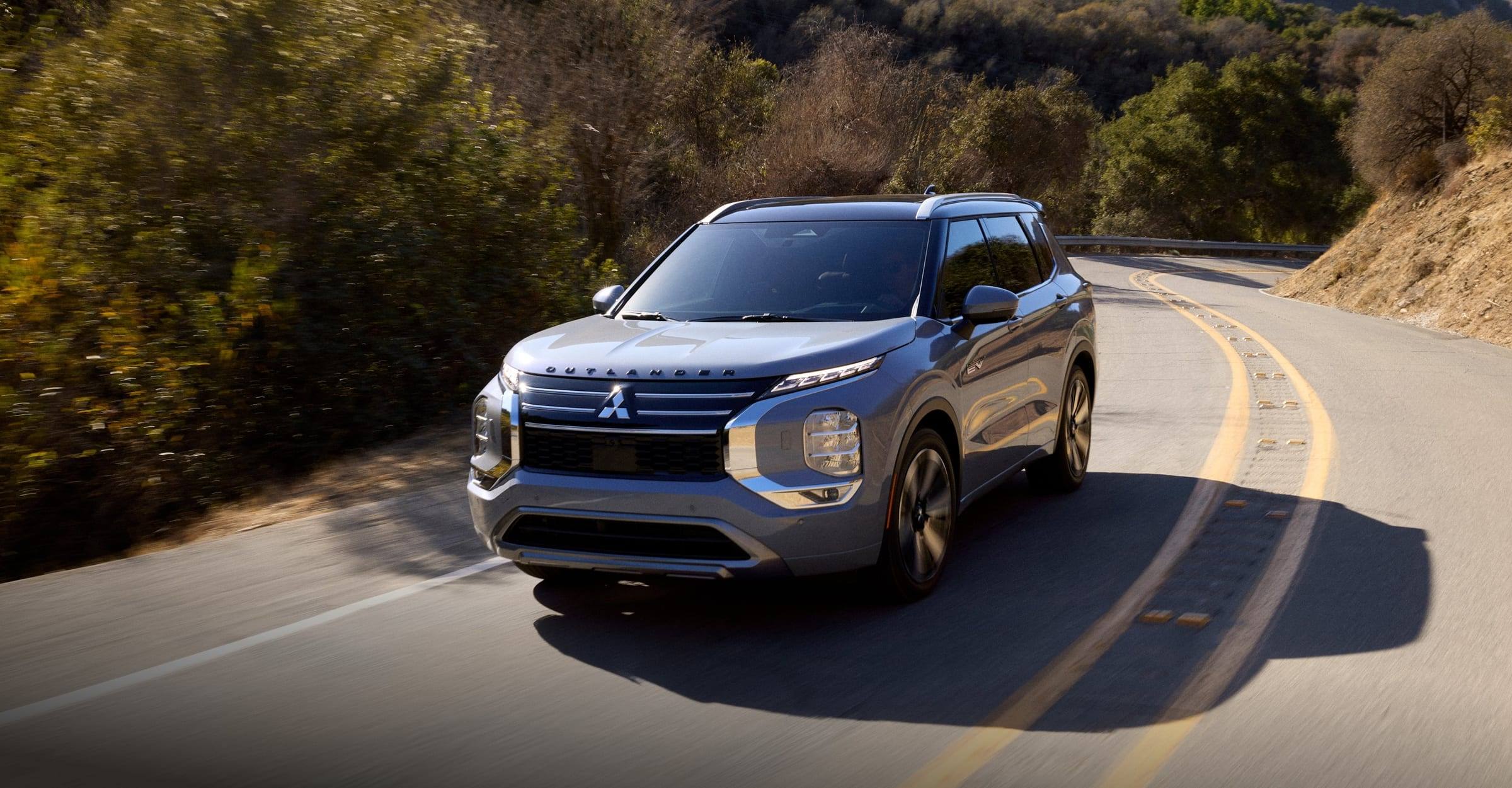
The official figure matters because it sets a car's value for compliance. Our car file lists the Mitsubishi Outlander PHEV Diamant 4WD in Germany at 60 g/km on the WLTP weighted combined cycle, with 2.7 L/100 km plus 16 kWh/100 km. That is above the 50 g/km ceiling for the 2025-2029 low-emission credit. On that figure, this version earns its maker no credit despite its plug.7,12
What it could mean for EV prices
We found no primary source that measures how far fleet targets have driven EV discounts. The mechanism is still clear from the fines. Take a hypothetical carmaker 3 g/km over target with 400,000 registrations. At €95 per g/km per car, it would pay €114 million. Selling extra EVs at thin margins can cost less than that.7
Softer targets shrink that exposure, so the incentive to cut EV prices weakens. T&E estimates that the Commission's 2030 averaging and super-credits alone would lower the 2030 BEV share of new cars from 57% to 47%. That is an advocacy group's model of the Commission version, not an official forecast or a model of the compromise.10
Two points cut the other way. None of the proposals described in our sources changes the 93.6 g/km target for 2025-2029. Small, EU-built EVs would also become more valuable for compliance under the super-credit, which gives makers a reason to keep their prices competitive.7,8
EVs in our car file, and the super-credit tests
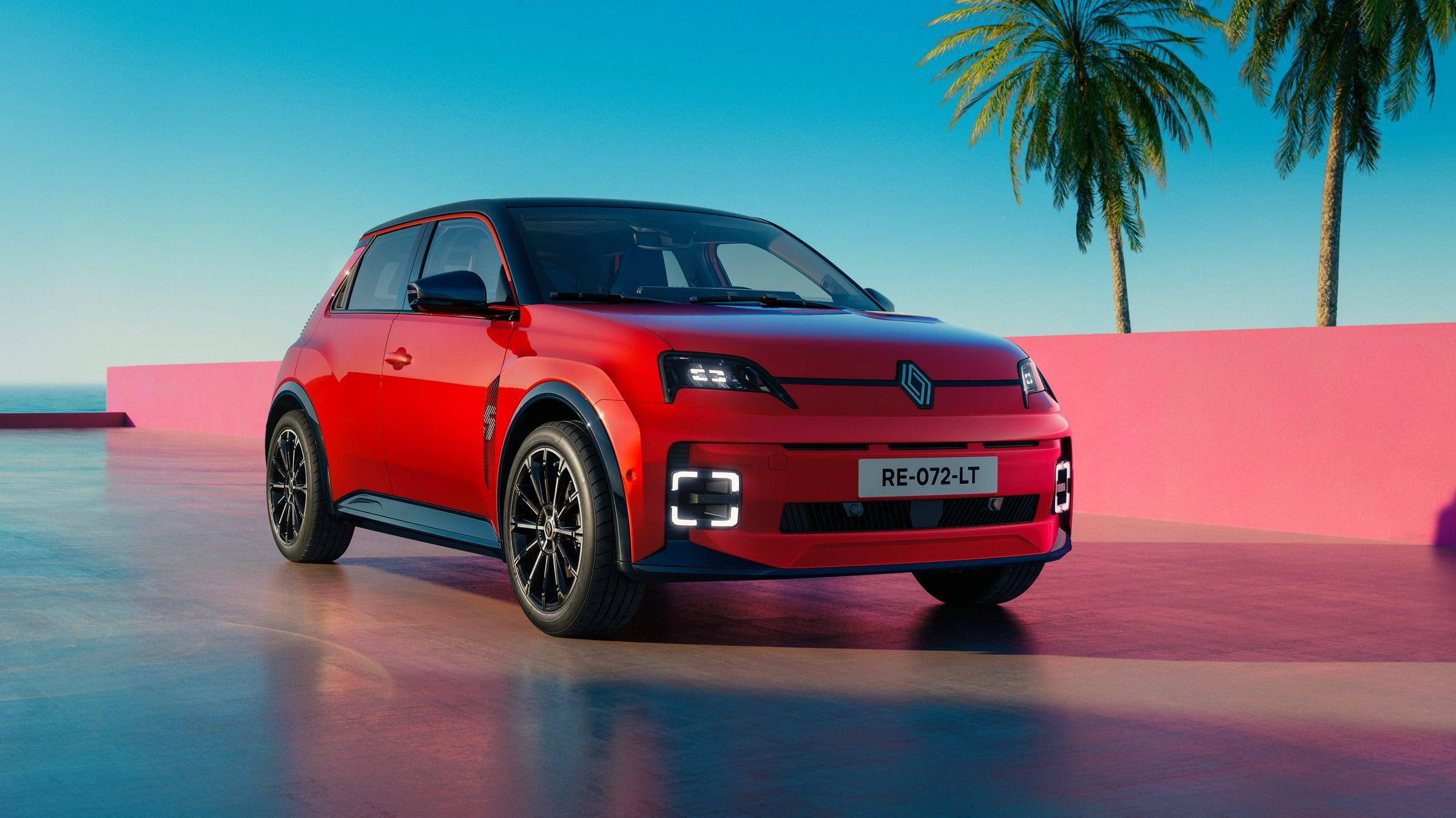
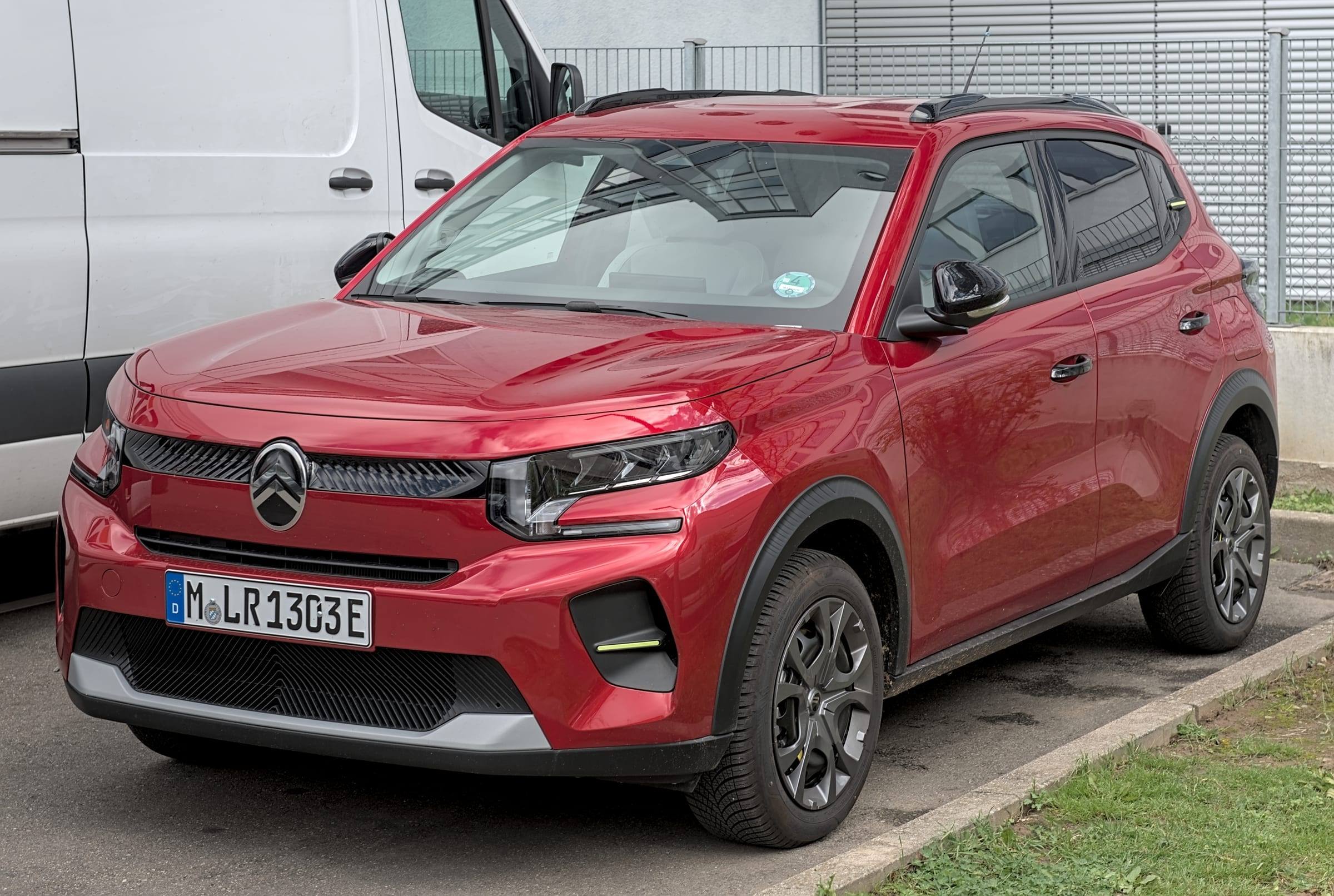
Our car file lists several EVs readers often compare. The Renault 5 E-Tech comes with 36.5, 40 or 52 kWh batteries and WLTP ranges of up to 305, 315 and 430 km in Europe. The Citroën ë-C3 has 30 or 44 kWh and up to 132 or 202 miles WLTP in the UK. The BYD Dolphin Surf has 30 or 43.2 kWh and 220-322 km WLTP.13,14,15
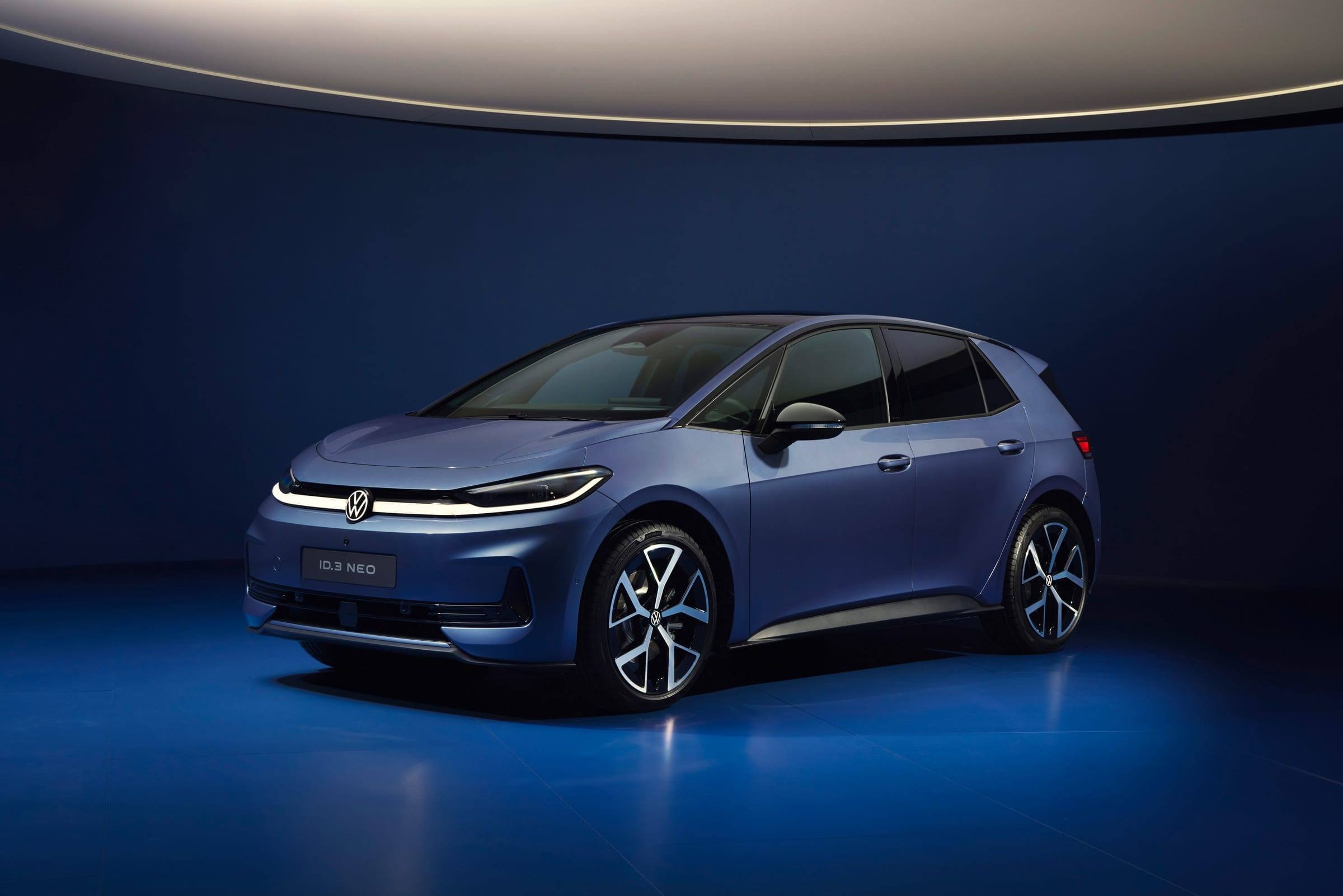
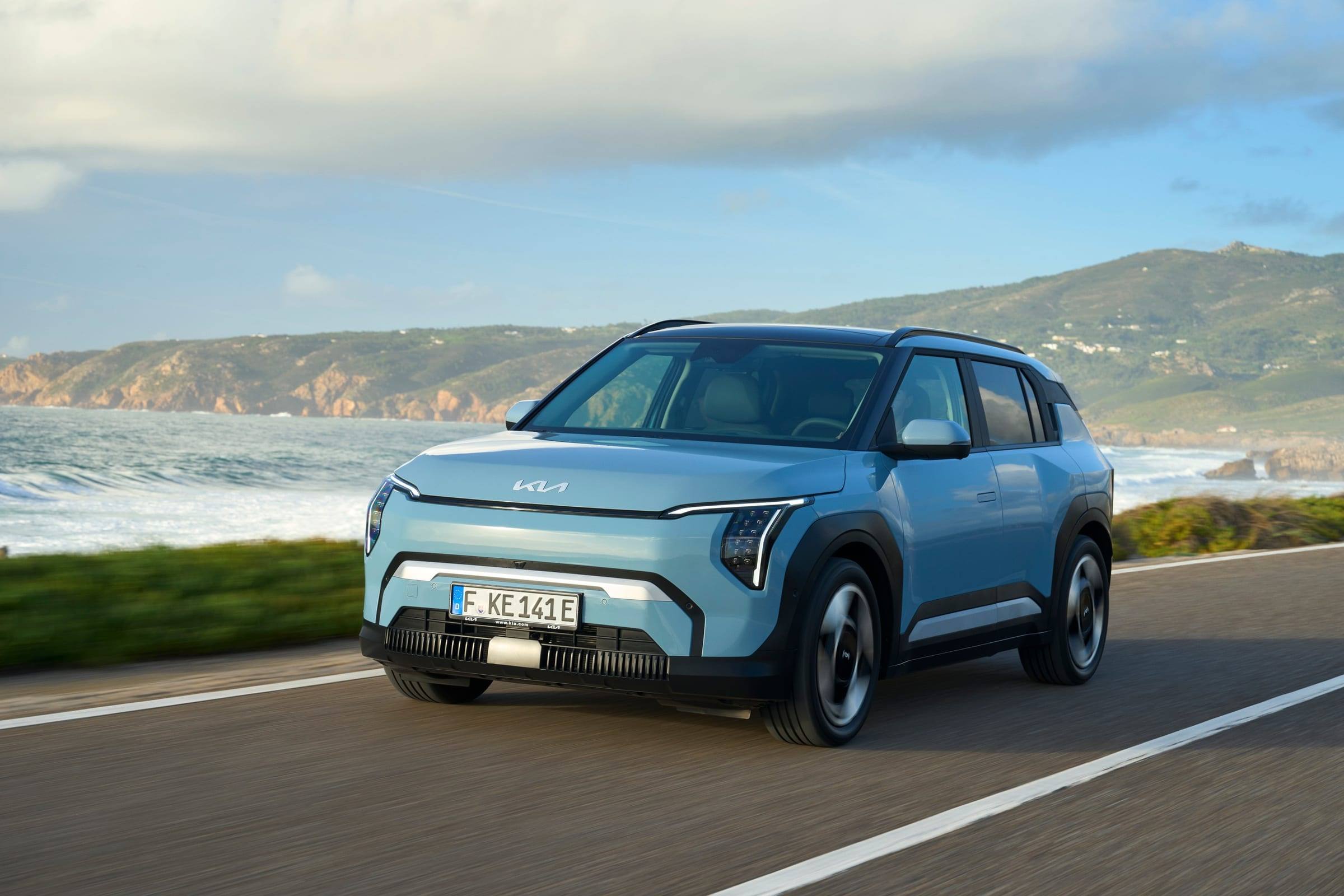
The Kia EV3 has 58.3 or 81.4 kWh and 436 or 605 km WLTP in Ireland. The Volkswagen ID.3 offers 50, 58 or 79 kWh usable, with up to 630 km WLTP for the 79 kWh version in Europe.16,17
Two tests decide whether a model would earn the 1.3x multiplier as proposed: the small-vehicle category and EU manufacture. Our car file does not yet record either for these models, and 'made in the EU' has not been defined. It also holds no verified prices for them. We are therefore not saying which models would qualify, or which compliance pressure has made cheaper, until the data supports it.8
Still undecided, and what to check
These points are still open: how the compromise treats PHEVs; whether 2030-2032 averaging survives; the size of the efficiency super-credit; any change to the fuel-credit cap and the definition of eligible renewable-fuel cars; whether ENVI adopts the same text; and where the Council lands. Delegated acts on steel credits and 'made in the EU' would then set what the credits are worth in practice.4,8
If you are buying now, current law applies. For a plug-in hybrid, check the official WLTP electric range for your exact version and market against how often you can charge. The Outlander PHEV, for example, quotes up to 85 km in Germany and 53 miles in the UK. For an EV, compare list prices and incentives in your own market on the day you order.6,12
Common questions
Has the European Parliament voted to weaken the 2035 target?
No. ITRE and TRAN, which only give opinions, adopted a compromise on 22 October 2026. ENVI, the committee responsible, still has to vote. After that come a plenary vote and talks with the Council.
Is the compromise target 87.5% or 95%?
Both numbers appear in the same rule. The amendment sets 87.5% for tailpipe emissions, on condition that steel credits offset remaining emissions up to 95%. That leaves 5% of the 2021 target unoffset.
Will plug-in hybrids be banned in 2035?
Under the Commission proposal, no. The Commission says PHEVs could stay on sale after 2035. Its legal text does not change how PHEV CO2 is counted. The compromise's treatment of PHEVs is not yet confirmed.
When could the changes become law?
Not before Parliament and the Council agree a common text. The indicative plenary date is 23 November 2026. Reports point to December, and Pascal Canfin has linked the plenary vote to a Parliament agreement on the automotive part of the Industrial Accelerator Act.
Evidence register
The material behind the conclusion. Bracketed numbers in the text point here.
- 01
reporting accessed 23 October 2026
EU Auto Package: Committee votes to relax CO₂ rules
electrive.com. On 22 October 2026, ITRE adopted the EPP/S&D/Renew compromise by 49 votes to 27 with 5 abstentions. TRAN adopted it by 27 to 18 with 1 abstention.
- 02
reporting accessed 23 October 2026
EU softens 2035 combustion engine ban in new political deal
NordiskBil. A separate outlet also reports the ITRE and TRAN votes on 22 October, with 49 and 27 votes in favour respectively.
- 03
primary accessed 23 October 2026
Procedure File: 2025/0420(COD) | Legislative Observatory | European Parliament
European Parliament Legislative Observatory. The CO2 standards revision (procedure 2025/0420(COD)) is still at committee stage in Parliament. The Environment committee (ENVI) is in charge, with Massimiliano Salini (EPP) as rapporteur, appointed 19/03/2026.
- 04
reporting accessed 23 October 2026
Agence Europe. Pascal Canfin said the plenary vote on the CO2 standards needs a Parliament agreement first on the automotive part of the Industrial Accelerator Act. ITRE's vote on that act is expected in December.
- 05
reporting accessed 23 October 2026
EU lawmakers reach deal to weaken car CO2 targets (Reuters)
Reuters via Yahoo Finance UK. Reuters, which saw the agreement text, reports an 87.5% cut for cars with a 7.5% top-up from EU low-carbon steel. Parliament and member states must then agree a common text on the 2030 and 2035 targets.
- 06
reporting accessed 23 October 2026
EU lawmakers agree deal to ease 2035 car emissions target
AM (am-online.com). The centre-platform agreement does not change the law. It still needs political approval in Parliament and then agreement with EU governments.
- 07
primary accessed 23 October 2026
Cars and vans - Climate Action - European Commission
European Commission (DG CLIMA). Under current law, the EU-wide car fleet target is 93.6 g CO2/km for 2025-2029, 49.5 g/km for 2030-2034 and 0 g/km (a 100% cut) from 2035. Vans: 153.9 and 90.6 g/km.
- 08
primary accessed 23 October 2026
COM(2025) 995 Proposal amending Regulation (EU) 2019/631
European Commission. The proposal's legal text would cut the 2035 fleet target from 100% to 90%, on condition that the remaining emissions are offset with low-carbon steel credits or renewable fuel credits.
- 09
reporting accessed 23 October 2026
EU committee mulls revised CO2 targets for cars, vans
Argus Media. Salini's ENVI draft report proposed reclassifying vehicles that run only on alternative fuels as zero-emission, and raising the 3% cap on fuel credits.
- 10
research accessed 23 October 2026
Position paper on the revision of the EU car CO2 standards
Transport & Environment. T&E reads the Commission's super-credit as applying to 'Made-in-EU' BEVs up to 4.2 m long, each counted as 1.3 cars for compliance in 2030-2034.
- 11
research accessed 23 October 2026
Proposal to weaken CO2 standards could delay EV progress in Europe
International Council on Clean Transportation. ICCT reads the Commission proposal as allowing plug-in hybrids and range extenders to be registered from 2035.
- 12
manufacturer accessed 18 October 2026
Mitsubishi Outlander PHEV: Official manufacturer overview (Mitsubishi Germany)
Mitsubishi. Charjin car file figure: efficiency 2.7 L/100 km + 16 kWh/100 km (WLTP weighted combined, Diamant 4WD, Germany, 60 g/km CO2; range across versions 2.6–2.7 L and 16–19.1 kWh/100 km. Mitsubishi UK quotes 313 mpg weighted).
- 13
manufacturer accessed 18 October 2026
Renault 5 E-Tech: Official manufacturer press release (Renault media)
Renault. Charjin car file figure: battery 36.5, 40 or 52 kWh (40 kWh Urban Range (90 kW motor) and 52 kWh Comfort Range (110 kW); the entry Five trim moves to a 36.5 kWh LFP battery with an 80 kW motor. Renault does not say here whether these are gross or usable figures.).
- 14
manufacturer accessed 18 October 2026
Citroën ë-C3: Official manufacturer model page (Citroën UK)
Citroën. Charjin car file figure: battery 30 or 44 kWh (Battery capacities as quoted by Citroën UK; ADAC lists 29.3 and 43.8 kWh net. Both use an 83 kW (113 hp) motor.).
- 15
manufacturer accessed 28 July 2026
BYD Dolphin Surf: Official manufacturer overview
BYD. Charjin car file figure: battery 30 or 43.2 kWh (Capacity and availability can change by version).
- 16
manufacturer accessed 19 October 2026
Kia EV3: Official manufacturer overview
Kia. Charjin car file figure: battery 58.3 or 81.4 kWh (Standard Range and Long Range, Ireland).
- 17
manufacturer accessed 18 October 2026
Volkswagen ID.3: Official manufacturer press release (Volkswagen newsroom)
Volkswagen. Charjin car file figure: battery 50, 58 or 79 kWh usable (Net capacities: 50 kWh with the 125 kW motor (standard on Trend), 58 kWh with 140 kW and 79 kWh with 170 kW (options on Life and Style). VW newsroom, Europe.).
No corrections recorded. Last checked 2026-10-23.