AnalysisElectric cars
Kia building the EV3 in Mexico changes the cost question, not the answer
Local production improves the conditions for a more attainable EV. It does not guarantee the price, specification, or charging support buyers will receive.
By Charjin Editorial Desk6 minutes5 sources
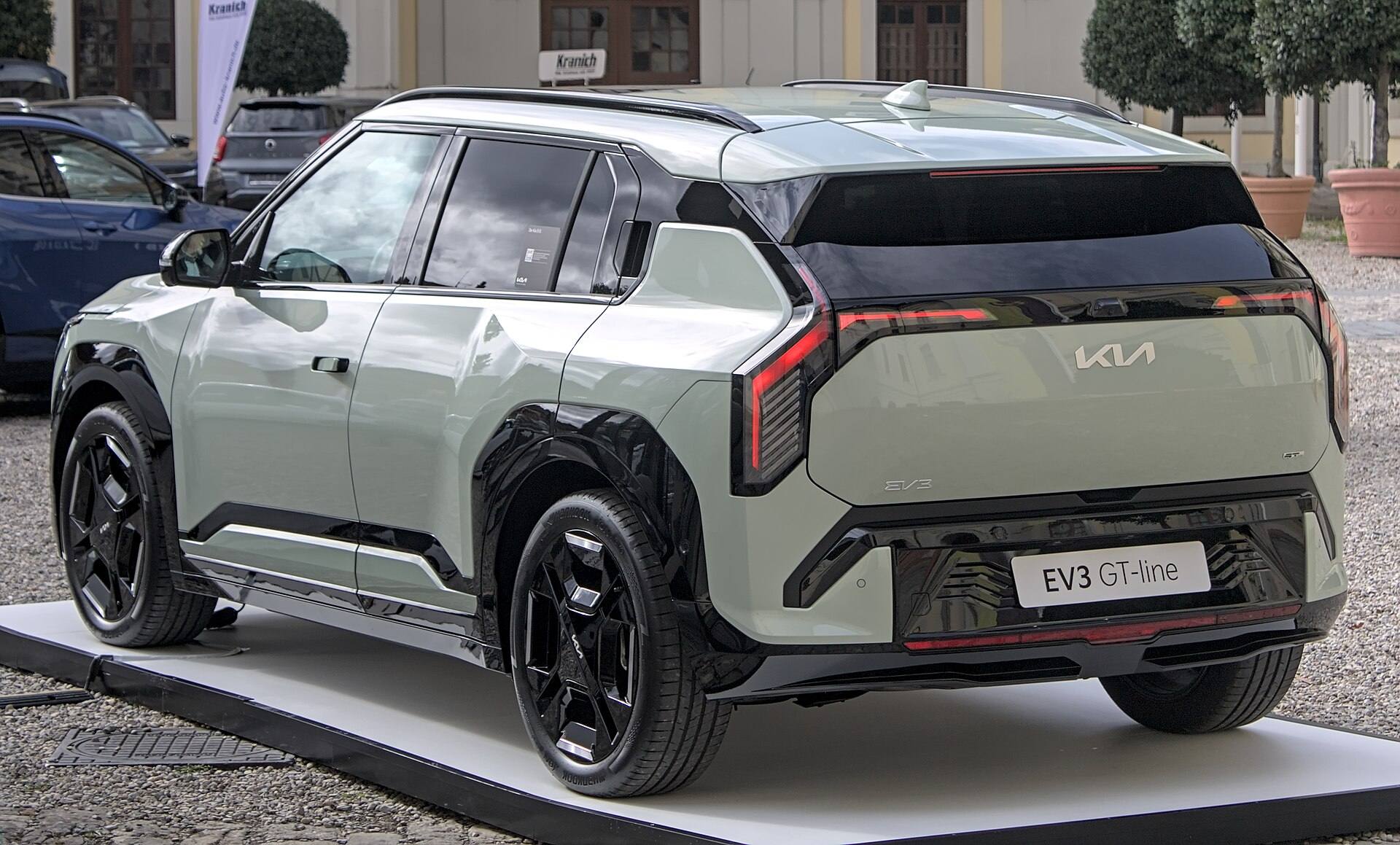

What does Mexican production actually change?
The short answer. Mexican EV3 production matters because it can shorten supply lines, add regional capacity, and give Kia more room to compete on price. Buyers should still wait for confirmed local pricing, battery specification, warranty, tariff treatment, and charging support before calling it an affordable EV.
Three facts to verify before calling the EV3 affordable.
- Treat local production as evidence of capacity, not proof of a low retail price.
- Compare the battery, range cycle, warranty, and charging package in the exact local specification.
- Watch delivery volume and dealer support after launch, not only the investment announcement.
Start with what changed
Kia is putting the EV3 into production at its Pesquería plant in Nuevo León as part of a 649 million dollar investment in Mexico. Reporting from the announcement said production would begin in August, with a meaningful share intended for the domestic market. That turns the EV3 from an imported proposition into a vehicle with a regional manufacturing base.3,4
That is important industrial news, but the buyer question is narrower. A factory investment can improve availability and reduce some logistics exposure. It cannot, by itself, confirm the showroom price, finance rate, delivery time, repair capacity, battery version, or standard equipment in each market.3
Charjin therefore reads the announcement as a change in the cost conditions around the EV3, not as a completed affordability claim. The proof will arrive in market-specific price lists, dealer stock, warranty documents, charging offers, and the first months of real deliveries.
Local production creates room, not a guarantee
Regional production can remove long shipping legs, reduce inventory lead time, simplify parts movement, and give a manufacturer more flexibility when exchange rates or trade rules change. Reusing an established plant also avoids treating every electric model as a completely separate industrial project.3,5
The retail result remains conditional. Battery cells, power electronics, software, safety hardware, taxes, incentives, distribution costs, and margin still sit inside the final price. The value of local assembly also changes when trade rules or regional-content requirements change. A locally assembled vehicle can still be expensive, just as an imported vehicle can be aggressively priced.3
For consumers, the useful signal is that Kia now has more tools with which to compete. The unhelpful leap is assuming every one of those tools will automatically become a lower sticker price. Production capacity creates optionality for the company; competition determines how much of that reaches the buyer.
There will not be one universal EV3
Kia Mexico promotes the EV3 with a claim of up to 605 kilometres of range and a seven-year warranty. Kia's United States page describes a pre-production 2027 model with a projected range of up to 300 miles and warns that specification and availability can vary. Those numbers are market claims, not interchangeable measurements.1,2
A buyer should identify the exact battery, test cycle, wheel size, drivetrain, charging peak, heat-pump availability, warranty coverage, and connected-services package before comparing prices. A cheaper trim with a smaller battery may be the better value for local driving, while a longer-range trim may justify its premium for regular intercity use.1,2
This is why a manufacturing headline cannot replace a model guide. The badge remains the same while range labels, equipment, incentives, software functions, and warranty conditions move by market. Charjin will keep the global vehicle facts separate from the local offer.
The factory needs an ownership ecosystem
Nuevo León already has an expanding electrification ecosystem. Government reporting has highlighted investment in electric fleets and rapid-charging positions, while industry mapping points to a broader Mexican supply chain for electric and hybrid production. The EV3 project fits that industrial direction rather than standing alone.5
Manufacturing scale and ownership quality are still different measurements. A successful launch requires dependable home-charging installation, transparent public-charging prices, trained service teams, parts availability, battery diagnostics, and finance products that understand electric-vehicle residual values.1
Readers should watch the practical evidence after production begins: how many versions dealers actually receive, how quickly deliveries stabilise, whether entry trims remain available, and whether service support grows outside the largest cities. Those signals say more about mass-market readiness than a launch-day photograph.
The Charjin view
The EV3 is exactly the sort of vehicle that can move electric cars beyond early adopters: compact outside, useful inside, offered with more than one battery strategy, and backed by a manufacturer with meaningful production scale. Building it in Mexico strengthens that case for the Americas.1,2
Our optimism remains conditional. The strongest version of this story is not that an EV factory opened. It is that a desirable electric car becomes easier to buy, easier to service, and honestly competitive against hybrids and combustion vehicles in the same price band.
Until local price lists and sustained inventory confirm that outcome, the right conclusion is measured: the manufacturing decision improves the probability of an attainable EV3. It does not settle the affordability question.
Common questions
Will Mexican production make the Kia EV3 cheaper?
It gives Kia more flexibility over supply, logistics, and regional capacity, but it does not guarantee a lower retail price. Battery sourcing, equipment, taxes, incentives, distribution, and competitive strategy still shape what buyers pay.
Which Kia EV3 range figure should buyers compare?
Use the figure for the exact local battery, trim, wheel size, drivetrain, and test cycle. A Mexican market claim and a projected United States figure are not interchangeable measurements, even when they describe the same model name.
What should be verified before calling the EV3 affordable?
Confirm the local price, finance terms, battery capacity, official range cycle, charging performance, warranty coverage, standard equipment, dealer availability, and repair support. Factory location alone cannot answer those ownership questions.
Evidence register
The material behind the conclusion. Bracketed numbers in the text point here.
- 01
primary accessed 10 August 2026
Nuevo Kia EV3: el SUV 100% eléctrico ya está en preventa
Kia Mexico. Manufacturer launch page for the Mexican-market range and warranty claims.
- 02
manufacturer accessed 10 August 2026
2027 Kia EV3 compact electric SUV
Kia America. United States pre-production positioning, projected range, availability, and specification caveats.
- 03
reference accessed 10 August 2026
Kia to invest $649 million to bring electric car production to Mexico
Reuters. Announcement details, investment value, production timing, domestic-market intent, and trade context.
- 04
reference accessed 10 August 2026
KIA Elects To Manufacture The EV3 In Mexico
CleanTechnica. The source-radar report that triggered this independent Charjin analysis.
- 05
primary accessed 10 August 2026
Cluster Industrial B2B presents the 2026 electromobility map for Mexico
Guanajuato Puerto Interior. Public-sector summary of electric-vehicle production, investment, and supply-chain development in Mexico.
No corrections recorded. Last checked August 10, 2026.