AnalysisElectric cars
Tesla Assisted Driving gets a 10% speed cap in Europe. What it changes at 30, 50 and 100 km/h, and what it leaves unsolved
The Dutch regulator has cut the system's speed margin from +50% to +10% and approved the new name. A Belgian test suggests the larger problem sits elsewhere: the car overran 30 km/h limits with the margin set at zero.
By Charjin Editorial Desk5 minutes14 sources
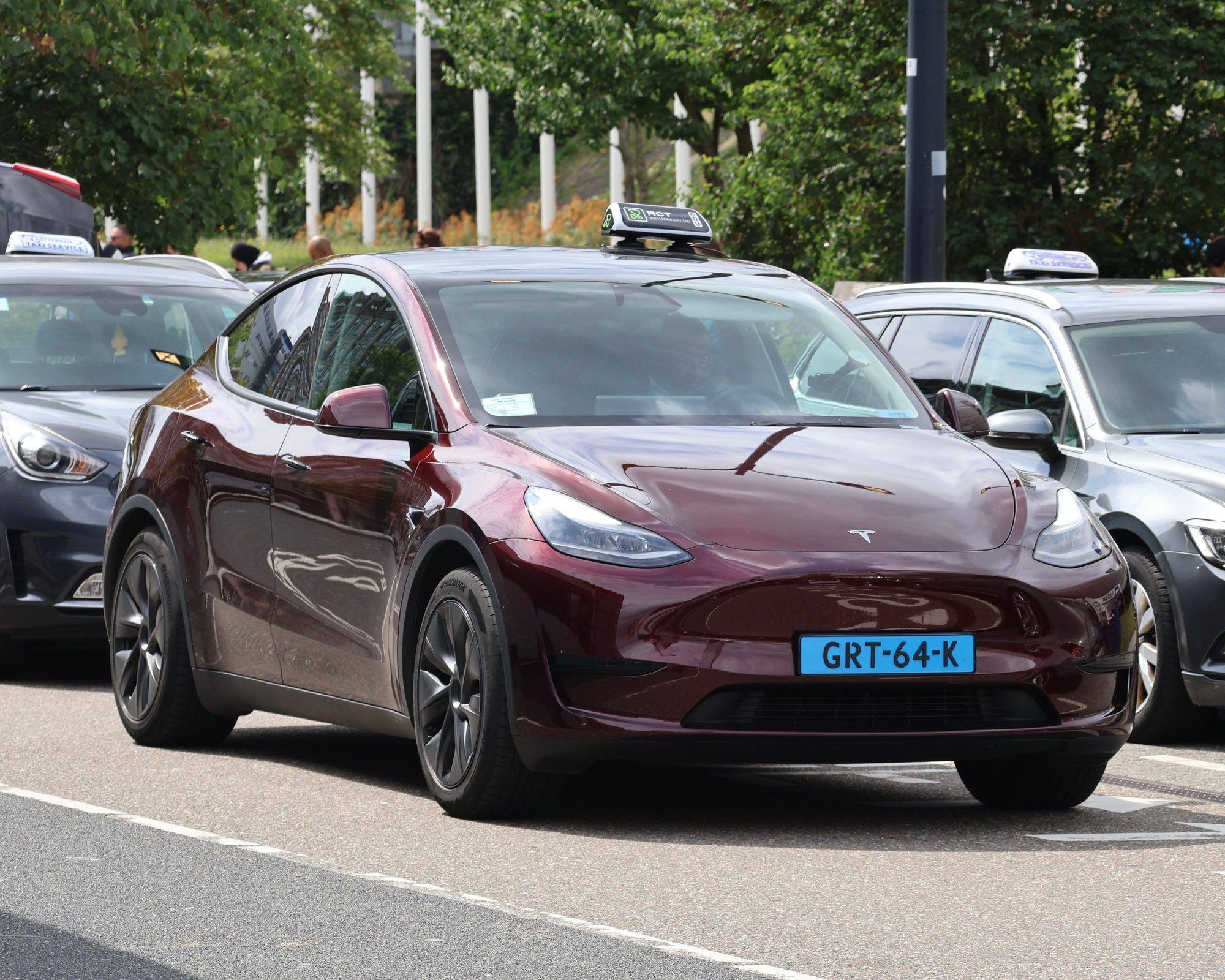
Does the 10% cap make Tesla Assisted Driving safe to leave alone on speed limits?
The short answer. No. The cap limits how far a driver can set the car above the limit, and it now resets to 0% at each start. A Belgian test in July found the car speeding in 16 of 29 Brussels 30 km/h segments with the margin already at 0%, often because it showed a 50 km/h limit, so you still need to read the signs yourself.
What to know if you use or plan to buy it
- The Dutch regulator RDW approved a maximum +10% margin, down from +50%, on 3 November. It starts at 0% each time the car starts and arrives over the air on HW4 or later cars.
- On a 50 km/h road the ceiling falls from 75 to 55 km/h. If the car has wrongly decided that a 30 km/h street is a 50 km/h road, the same arithmetic would still allow 55.
- The driver stays responsible, including, on Charjin's reading, for any fine. The price is reported at €99 a month, and the system is not approved in Germany, France, Italy or Spain. An EU vote cannot come before December.
What the Dutch regulator changed
On 3 November the RDW, the Dutch vehicle authority, said it had assessed and approved changes requested by Tesla. The margin that lets the system exceed the limit falls from +50% to a maximum of +10%. It returns to 0% when the car starts, and other speed-related functions are also off by default.1
FSD Supervised becomes Tesla Assisted Driving on the screen, in the manual and in other driver information. The RDW says the name does not alter how the system works, and that this is still driver assistance with the driver responsible. The update goes over the air to cars with hardware version 4.0 or later.1
The RDW treated these as minor changes added to its existing approval, which it did not need to amend or extend. It informed Belgium, Croatia, Czechia, Denmark, Estonia, Latvia, Lithuania, Slovakia and Slovenia. With the Netherlands, that is 10 countries where the approval has been accepted, up from eight at the start of October.1,9
Why the cap arrived now
The system needs wider backing. An EU-wide decision requires at least 15 of 27 member states, holding at least 65% of the EU population, and the committee handling it does not meet again until December. The countries that had accepted the approval by late September held about 12% of that population.7
Speed has been the main objection. Sweden's transport agency told the committee to vote against unless the ability to exceed limits was removed, and France's transport minister said he would not authorise the system as it stood, citing speeding and driver attention in towns.10,11
Germany moved the other way. Its transport ministry said on 6 October that it had agreed with Tesla in September that the system may exceed limits by at most 10%, and that it would support this position in the EU process. It also called the old name misleading and said the driver stays 100% responsible.2,6
The European Transport Safety Council, a road safety group, rejects any margin. It says UN Regulation 171 states that a system "shall not enable the driver to set a default offset". Resetting to 0% at each start looks aimed at that wording, though the RDW does not say so. The council's latest statement predates the RDW notice, and Charjin found no response from it yet.1,4,5
The cap at real speed limits
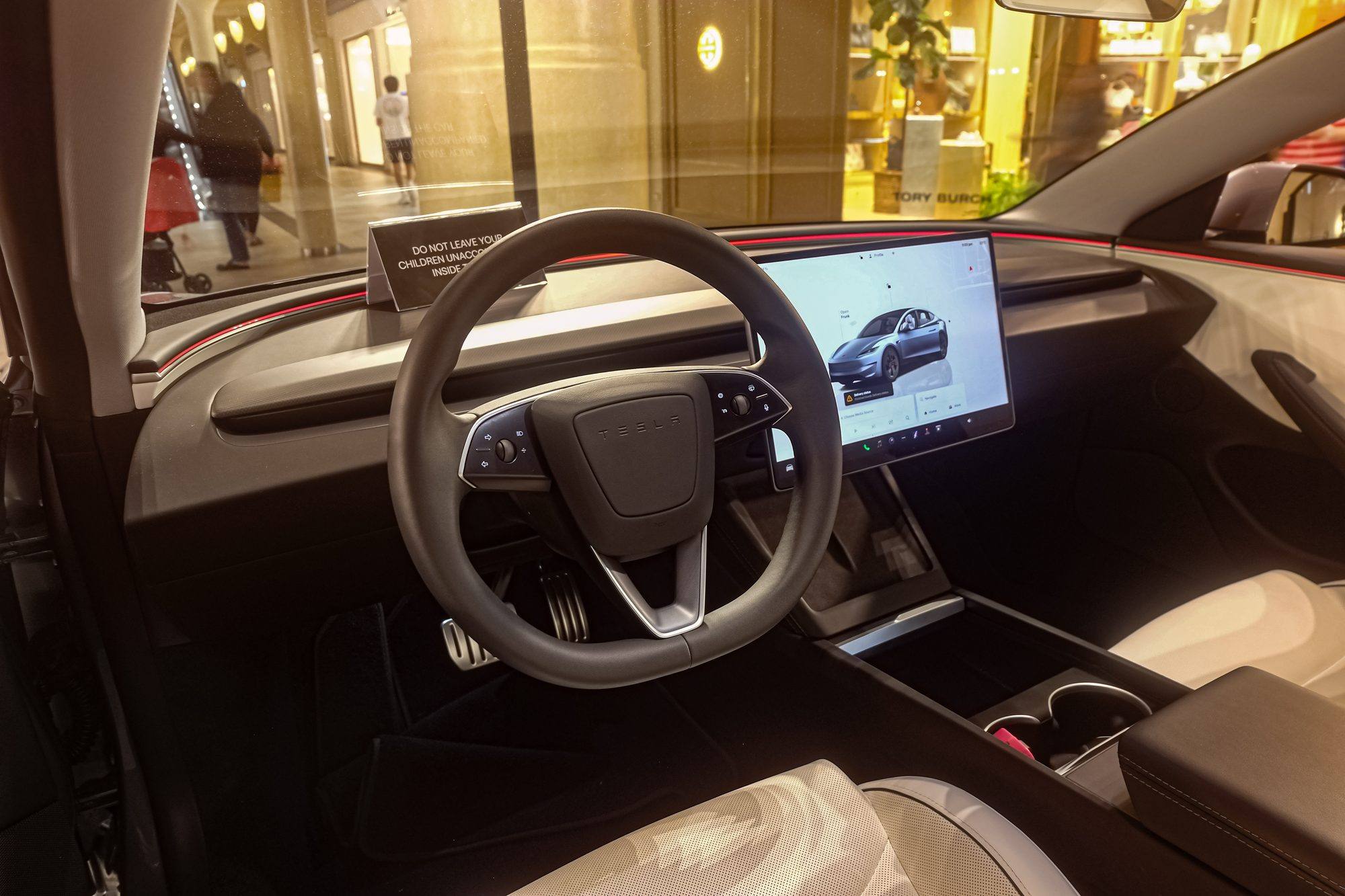
Charjin worked out the highest speed the old and new margins allow. In a 20 km/h home zone it falls from 30 to 22 km/h. In a 30 km/h zone it falls from 45 to 33, on a 50 km/h road from 75 to 55, and on a 100 km/h road from 150 to 110. Those are calculated ceilings, and a car will not always reach them.1
The time at stake is small. Over 10 km of clear road at a constant speed, 110 km/h instead of 100 saves about 33 seconds, and 55 km/h instead of 50 saves about 65 seconds. That is Charjin's arithmetic, and queues and junctions would shrink both figures.1
The legal cost can be larger. ANWB's table of 2026 Dutch fines lists €46 for 5 km/h over inside a built-up area and €84 for 10 km/h over on a motorway, before administration costs. So one 55 in a 50, or one 110 in a 100, can cost far more than the minute or so it saves. These are Dutch amounts only, and the table does not say whether a measuring correction applies.14
Using the margin in full remains a driver's choice. Because the RDW and the German ministry both say responsibility stays with the driver, Charjin's reading is that a fine would too. Neither body addresses fines directly, so check your own country's rules.1,2
What the cap does not touch
The most useful evidence comes from Johanna.be, a Brussels mobility non-profit. It tested a Model 3 on software 2026.21.100 and FSD v14.2.2.6 between 20 and 22 July, in standard mode, with the speed offset at 0% and contextual max speed off. Those are settings the new cap would not change.3
The car exceeded the limit in 16 of 29 Brussels 30 km/h segments, or 55%, averaging 44 km/h. That is about 47% over the limit, far beyond a 10% margin. In home zones it exceeded 20 km/h in five of 12 cases, averaging about 26 km/h.3
The cause appears to be how the car handles limits. It often read the 30 km/h sign correctly, then kept showing the driver 50 km/h. Across the Brussels sample, the driver saw a wrong limit in about 90% of segments. A Citroën C3 with ordinary sign recognition identified the zone signs on all seven segments compared, while the Tesla reflected the limit on one.3
The study also found no audible speed warning during its drives, and it found that braking to take over could release the steering, which sent the car straight ahead at two roundabouts. In six cycle streets it never showed the correct limit, and it tried to overtake cyclists, which Belgian rules ban. It did generally yield with care to people on foot and on bikes.3
If a car believes a 30 km/h street is a 50 km/h road, a 10% margin on that belief would be 55 km/h, or 83% over the legal limit. That is Charjin's arithmetic. The RDW notice says nothing about limit recognition, so nothing published shows this update addresses it.1,3
The study has limits. It covers one car, one driver's video record, about two days and one software version, and it comes from a group that campaigns for pedestrians and cyclists. It predates this update, and Electrek reported no reply from Tesla.3,12
What to do if you use it or are buying
If you subscribe, expect to start at 0% each trip and treat that as the sensible setting. Check the limit on screen against the signs, above all near schools and in residential streets, and be ready to slow the car yourself. Keep both hands ready when you brake to take over, because of the steering behaviour above.1,3
Press reports put the price at €99 a month including VAT, or about €1,188 a year, with no one-time purchase and no refunds on subscriptions. Tesla's page reportedly says the car warns and then switches the system off when nearing a country where it is not approved, so plan cross-border trips around that.8,13
If you live in Germany, France, Italy or Spain, do not pay for a car on the assumption that this feature will arrive. Germany's support is a position on the EU process, and the RDW says EU-wide approval is still under discussion. December is the earliest date for a vote, not a date for one.1,2,7
What is still unknown
The RDW did not name the other speed functions now off by default, and a driver may still be able to turn them on. Tesla's own support pages blocked Charjin's requests, so its price and border wording here come from press reports of those pages. Tesla's rollout timing for each country is also unconfirmed.1,9,13
The larger safety claim is also unsettled. Experts who reviewed Tesla's method for Reuters said its study does not support the claim that the system saves lives. Independent retests of this update in 30 km/h zones would give a clearer answer than the cap itself, and Charjin has not seen any yet.6
Common questions
Can the car still go over the limit?
Yes. A driver can raise the margin to a maximum of +10% after it resets to 0% at the start of a trip. The Belgian test also recorded speeding with the margin at 0%, on earlier software.
Is it self-driving now that it has been approved?
No. The RDW calls it a driver assistance system and says the driver remains responsible. Germany's ministry says the old name was misleading and that the driver is 100% responsible.
Which countries have accepted the Dutch approval?
The Netherlands, Belgium, Croatia, Czechia, Denmark, Estonia, Latvia, Lithuania, Slovakia and Slovenia, according to the RDW's 3 November notice. Germany, France, Italy and Spain have not, and an EU-wide vote cannot come before December.
Will my car get the update?
The RDW says it applies to Tesla models with Tesla Assisted Driving and hardware version 4.0 or later, delivered over the air.
Evidence register
The material behind the conclusion. Bracketed numbers in the text point here.
- 01
primary accessed 4 November 2026
RDW approves changes to Tesla driver assistance system
RDW (Netherlands Vehicle Authority). The regulator's 3 November notice on the +10% margin, 0% default, renaming, HW4 scope, notified countries, approval status and driver responsibility.
- 02
primary accessed 4 November 2026
Aktueller Stand bei der Genehmigung eines Tesla-Assistenzsystems
Bundesministerium für Verkehr. The German transport ministry's 6 October statement on the 10% tolerance agreed with Tesla, the misleading name and full driver responsibility.
- 03
research accessed 4 November 2026
Johanna.be vzw. The July 2026 Belgian test report, with its method, software version, settings, speeding results, displayed-limit errors and takeover behaviour.
- 04
reference accessed 4 November 2026
European Transport Safety Council. The safety council's 30 October position that even a 10% margin breaches UN Regulation 171, with the wording it quotes from that regulation.
- 05
reference accessed 4 November 2026
European Transport Safety Council. The council's earlier argument on default offsets and the paragraph of UN Regulation 171 it relies on.
- 06
reference accessed 4 November 2026
Musk welcomes German backing for Tesla driver assistance tech as group chases EU approval
Reuters, via ARY News. Reuters report, as republished, on Germany's 10% position and on experts who said Tesla's study does not support its claim that the system saves lives.
- 07
reference accessed 4 November 2026
EU vote on Tesla FSD not expected before December
electrive. The qualified-majority threshold, the December timing and the 12% population share of adopting countries at the end of September.
- 08
reference accessed 4 November 2026
Tesla Drops One-Time Purchase For Full Self-Driving In Europe
InsideEVs. Reports the move to a €99 monthly subscription and the end of one-time purchase in Europe.
- 09
reference accessed 4 November 2026
Tesla cuts FSD's speed margin from 50% to 10% over the limit in Europe
Electrek. Independent report of the RDW notice, the rise to 10 countries and the fact that the RDW did not name the other functions.
- 10
reference accessed 4 November 2026
France won't approve Tesla 'FSD' yet, wants EU-wide sign-off first
Electrek. Reports the French transport minister's refusal to authorise the system as it stood, and his reasons.
- 11
reference accessed 4 November 2026
Sweden tells EU to reject Tesla 'FSD' unless speeding is removed
Electrek. Reports the Swedish Transport Administration's letter asking the committee to vote against unless the speed offset was removed.
- 12
reference accessed 4 November 2026
Tesla 'FSD' sped in 55% of Brussels 30 km/h zones ahead of EU vote
Electrek. Independent report of the Johanna.be study, including that Tesla did not respond to it.
- 13
reference accessed 4 November 2026
Tesla Films Its Mandatory Assisted Driving Video in Berlin Ahead of German Approval
Tesla North. Reports the wording of Tesla's Dutch support page on the €99 price including VAT, no one-time purchase, no refunds and border behaviour.
- 14
data accessed 4 November 2026
Dit kost een verkeersboete in 2026
ANWB. The table of 2026 Dutch speeding fines by road type, excluding administration costs.
No corrections recorded. Last checked 4 November 2026.