ReportCharging and infrastructure
Volkswagen caps some ID.4 batteries at 80% while it hunts for a fire-risk fix
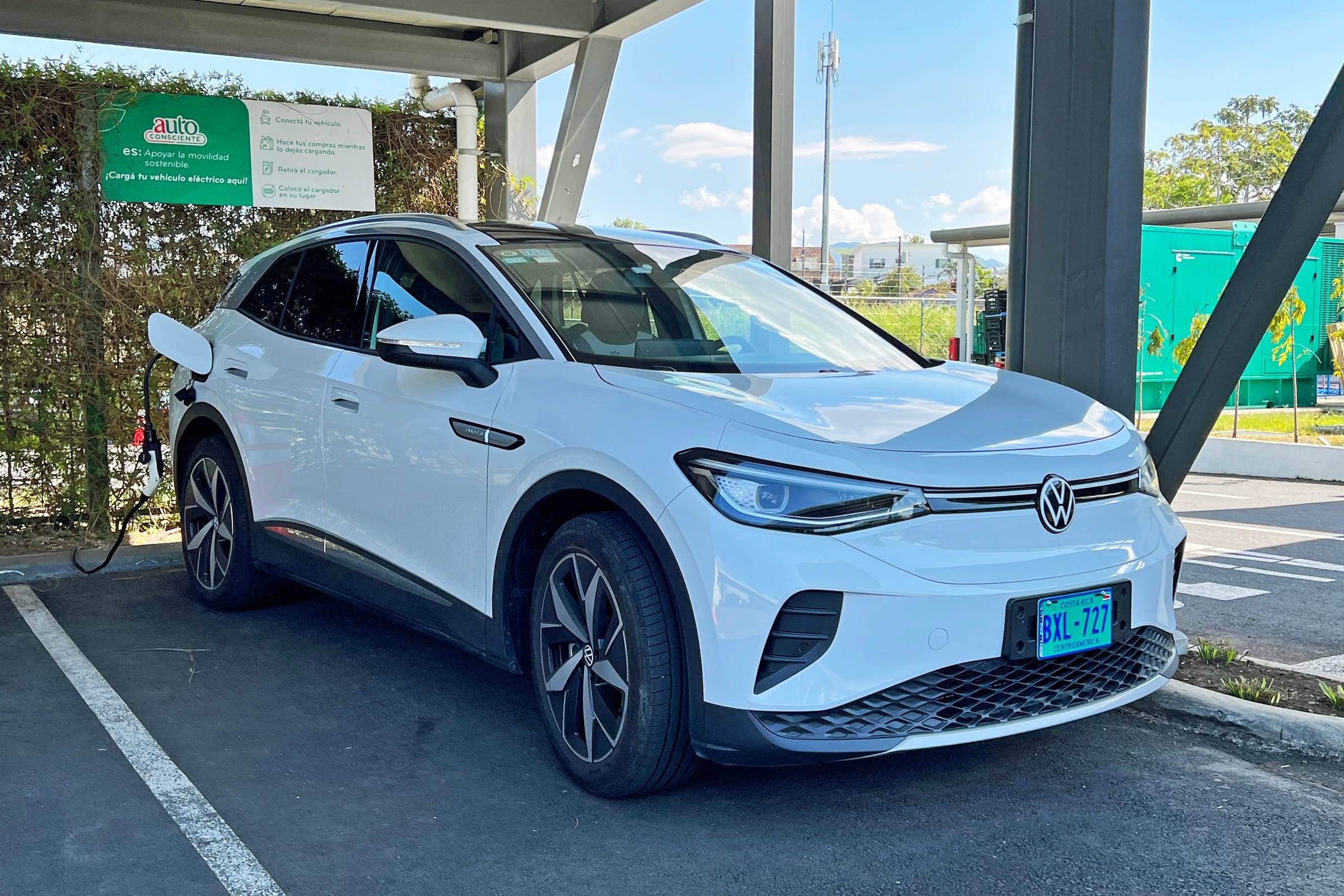
A new US and Canadian recall tells owners of about 28,000 ID.4s to stop charging above 80% because the battery may overheat. Volkswagen does not yet know the root cause, and the cap costs a typical car roughly 40 to 60 miles of rated range.
By Charjin Editorial Desk3 minutes8 sources

My ID.4 is in the recall. What do I actually have to do?
The short answer. Set the maximum charge to 80% and leave it there until Volkswagen has a repair, which it says is still being developed. Check your VIN on the NHTSA or Transport Canada recall lookup, and expect a letter from Volkswagen; in the US the first letters are due to be mailed on 27 November 2026.
Three things ID.4 owners should know now.
- The recall covers 22,524 ID.4s in the US (model years 2023 to 2026) and 5,633 in Canada (2023 to 2025).
- Volkswagen links the fire risk to charging above 80%, but it has not identified the root cause and has no repair yet.
- On EPA figures, an 80% cap takes a 2024 or 2025 ID.4 Pro from 291 to about 233 miles of rated range.
What Volkswagen has filed
Volkswagen Group of America filed recall 26V630 with the US National Highway Traffic Safety Administration on 30 September 2026. It covers 22,524 ID.4s from the 2023 to 2026 model years. The regulator's summary says the high-voltage battery may fail and lead to a vehicle fire. Volkswagen's own code for the campaign is 93EX.1
Transport Canada published a matching recall, number 2026469, on the same date. It covers 5,633 ID.4s from the 2023 to 2025 model years and warns that an overheating battery can create a fire risk even when the car is parked and switched off. Together the two filings cover about 28,000 vehicles.2
This is the fourth ID.4 battery recall in the US in under a year. Two small campaigns filed in December 2025 and January 2026 dealt with misaligned electrodes in cell modules, and a third, covering 43,881 cars with batteries that may overheat, brought a software update and battery replacement where needed.3
Why 80 per cent
Volkswagen's filing, as reported by trade outlets that read it, says certain charging profiles combined with a state of charge above 80% may trigger thermal propagation, meaning heat spreading from cell to cell. The root cause is listed as unknown. The cells come from SK Battery America.4,5
Electrek reports that Volkswagen counted 22 US claims between January 2024 and August 2026. The Auto Wire reports that Volkswagen estimates 0.1% of the recalled cars actually have the defect, and that it used build records, supplier records and the cars' own charging data to decide which vehicles to include. Neither outlet says how many of the 22 claims involved a fire.4,5
How the cap is applied
The NHTSA record tells owners to charge to no more than 80% until the repair is done. It does not tell them to park outside or avoid rapid chargers, which was the advice in the earlier electrode recalls. Transport Canada asks owners to set the maximum charge setting to 80%.1,2,3
AutoGuide reports that Volkswagen plans to set the 80% limit remotely on cars with an active online connection, and to post owners a reminder sticker. Some outlets report that owners can decline the automatic setting. Charjin has not seen Volkswagen's owner message, so we could not confirm how any opt-out works or when the remote change takes effect. Cars without a working connection will need the limit set by hand.6
What the cap costs in range
Charjin's calculation uses the EPA range for each US version and assumes rated range scales with the charge limit. A 2024 or 2025 ID.4 Pro is rated at 291 miles (468 km), so 80% leaves about 233 miles (375 km), a loss of about 58 miles. A 2023 ID.4 Pro falls from 275 to about 220 miles. The 2024 standard-range ID.4 falls from 206 to about 165 miles.7
The same arithmetic works for the European figures in Charjin's car file. Removing 20% of a 77 kWh usable battery takes away 15.4 kWh, worth about 97 km at the official 15.8 kWh/100 km. On the 52 kWh battery the loss is about 66 km. These are test-cycle figures, so real losses will be larger in cold weather and at motorway speed.8
For daily driving the cap changes little, because most trips use a small part of the battery. It matters on long trips, where the first leg from home is shorter. Rapid charging is less affected: Volkswagen's own rapid-charging claim is quoted for 10 to 80%, about 28 minutes, and charging slows above that level.8
What owners should do
Enter your VIN on the NHTSA or Transport Canada recall lookup; US VINs became searchable on 6 October. Set the charge limit to 80% now and do not wait for the letter. US interim letters are due to be mailed on 27 November 2026, with a second letter once a repair exists. Volkswagen's US customer service number is 1-800-893-5298, quoting 93EX.1,2
Volkswagen is not offering reimbursement under this campaign because it says the cars are still under the new-vehicle warranty, according to The Auto Wire's reading of the filing. Still unknown: the root cause, when the repair will arrive, whether it will mean new modules or only software, and whether European ID.4s with the same cells are affected. Charjin found no matching European recall.5
Common questions
Is it safe to keep driving a recalled ID.4?
The regulators have not told owners to stop driving or to park outside. They ask owners to keep the charge limit at or below 80% until the repair is done.
Can I still use rapid chargers?
The new recall record does not tell owners to avoid DC rapid charging, unlike the two earlier electrode recalls. Set the car's limit to 80% so a rapid session stops there too.
Does this affect ID.4s in the UK or Europe?
The filings Charjin checked cover US and Canadian vehicles. We found no matching European recall, but owners elsewhere should ask their dealer.
Evidence register
The material behind the conclusion. Bracketed numbers in the text point here.
- 01
primary accessed 18 October 2026
Recall 26V630000: Volkswagen ID.4 high-voltage battery
US National Highway Traffic Safety Administration. Official recall record: 22,524 vehicles, 2023-2026 model years, 80% advice, remedy under development, letters due 27 November 2026.
- 02
primary accessed 18 October 2026
Recall 2026469: Volkswagen ID.4 high-voltage battery
Transport Canada. Canadian recall: 5,633 vehicles, 2023-2025 model years, fire risk when parked, 80% maximum charge setting.
- 03
primary accessed 18 October 2026
Recalls for the 2024 Volkswagen ID.4 (25V836, 26V028, 26V030 and 26V630)
US National Highway Traffic Safety Administration. Earlier ID.4 battery recalls, their scope and the park-outside and rapid-charging advice they carried.
- 04
reference accessed 18 October 2026
Volkswagen recalls more than 22,500 ID.4 EVs and tells owners to charge to just 80%
Electrek. Reports 22 US claims, SK Battery America as cell supplier and the thermal-propagation explanation.
- 05
reference accessed 18 October 2026
VW ID.4 Battery Recall: 22,524 EVs Told to Charge Only to 80%
The Auto Wire. Reading of the Part 573 filing: selection by charging data, 0.1% defect estimate, warranty and reimbursement position.
- 06
reference accessed 18 October 2026
Volkswagen Recalls ID.4 EVs Over High-Voltage Battery Fire Risk
AutoGuide. Reports the planned remote 80% limit for connected cars and the reminder sticker.
- 07
data accessed 18 October 2026
Fuel economy data for the 2023-2025 Volkswagen ID.4 and ID.4 Pro
US Department of Energy and EPA, fueleconomy.gov. EPA rated ranges: 275 miles (2023 Pro), 291 miles (2024 and 2025 Pro), 206 miles (2024 ID.4).
- 08
manufacturer accessed 18 October 2026
Volkswagen ID.4 official overview (Charjin car file)
Volkswagen. European usable battery sizes of 52 and 77 kWh and official consumption from 15.8 kWh/100 km, as recorded in Charjin's car file on 28 July 2026.
No corrections recorded. Last checked 18 October 2026.