AnalysisClean energy and the grid
China's 67% plug-in share is cutting oil use faster than it is straining the grid
Two-thirds of new cars sold to Chinese households in September 2026 plugged in. The oil effect is already visible in national fuel demand, while charging is still a small, fast-growing slice of electricity use.
By Charjin Editorial Desk4 minutes10 sources
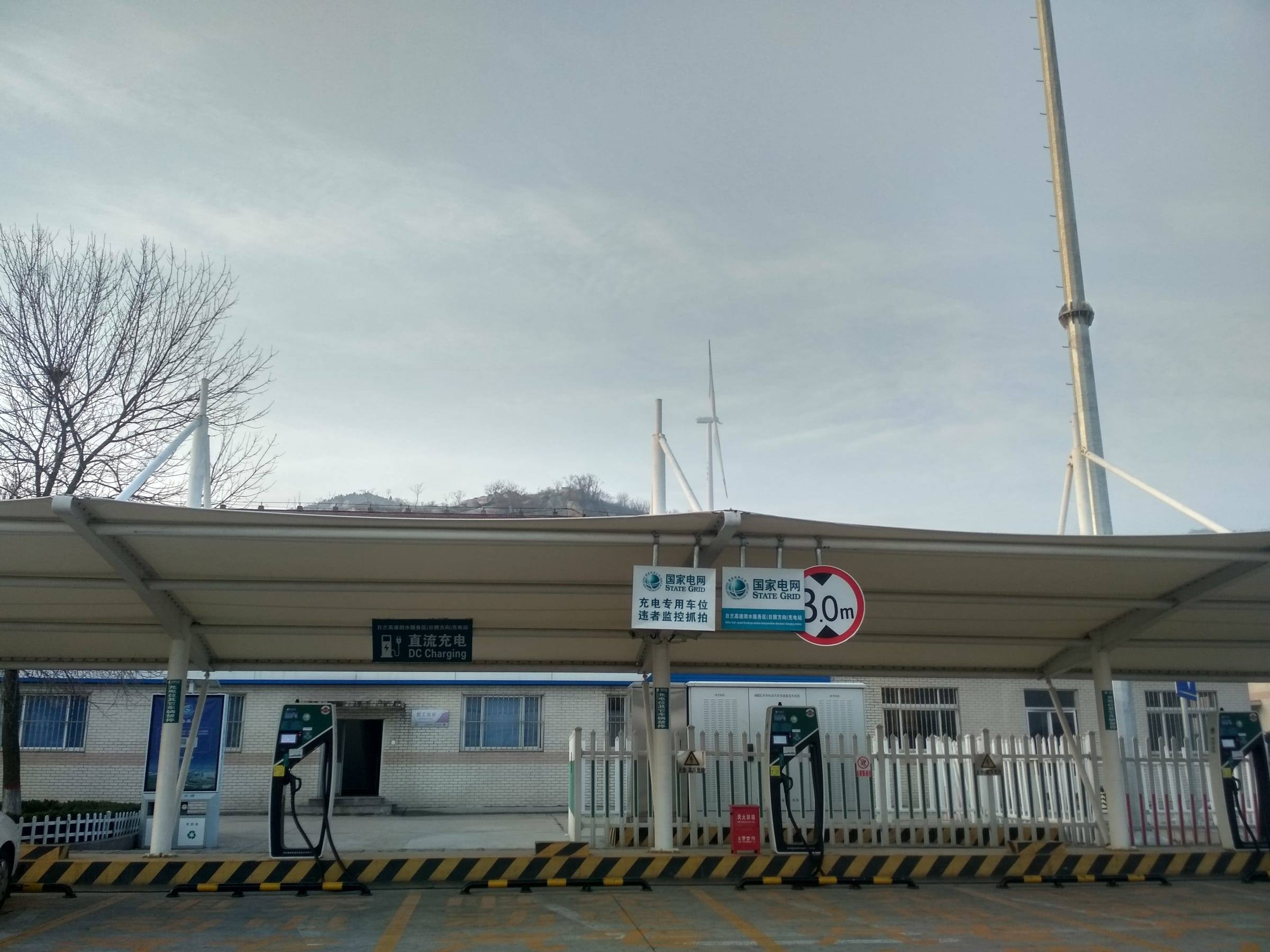

What does China's record plug-in share mean for oil and the grid?
The short answer. Plug-in cars took 67.0% of China's passenger-car retail market in September 2026, a record, mainly because petrol-car sales collapsed under high fuel prices. That is already pulling down Chinese road-fuel demand, while charging used about 1.7% of national electricity in August: growing quickly, but not yet a grid-scale strain.
Three things the September numbers show.
- The record share came from shrinking petrol sales, not from more plug-in sales: plug-in retail volume fell 16.7% year on year.
- Check which statistic is quoted: CPCA retail share (67.0%) and CAAM total-sales share (61.6%) measure different things.
- Charging is one of the fastest-growing electricity uses in China, up about 51% a year, but from a base under 2% of national demand.
What the September figures say
The China Passenger Car Association (CPCA) counted 1.618 million passenger-car retail sales in September 2026, down 28.0% on September 2025. Of those, 1.084 million were new-energy vehicles, meaning battery-electric cars and plug-in or range-extender hybrids. That put the plug-in share of retail sales at 67.0%, the highest yet recorded.1,2
The headline hides a falling market. Plug-in retail volume was 16.7% lower than a year earlier. Conventional fuel-car retail fell 43% to about 530,000, and pure petrol cars dropped 49%, while ordinary self-charging hybrids rose 25%. The association attributes the fuel-car slump to high oil prices hitting every segment, and the weakness at the cheapest end of the electric market to less favourable subsidies.1
Much of China's output is now leaving the country. CPCA counted 558,000 plug-in passenger-car exports in September, up 163.5%, and plug-ins made up 60.8% of passenger-car exports. That is why plug-in wholesale volume rose 11.3% to 1.666 million even as domestic retail fell.1,2
Why two official shares do not match
The China Association of Automobile Manufacturers (CAAM) published a different headline on 12 October: 1.823 million plug-in vehicles sold in September, up 13.6%, or 61.6% of all new vehicle sales. CAAM counts factory sales of all vehicle types, including commercial vehicles and exports. CPCA's 67.0% is a domestic retail figure for passenger cars only.4,1
There is a third number in circulation. CPCA's preliminary weekly tally for 1 to 30 September put plug-in retail at 1.141 million and the share at 67.1%. The monthly report a few days later revised the volume to 1.084 million. Readers should treat weekly figures as early estimates and quote the monthly report.3,1
Across the first nine months of 2026, CAAM counts 12.472 million plug-in vehicles sold, 53.6% of the total. For the year so far, China has crossed the halfway mark on a sales-weighted basis, not only in individual months.4
The oil side: demand is already falling
The context is an oil shock. The International Energy Agency's October Oil Market Report, published on 14 October, forecasts world oil demand to fall by 2.6 million barrels a day in 2026, to 102.4 mb/d. North Sea Dated crude averaged $116.89 a barrel in September. The agency expects only a partial recovery in 2027, leaving demand about 620,000 barrels a day below 2025.5
China's electric fleet is part of that story. E&E News reported in August that the IEA's oil market report estimated electric vehicles displaced about 1.5 mb/d of oil in China in the second quarter, close to double what had been expected. The October report's public summary does not give a new China electric-vehicle figure, so that estimate has not been updated here.6,5
Analysts at Kpler estimate technology-driven displacement of Chinese road fuel at about 1.3 mb/d across 2026, with electric cars accounting for around 640,000 barrels a day of petrol. Kpler puts the plug-in share of China's passenger-car fleet at about 15% at the end of 2025, approaching 20% by the end of 2026. That gap between sales share and fleet share matters. Even at 67% of sales, most cars on Chinese roads still burn petrol.7
The grid side: fast growth from a small base
China's National Energy Administration reports electricity use by the charging and battery-swap services sector. In August 2026 it reached 17.2 billion kWh, up 51.2% year on year. From January to August it totalled 114.7 billion kWh, up 55.1%.8
Total electricity consumption in August was 1,033.2 billion kWh, up 1.7%, and peak load set a record of 1.56 billion kW. On those figures, charging services used about 1.7% of China's electricity in August. That makes charging one of the strongest growth lines in the statistics, alongside data services, but a long way from the main driver of national demand or of the summer peak.8
This category tracks commercial charging and swapping services. Charjin's reading is that it probably does not capture all charging at home, so total vehicle electricity use is likely higher. The administration's September figures had not been published when this article was checked.8
Charjin's check: do the electricity and oil numbers agree?
A rough cross-check shows the two sides of the story are consistent. Assume every kWh of August's 17.2 billion went into a car using about 16 kWh per 100 km, the figure BYD quotes for the Atto 3 in Europe. That would cover about 107.5 billion km in the month.8,10
Covering the same distance in a petrol car using 7 litres per 100 km, a Charjin assumption, would need about 7.5 billion litres. That is roughly 47 million barrels, or about 1.5 million barrels a day across August's 31 days. It lands close to the IEA's second-quarter displacement estimate as reported by E&E News.6
This is an order-of-magnitude check, not a forecast. The charging-services figure includes buses and trucks, which use more energy per kilometre and displace diesel rather than petrol, and it leaves out much home charging. The useful conclusion is narrower: a little under 2% of China's electricity is now doing work that would otherwise need well over a million barrels of oil a day.8,7
What to watch next
Policy is tightening. From the start of 2026, plug-in buyers pay a 5% purchase tax instead of none, with the relief capped at 15,000 yuan per vehicle. A 2% consumption tax on lithium-ion batteries started on 1 September 2026 and is due to rise to 4% in September 2027.9
If oil prices ease, some of September's swing away from petrol cars could reverse, because the record share rests on a petrol-car collapse more than on plug-in growth. The IEA itself calls the supply recovery fragile. Readers should watch whether plug-in retail volume, not only share, returns to growth in the fourth quarter.1,5
For the grid, the signal to watch is the administration's monthly charging line against the national peak. Growth of 50% a year compounds quickly. If it were sustained, charging volume would be about seven times larger within five years, which is when charging timing and local network capacity start to matter more than national totals.8
Common questions
Did more electric cars sell in China in September 2026 than a year earlier?
Not at retail. CPCA counted 1.084 million plug-in retail sales, 16.7% fewer than in September 2025. The share hit a record because petrol-car sales fell much faster. Wholesale and export volumes did rise.
Why do CPCA and CAAM give different plug-in shares?
CPCA's 67.0% covers domestic retail sales of passenger cars. CAAM's 61.6% covers factory sales of all vehicles, including commercial vehicles and exports. Both are official industry figures but they measure different things.
Is EV charging overloading China's grid?
Not at national level on current data. Charging and battery-swap services used about 1.7% of China's electricity in August 2026, although that use is growing by about half every year. Local network limits are a separate question that national statistics do not answer.
Evidence register
The material behind the conclusion. Bracketed numbers in the text point here.
- 01
data accessed 18 October 2026
乘联会:9月全国乘用车市场零售161.8万辆 新能源渗透率67%
Phoenix Auto (ifeng), reporting CPCA data. CPCA September 2026 monthly retail, wholesale, export and powertrain figures and the association's explanations.
- 02
data accessed 18 October 2026
CPCA September 2026 passenger car market summary
MarkLines. Independent summary confirming 1.618 million retail, 1.084 million plug-in retail and 67% penetration.
- 03
data accessed 18 October 2026
乘联分会:9月1-30日全国乘用车新能源市场零售114.1万辆
Eastmoney (Cailian Press), reporting CPCA data. CPCA's preliminary weekly tally for 1 to 30 September 2026, later revised in the monthly report.
- 04
data accessed 18 October 2026
Xinhua (news.cn), reporting CAAM data. CAAM September and January to September 2026 production, sales, share and export figures.
- 05
primary accessed 18 October 2026
Oil Market Report - October 2026
International Energy Agency. IEA forecasts for 2026 and 2027 world oil demand and September 2026 crude prices.
- 06
reference accessed 18 October 2026
EVs drive down China's oil demand as Iran war slogs on
E&E News. Reports the IEA estimate that EVs displaced about 1.5 mb/d of oil in China in the second quarter of 2026.
- 07
research accessed 18 October 2026
Kpler. Kpler estimates of road-fuel displacement, petrol displaced by EVs and plug-in fleet share.
- 08
data accessed 18 October 2026
Guangming Online (CCTV News), reporting National Energy Administration data. National Energy Administration figures for August 2026 total consumption, peak load and charging-services electricity use.
- 09
reference accessed 18 October 2026
China further reduces tax incentives for EVs
electrive. Purchase-tax and battery consumption-tax changes for 2026 and 2027.
- 10
manufacturer accessed 18 October 2026
BYD Europe. Source of the about 16 kWh/100 km consumption figure used in the worked example (Charjin car file).
No corrections recorded. Last checked 18 October 2026.