AnalysisElectric cars
Hyundai Ioniq 5: what independent tests say about range, charging, safety and recalls
Independent tests broadly back up Hyundai's charging claims for the Ioniq 5 and put real-world efficiency about 16–17% above the official WLTP figure. Safety is five stars, but the rating dates from 2021, and the US recall list now includes three high-voltage battery campaigns.
By Charjin Editorial Desk5 minutes11 sources
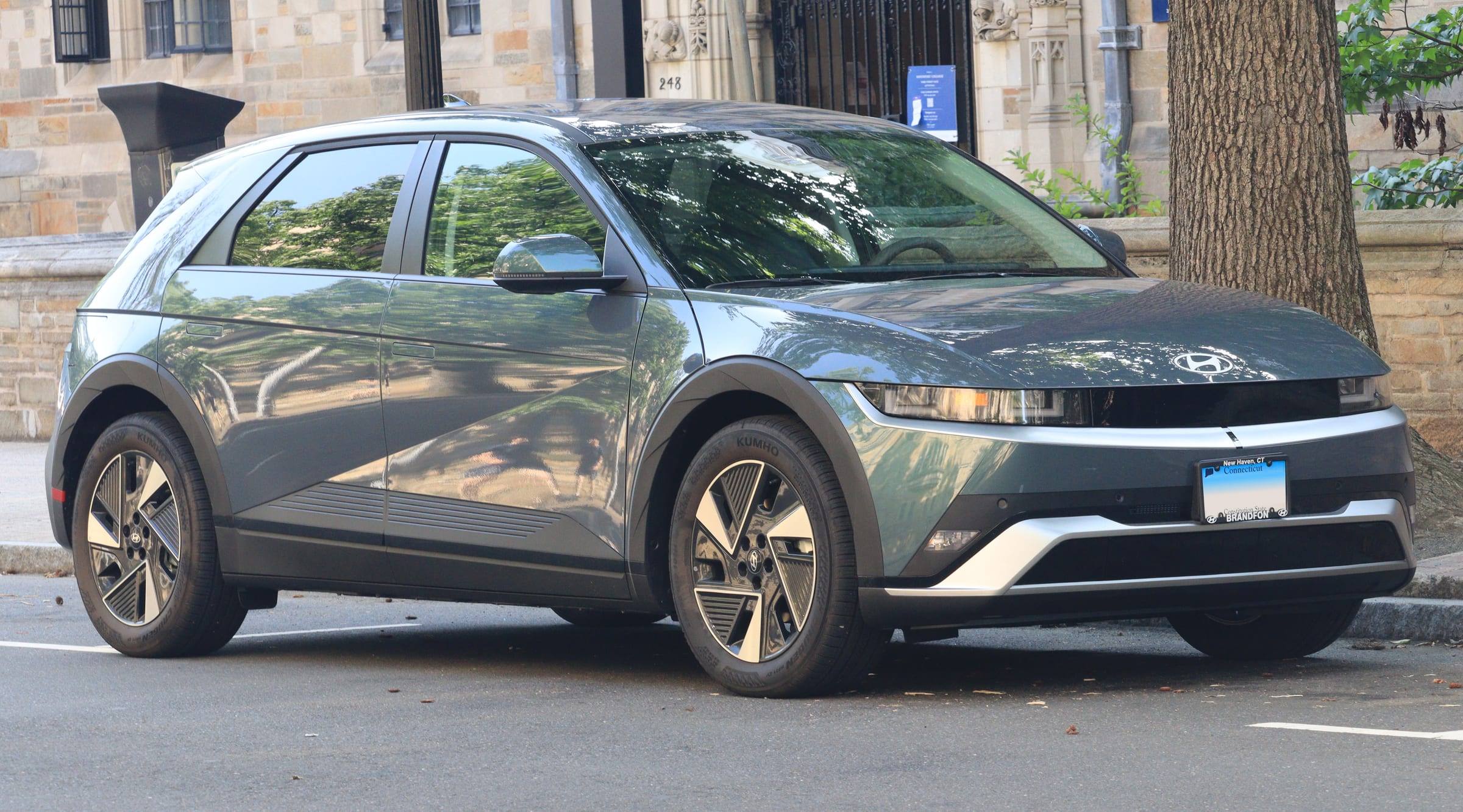

Does the Hyundai Ioniq 5 live up to its official figures in independent tests?
The short answer. On charging, yes. Two independent tests measured peaks within about 2% of the 260 kW claim and a 10–80% time within two minutes of the 18-minute claim. On range, plan on roughly 490–500 km for the 84 kWh rear-wheel-drive car in mild weather rather than the 570 km WLTP figure, and check the recall status of any car you are offered.
What the independent evidence shows
- ADAC measured 18.7 kWh/100 km for the 84 kWh RWD, against 16.0 kWh/100 km on WLTP; the EPA figure for the US RWD works out at about 18.6.
- In NAF's January 2025 winter test, run between −6°C and +8°C, an AWD Ioniq 5 covered 440 km against its 546 km WLTP rating, exactly the field's 19.4% average shortfall.
- The Euro NCAP five-star rating dates from 2021. NHTSA lists 15 US recall campaigns for model years 2022–2026, including the ICCU charging-unit campaign and three involving the high-voltage battery.
Safety: five stars from 2021, with weak pedestrian protection
Euro NCAP gave the Ioniq 5 five stars in a rating published on 27 October 2021. The test car was a left-hand-drive, rear-wheel-drive long-range version with a 160 kW motor. It scored 88% for adult occupants, 86% for child occupants, 63% for vulnerable road users and 88% for safety assist.1
Euro NCAP reviewed the rating after the facelift, on 13 June 2024, and kept the 2021 result. The updated car therefore carries a score earned under the test protocols of 2021. Euro NCAP labels every rating with its year, and buyers comparing the Ioniq 5 with a car rated in 2025 or 2026 should keep that label in view.1
Pedestrian protection is the weak area. The car scored no points for a pedestrian's pelvis, and the base of the windscreen and the stiff windscreen pillars performed poorly. Automatic emergency braking was rated poor when reversing towards a pedestrian and when an adult crosses into the path of a turning car. On the positive side, the centre airbag between the front seats worked well in the side-impact test, and whiplash protection was rated good front and rear.1
Efficiency and range against the official figures
ADAC published its test of the updated car on 20 August 2025, using an 84 kWh, 168 kW rear-wheel-drive Uniq. Its Ecotest measured 18.7 kWh/100 km including charging losses. The WLTP figures are 16.0 kWh/100 km and 570 km. ADAC estimated the real range at about 500 km in favourable conditions, with no snow or frost.3
The US figures point the same way on a different test cycle. The EPA rates the 2025 Ioniq 5 RWD at 318 miles (about 512 km) and 30 kWh per 100 miles, which is about 18.6 kWh/100 km. Wheel size matters. The AWD car is rated at 290 miles on 19-inch wheels but 269 miles on 20-inch wheels, and the XRT at 259 miles.4
The earlier 58 kWh car went through Green NCAP's laboratory and road tests in 2022. Green NCAP measured 58.8 kWh of battery capacity and estimated about 380 km on typical trips with moderate air conditioning. In its −7°C laboratory test, consumption rose by 85%. That figure comes from the older, smaller-battery car, so use it as a sign of direction, not as a forecast for a new one.2
Winter: what the Norwegian test measured
Norway's motoring organisation NAF and the magazine Motor ran their El Prix winter test in mid-January 2025. Temperatures ranged from −6°C to +8°C, with rain and slippery roads. Each car drove until it could no longer hold the speed limit, and NAF recalculated distances from GPS stop positions because trip computers were not accurate enough.6,7
NAF's Ioniq 5 was a 2024 long-range AWD Premium with a WLTP rating of 546 km. It covered 440 km, 19.4% short of WLTP, at 18.7 kWh/100 km. The average shortfall across the field was also 19.4%, so the Hyundai finished exactly at the average. The best car, a Polestar 3, came within 4.1% of its rating.5,6
By Norwegian standards that test was mild. In NAF's January 2026 test, with temperatures down to −32°C, cars lost 38% of their WLTP range on average. The Ioniq 5 did not take part, so there is no deep-cold measurement for the updated car.7
Charging: the claims hold up
Hyundai claims a 10–80% charge in 18 minutes and a peak of 260 kW. In the NAF winter 2025 charging test, the AWD car took 19 minutes 49 seconds and peaked at 256 kW, 1.5% below the claim.5
ADAC's test of the RWD car recorded a peak of 255.3 kW and an average above 200 kW between 10% and 80%. In NAF's winter charging test, only two of 24 cars finished the 10–80% charge in less time; times ranged from 16 to 47 minutes. Battery sizes differ, so the times are not a direct ranking, but they show the Ioniq 5 near the front.3,8
Recalls: a long US list, three of them on the battery
NHTSA's database lists 15 US recall campaigns for Ioniq 5 model years 2022 to 2026, one of them replaced by a broader campaign. The best known is 24V-868, filed in November 2024. It covers 2022–2024 cars whose Integrated Charging Control Unit (ICCU) can be damaged and stop charging the 12-volt battery, which can cause a loss of drive power. Dealers inspect and replace the unit and its fuse and update its software.9,10
Three campaigns involve the high-voltage battery. Two, 25V-482 and 26V-068, cover 2025 and 2026 cars whose bus bars may not be tightened properly, which can cause a short circuit. The newest, 26V-432 from July 2026, covers 2023–2024 cars whose cells may contain misaligned electrodes that can lead to a fire. Owners are told to park outside and limit charging to 80% until the battery assembly is replaced.9,10
Other campaigns cover a driveshaft on 2023 cars, parking-mechanism software on 2022 cars, rear suspension fasteners and seat-belt retractors on 2025 cars, and braking software on the Ioniq 5 N. These are US campaigns tied to US vehicle identification numbers. A buyer in the UK or EU should check the exact car through the national recall service and ask the dealer for proof that open recalls have been done.9,10
What the evidence adds up to
Side by side, the measurements tell a consistent story. ADAC's 18.7 kWh/100 km and the EPA's roughly 18.6 kWh/100 km are both about 16–17% above the 16.0 kWh/100 km WLTP figure for the RWD. NAF's AWD car used 11% more than its own 16.8 kWh/100 km rating in a wet Norwegian January.3,4,6
Charjin's worked example: dividing the 570 km WLTP range by that 16–17% gap gives about 490 km, close to ADAC's 500 km estimate. On a long trip, where most drivers use the 10–80% window, that becomes about 340–350 km between charging stops in mild weather. Each stop should take about 20 minutes on a charger that can deliver the car's full power. Expect less in hard frost, where NAF measured average losses of 38% across other cars.3,5,7
This review does not include owner reliability survey data. It also has no deep-cold result for the updated car, and the safety rating predates the facelift. Before buying, check the recall record of the exact car, the battery size, and the wheel size, which cost the AWD car 21 miles of EPA range on 20-inch rather than 19-inch wheels. Hyundai's own overview of the updated car gives no figures to check these against.4,9,11
Common questions
How far does a Hyundai Ioniq 5 really go on a charge?
For the 84 kWh rear-wheel-drive car, ADAC estimated about 500 km in favourable conditions against 570 km on WLTP. NAF measured 440 km for a 2024 AWD car in a mild Norwegian winter test, against its 546 km rating.
Is the Ioniq 5's Euro NCAP rating still valid after the facelift?
Euro NCAP reviewed it on 13 June 2024 and kept the five-star 2021 rating for the updated car. It was earned under 2021 protocols, and pedestrian protection was its weakest area.
Which Ioniq 5 recalls matter most?
In the US, the ICCU campaign (24V-868) for 2022–2024 cars and the battery campaigns 25V-482, 26V-068 and 26V-432. Check the exact vehicle by VIN or registration, because campaigns differ by market.
Evidence register
The material behind the conclusion. Bracketed numbers in the text point here.
- 01
primary accessed 18 October 2026
Hyundai IONIQ 5 2021 safety rating
Euro NCAP. Five-star rating, scores, tested variant, 2024 facelift review and test weaknesses.
- 02
data accessed 18 October 2026
Hyundai IONIQ 5 - Green NCAP 2022 Results - 5 stars
Green NCAP / Euro NCAP. Measured battery capacity, real-world range estimate and -7°C consumption rise for the 58 kWh car.
- 03
data accessed 18 October 2026
Test: So sticht der Hyundai Ioniq 5 die Konkurrenz aus
ADAC. ADAC test of the 84 kWh RWD: Ecotest consumption, range estimate, WLTP figures and charging peak.
- 04
primary accessed 18 October 2026
2025 Hyundai Ioniq 5 fuel economy and range
US EPA / Department of Energy, fueleconomy.gov. EPA range and kWh per 100 miles for each 2025 Ioniq 5 version.
- 05
data accessed 18 October 2026
Rekkeviddetest av Hyundai IONIQ 5
NAF. NAF test history, WLTP figure of the test car and winter 2025 charging results against the manufacturer claim.
- 06
data accessed 18 October 2026
El Prix vinter 2025: rekkevidde
NAF. Winter 2025 method, conditions, per-car measured range and consumption, and the field average.
- 07
data accessed 18 October 2026
El Prix vinter 2026: rekkeviddetest
NAF. January 2026 test conditions down to -32°C, the 38% average loss, and the 2025 temperature range.
- 08
data accessed 18 October 2026
NAF. Measured 10–80% charging times for the 24 cars in the winter 2025 charging test.
- 09
primary accessed 18 October 2026
Recalls by vehicle: Hyundai Ioniq 5, model year 2023
US National Highway Traffic Safety Administration. NHTSA recall records including the ICCU campaign 24V-868 and battery campaign 26V-432.
- 10
primary accessed 18 October 2026
Recalls by vehicle: Hyundai Ioniq 5, model year 2025
US National Highway Traffic Safety Administration. NHTSA recall records for 2025 cars, including bus-bar, suspension, seat-belt and Ioniq 5 N braking campaigns.
- 11
manufacturer accessed 18 October 2026
Hyundai Motor Company. Hyundai's overview of the updated car; it lists features but no range or charging figures, the source cited in Charjin's car file.
No corrections recorded. Last checked 18 October 2026.