AnalysisCharging and infrastructure
Charging at home without a driveway: what England's new pavement-channel rules change
From 21 October 2026, households in England that park on the street will no longer need planning permission for an approved cable channel across the pavement and a charger on the front wall. The council still has to say yes, and the reward is large: off-peak home charging can cost a tenth of public rapid charging.
By Charjin Editorial Desk5 minutes14 sources
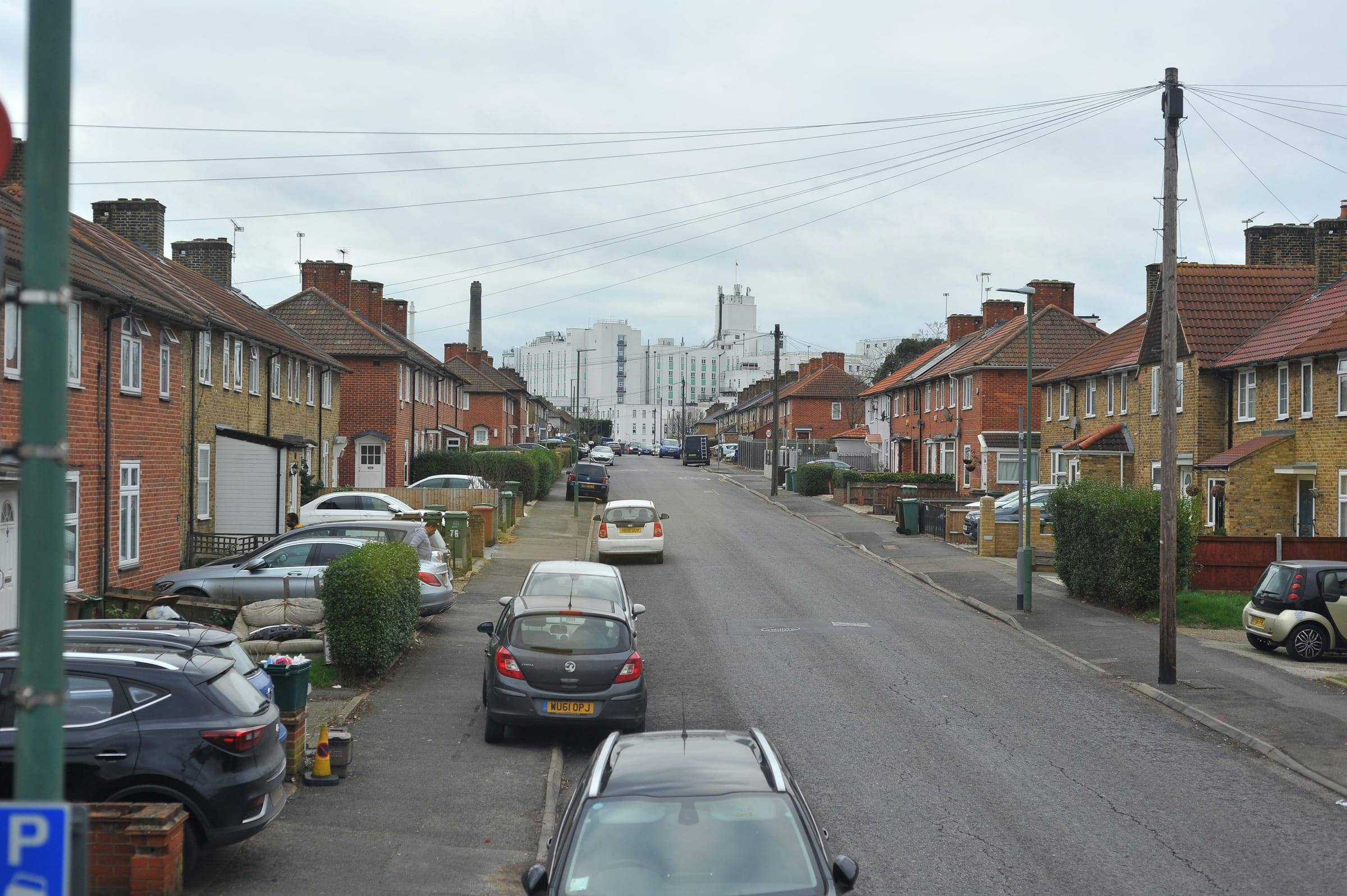
I park on the street outside my house. Can I now charge at home?
The short answer. Possibly. From 21 October 2026 the planning step disappears in England for a council-authorised pavement channel and a wall charger, outside conservation areas and listed properties. You still need your highway authority's consent, a space near your door, and an installer, and a grant of up to £500 can help with the charger.
Four things to check before you plan a pavement channel.
- Ask your council whether it authorises cross-pavement channels and which suppliers or ownership model it uses.
- Check whether your home is in a conservation area or is a listed building; the new rights do not apply there.
- Make sure a wall charger can sit no higher than 1.6 m, stick out no more than 0.2 m and leave 1.5 m of footway.
- Compare tariffs: in our example, smart off-peak home charging costs about £1.20 per 100 km against about £12.48 at a public rapid charger.
What changes on 21 October
The Town and Country Planning (General Permitted Development) (England) (Amendment) (No. 2) Order 2026 was made on 25 September and comes into force on 21 October 2026. It adds a new permitted development right for a cross-pavement solution, defined as a cable channel set into the footway so a charging cable can cross safely from a home to a parked car. The channel must be installed by, for, or with the authorisation of the highway authority.1
The order also widens the existing right for wall-mounted chargers. A charger can now go anywhere within the curtilage of a house or block of flats, not only beside off-street parking. It must sit no higher than 1.6 m, and under the new route there can be only one per property. Where the wall faces the street, it must protrude no more than 0.2 m and leave at least 1.5 m of footway. When the charger is in use, the cable must cross the pavement in an authorised channel.1
The new wall-charger route and the channel right both exclude conservation areas, and the channel right also excludes listed buildings and scheduled monuments. When a channel is no longer needed it must be removed and the pavement put back as it was. The rules follow a Department for Transport consultation that ran from November 2025 to January 2026, with the government response published on 11 September 2026.1,2,6
What the order does not change
Removing planning permission takes away one application, not the council's control. Government guidance for councils, published in December 2024, says placing apparatus across a highway needs the highway authority's consent under section 178 of the Highways Act 1980. Companies that are not statutory undertakers also need a street works licence. Trade reporting of the September announcement confirms that councils keep this oversight.3,6,7
The same guidance is blunt about parking: having a channel outside your door gives you no right to the space. Councils are told to check that a resident can usually park near the home, and to look at pavement width, junctions, buried pipes and tree roots. Liability depends on local agreements; Milton Keynes, for example, requires residents to hold public liability insurance for cable misuse.3
Councils also choose who owns the channel. Under one model the council owns and maintains it and the resident pays an approved contractor; under another a supplier owns and maintains it. The charger itself stays the resident's responsibility and must be installed by a qualified electrician.3
Who could use it
About 8 million households in England, or 32%, have no off-street parking, according to English Housing Survey figures quoted in the government guidance. Roughly half of them, almost 4 million, have adequate on-street parking and could in principle use a pavement channel. EVA England puts the share of UK households without off-street parking at around four in ten.3,6
Demand appears to be real where councils offer schemes. The Royal Borough of Greenwich said in July 2026 that more than 160 residents applied for a trial designed for 50 households, which it planned to expand to 75. The council has not yet reported any completed installations.5
Paying for the kit
The government's chargepoint grant for households with on-street parking provides up to £500 towards installing a charger. To qualify you must own or rent the home, have only on-street parking and be installing a cross-pavement solution such as a charging gully. Some councils add their own help for the channel itself: Greenwich offers up to £1,200 from Office for Zero Emission Vehicles funding.4,5
Charger prices vary. As one reference point, Octopus Energy lists supported smart chargers from £949 including standard installation. Charjin has not found an official national figure for the cost of a pavement channel; the government guidance says costs depend on the site and that installing several at once is likely to be cheaper.3,13
The running-cost gap
The case for home charging got stronger on 1 October. HMRC has applied a temporary zero rate of VAT to qualifying domestic electricity in England, Scotland and Wales until 31 March 2027; Northern Ireland stays at 5%. Public charging still carries 20% VAT, a gap that a parliamentary petition opened in August is trying to close.8,9,10
Under Ofgem's price cap for October to December 2026, the average electricity unit rate for Direct Debit customers is 26.32p per kWh, now without VAT. Intelligent Octopus Go offers 7.6p per kWh for smart charging overnight, if your car or charger is compatible. Zapmap's September 2026 index puts average pay-as-you-go public prices at 54p per kWh for slow and fast chargers and 79p for rapid and ultra-rapid.11,12,13
Charjin's worked example uses the Volkswagen ID.4's official consumption of 15.8 kWh per 100 km from our car file. That gives about £1.20 per 100 km on the smart off-peak rate, £4.16 at the price-cap rate, £8.53 at an average public slow or fast charger and £12.48 at an average rapid charger. Over 10,000 km a year that is roughly £120, £416, £853 and £1,248.11,12,13,14
Those figures leave out standing charges, charging losses and subscriptions or promotions on public networks, and real-world consumption is usually higher than the official figure. The ranking still holds: a driver who can plug in at home on a smart tariff pays roughly a tenth of the rapid-charging price for the same energy.12,14
What to check before you start
Start with your council. Ask whether it authorises cross-pavement channels, which products or suppliers it accepts, who will own the channel and what insurance it expects. Then check the planning status of your home: conservation areas and listed buildings still need permission, and the charger must meet the height, projection and footway limits in the order.1,3
Read the grant conditions before any work starts, and confirm that your car or charger works with the tariff you want before you sign up. Remember that the VAT zero rate is temporary and is due to end on 31 March 2027, so judge the investment on normal tariffs as well.4,8,13
The Charjin view
The order removes a real obstacle, and it does so in the right place: the council keeps control of the pavement while the planning duplicate goes. It does not create a right to charge at home. Whether a household benefits will still depend on its council's appetite, the street layout and whether a parking space is usually free near the door.1,3
The bigger issue is the price gap. With home electricity now free of VAT and public charging still taxed at 20%, drivers without a driveway pay far more per kilometre. Pavement channels will help some of them; the rest still depend on public prices coming down.8,9,12
Common questions
Can I just run a cable over the pavement with a mat?
No. Under the new order the cable must cross the footway in an authorised cross-pavement solution. Government guidance also notes that a resident who leaves cable lying across the pavement may be liable if someone is hurt.
Does this apply in Scotland, Wales or Northern Ireland?
The planning order amends England's permitted development rules. The rest of the UK has its own planning systems, so check with your local council.
Does the VAT cut apply to home EV charging?
The zero rate applies to qualifying domestic electricity in Great Britain from 1 October 2026 to 31 March 2027. HMRC's paper does not mention cars specifically, but a home charger runs on the household supply.
Will I get a reserved parking space?
No. Government guidance says a channel gives no ownership or priority over the parking space outside your home.
Evidence register
The material behind the conclusion. Bracketed numbers in the text point here.
- 01
primary accessed 18 October 2026
legislation.gov.uk. New Class F right for cross-pavement solutions, revised wall-charger limits, exclusions and the 21 October 2026 commencement date.
- 02
primary accessed 18 October 2026
Electric vehicle charging: changes to permitted development rights
GOV.UK. Consultation dates and the government response published on 11 September 2026.
- 03
primary accessed 18 October 2026
Cross-pavement solutions for charging electric vehicles
GOV.UK. Guidance for councils on highway consent, licences, ownership models, liability, parking rights, costs and household numbers.
- 04
primary accessed 18 October 2026
Electric vehicle chargepoint grants
GOV.UK. Up to £500 towards a chargepoint for households with only on-street parking installing a cross-pavement solution.
- 05
primary accessed 18 October 2026
EV cross-pavement charging trial expanded following strong resident demand
Royal Borough of Greenwich. Greenwich trial applications, expansion to 75 households and up to £1,200 of OZEV-funded grant.
- 06
reference accessed 18 October 2026
UK removes major barrier to cross-pavement EV charging
electrive. Reports the DfT decision, continued council oversight under section 178 and EVA England's household estimate.
- 07
reference accessed 18 October 2026
Rule change confirmed for cross pavement EV charging
GreenFleet. Confirms that councils keep oversight through highways permissions after the change.
- 08
primary accessed 18 October 2026
Temporary zero rate of VAT in Great Britain for domestic electricity
HM Revenue & Customs. Zero rate on qualifying domestic electricity from 1 October 2026 to 31 March 2027; Northern Ireland stays at 5%.
- 09
reference accessed 18 October 2026
UK home charging gets cheaper while public charging stays taxed
electrive. Reports that public charging keeps 20% VAT while home electricity moves to zero.
- 10
primary accessed 18 October 2026
Reduce VAT on public EV charging to match the home charging rate
UK Parliament Petitions. Petition opened 17 August 2026 stating public charging carries 20% VAT.
- 11
data accessed 18 October 2026
Energy price cap unit rates and standing charges
Ofgem. Average electricity unit rate of 26.32p per kWh for Direct Debit, 1 October to 31 December 2026.
- 12
data accessed 18 October 2026
Zapmap. September 2026 average pay-as-you-go public prices: 54p per kWh slow and fast, 79p rapid and ultra-rapid.
- 13
manufacturer accessed 18 October 2026
Octopus Energy. Smart-charging off-peak rate of 7.6p per kWh, compatibility requirements and charger prices from £949 installed.
- 14
manufacturer accessed 18 October 2026
Volkswagen ID.4 official overview (Charjin car file)
Volkswagen. Official consumption from 15.8 kWh/100 km used in the worked cost example, as recorded in Charjin's car file on 28 July 2026.
No corrections recorded. Last checked 18 October 2026.