AnalysisHybrids and plug-in hybrids
BYD Seal U DM-i: what independent tests measured on electric range and fuel use
ADAC's test of the all-wheel-drive Seal U DM-i found 65 km of electric range and 7.7 l/100 km once the battery was empty, both worse than the official figures. The plug-in hybrid only pays off if it is charged often, and its five-star safety rating was carried over from the electric Seal U.
By Charjin Editorial Desk5 minutes7 sources
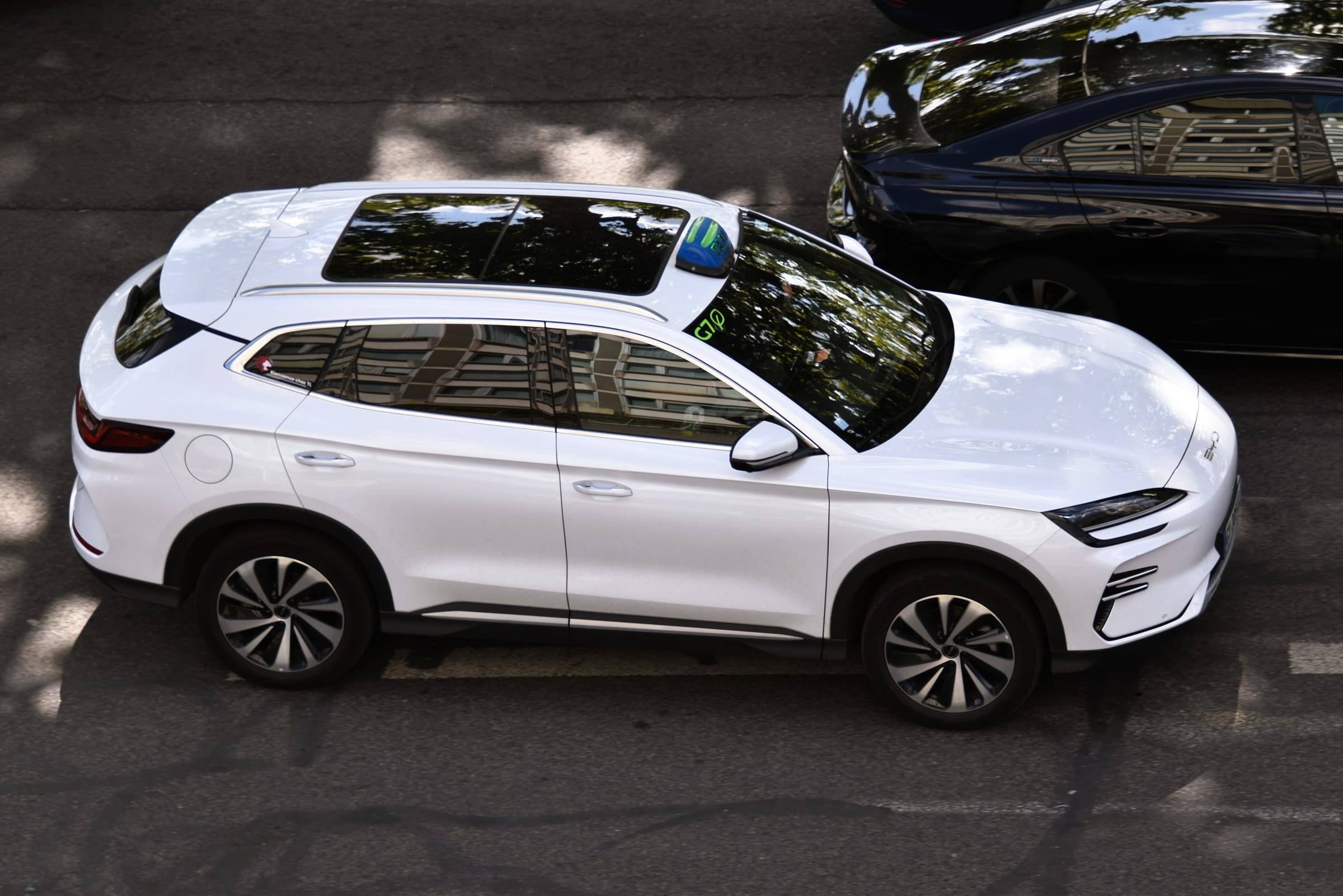

How economical is the BYD Seal U DM-i in independent testing?
The short answer. ADAC measured 65 km of electric range at 27.3 kWh/100 km for the AWD Design, against 70 km and 20.0 kWh/100 km on WLTP. With the battery empty it used 7.7 l/100 km, rising to 10.2 l/100 km on the motorway. Charged daily, it can cover typical commutes on electricity; driven uncharged, it is a thirsty petrol SUV.
What the evidence says
- Electric range held up reasonably well at 65 km against 70 km WLTP, but energy use was 27.3 kWh/100 km against 20.0 kWh/100 km.
- Battery-empty fuel use of 7.7 l/100 km was 12% above the 6.9 l/100 km WLTP figure for this version, and 10.2 l/100 km at motorway speeds.
- The five-star Euro NCAP rating was tested on the electric Seal U in 2023 and extended to the plug-in versions in September 2024.
What ADAC measured on electricity
The German motoring club ADAC tested the Seal U DM-i Design AWD, the 238 kW (324 PS) version with an 18.3 kWh lithium iron phosphate battery. The car was a BYD press car first registered in June 2024, priced at 45,990 euros as tested with a six-year or 150,000 km general warranty. It is no niche model: ADAC notes it was among Germany's ten best-selling plug-in hybrids in 2025, with 8,674 sold.1,2
Starting with a full battery, the car covered 65 km on the electric part of ADAC's Ecotest, a mixed cycle, before the engine started. The WLTP figure for this version is 70 km, or 98 km in the WLTP city cycle. Range therefore held up reasonably well.1,2
Efficiency did not. ADAC measured 27.3 kWh/100 km including charging losses, against a WLTP figure of 20.0 kWh/100 km. ADAC notes that the most frugal rivals manage about 20 kWh/100 km. A full charge from empty took 17.7 kWh from the socket.1
Fuel use once the battery is empty
The Seal U DM-i is a mainly series hybrid. Electric motors on both axles drive the car even with an empty battery, and the 1.5-litre turbocharged petrol engine mostly generates electricity. It connects to the front wheels only at higher speeds.1
It is also a heavy and powerful car. The all-wheel-drive version weighs about 2.1 tonnes, reaches 100 km/h from rest in 5.9 seconds and has a payload of under 400 kg. ADAC rates the performance as very good and the efficiency as weak, which is the trade-off a buyer of this version accepts.1
In hybrid mode with the battery empty, ADAC measured 7.7 l/100 km. That splits into 5.3 l/100 km in town, 7.3 l/100 km on country roads and 10.2 l/100 km on the motorway. The WLTP battery-empty figure for this version is 6.9 l/100 km, so the measured result is about 12% higher. BYD's European page advertises 6.4 l/100 km without naming a version; ADAC's data lists 6.9 l/100 km for this all-wheel-drive one.1,2,3
Over ADAC's combined assessment of the first 100 km, the car used 2.7 litres of petrol and 17.8 kWh of electricity. It earned three of five Ecotest stars. Charging is slow by current standards: the CCS socket accepts up to 18 kW, and ADAC found a DC charge still takes more than an hour. BYD quotes 35 minutes from 30% to 80%.1
How it compares with plug-in hybrids in general
Official plug-in hybrid figures assume a lot of electric driving. European Commission real-world data for cars registered in 2021 found real-world CO2 emissions were on average 3.5 times higher than the laboratory values. For 2022 registrations the gap was 314%. The gap for petrol cars was about 21%.4
A Fraunhofer ISI study of nearly one million plug-in hybrids from 2021 to 2023 put real-world use at about 6 l/100 km against about 1.5 l/100 km on WLTP. Compact and mid-market models ran on electricity 35–43% of the time. The Toyota Prius Plug-in was at 42.8%.5
Those are fleet averages, and none of them breaks out the Seal U DM-i. They show the main risk for any plug-in hybrid, including this one: the official figure is reached only by drivers who charge almost every day.4,5
Safety: five stars, carried over from the electric car
Euro NCAP rated the BYD Seal U at five stars on 6 December 2023, testing the electric Design version. It scored 90% for adult occupants, 86% for child occupants, 83% for vulnerable road users and 77% for safety assist. On 11 September 2024 Euro NCAP extended the rating to the plug-in hybrid versions, including the Boost, Design 4×4 and Comfort.6,7
The result page does not say whether extra crash tests were run on the plug-in hybrid. It records weak spots: poor head protection at the base of the windscreen and the stiff windscreen pillars, no score for car-to-car emergency braking in head-on scenarios, marginal rear-seat whiplash protection, a weak driver-monitoring score, and a child presence detection system that was not rewarded. In ADAC's own scenarios, the emergency braking system recognised motorcyclists, pedestrians and cyclists largely reliably.6,1
Worked example: one week, two ways
Take a week of five 40 km commutes and one 50 km weekend trip, 250 km in all. Each day fits inside ADAC's 65 km electric range. Charged every night, the car would use about 68 kWh of electricity at ADAC's 27.3 kWh/100 km and almost no petrol, assuming conditions similar to ADAC's mixed cycle.1
Never charged, the same week at ADAC's 7.7 l/100 km would use about 19 litres of petrol. A 400 km motorway trip shows the other extreme. Even allowing the full 65 km on electricity, which ADAC measured on a mixed cycle rather than a motorway, the remaining 335 km at 10.2 l/100 km needs about 34 litres. The WLTP battery-empty figure would suggest about 23 litres.1,2
The 60-litre tank gives about 775 km on an empty battery at ADAC's average. Charjin's car file lists the Seal U DM-i at 70–125 km of electric range depending on version, with an 18.3 or 26.6 kWh battery. Buyers with longer daily journeys may want the larger battery, though Charjin found no independent test of it.1,3
What is still unknown
This review rests on one detailed independent test of one version. There is no measured winter electric range for the DM-i, no independent test of the 26.6 kWh battery, and the Commission's published real-world summary does not break out individual models. A single press car with 17,517 km on the clock says nothing about long-term reliability. Charjin did not search recall databases for this model, so check the exact car's VIN or registration with the national recall service before buying.1,4
Common questions
How far does the BYD Seal U DM-i go on electricity?
ADAC measured 65 km on its mixed Ecotest cycle for the AWD Design, against 70 km on WLTP. Other versions are rated at up to 125 km, but Charjin found no independent test of them.
What fuel economy does the Seal U DM-i get with an empty battery?
ADAC measured 7.7 l/100 km on average: 5.3 in town, 7.3 on country roads and 10.2 on the motorway. The WLTP battery-empty figure for that version is 6.9 l/100 km.
Does the plug-in hybrid have its own Euro NCAP rating?
No. The five-star rating comes from a 2023 test of the electric Seal U and was extended to the plug-in versions in September 2024.
Evidence register
The material behind the conclusion. Bracketed numbers in the text point here.
- 01
data accessed 18 October 2026
ADAC Autotest: BYD Seal U DM-i Design AWD
ADAC. Measured electric range, electricity and fuel consumption, Ecotest result, charging observations and test-car details.
- 02
data accessed 18 October 2026
BYD Seal U DM-i Design AWD: Allgemeine Daten
ADAC. WLTP electric range, city range, consumption and battery-empty fuel figure for the tested version.
- 03
manufacturer accessed 18 October 2026
BYD Europe. Manufacturer claims of 6.4 l/100 km, 70 km-plus electric range and up to 1,080 km combined range; the source in Charjin's car file.
- 04
primary accessed 18 October 2026
Real-world CO2 emissions and fuel consumption of cars and vans collected in 2022
European Commission, DG Climate Action. Real-world versus type-approval gaps for plug-in hybrids and petrol cars registered in 2021 and 2022.
- 05
reference accessed 18 October 2026
Plug-in-Hybrid: Verbrauch deutlich über Messwerten
ÖAMTC auto touring. Report on the Fraunhofer ISI study of nearly one million plug-in hybrids, including electric driving shares.
- 06
primary accessed 18 October 2026
Euro NCAP. Five-star scores, tested variant, September 2024 variant extension and recorded weaknesses.
- 07
primary accessed 18 October 2026
Euro NCAP safety results release, 11 September 2024
Euro NCAP. September 2024 release extending the five-star result to the SEAL-U plug-in hybrid variant.
No corrections recorded. Last checked 18 October 2026.