AnalysisBatteries and supply chain
COMAC's 19-seat electric CE-25A flies with a crew for the first time. What its battery still has to prove before anyone buys a ticket
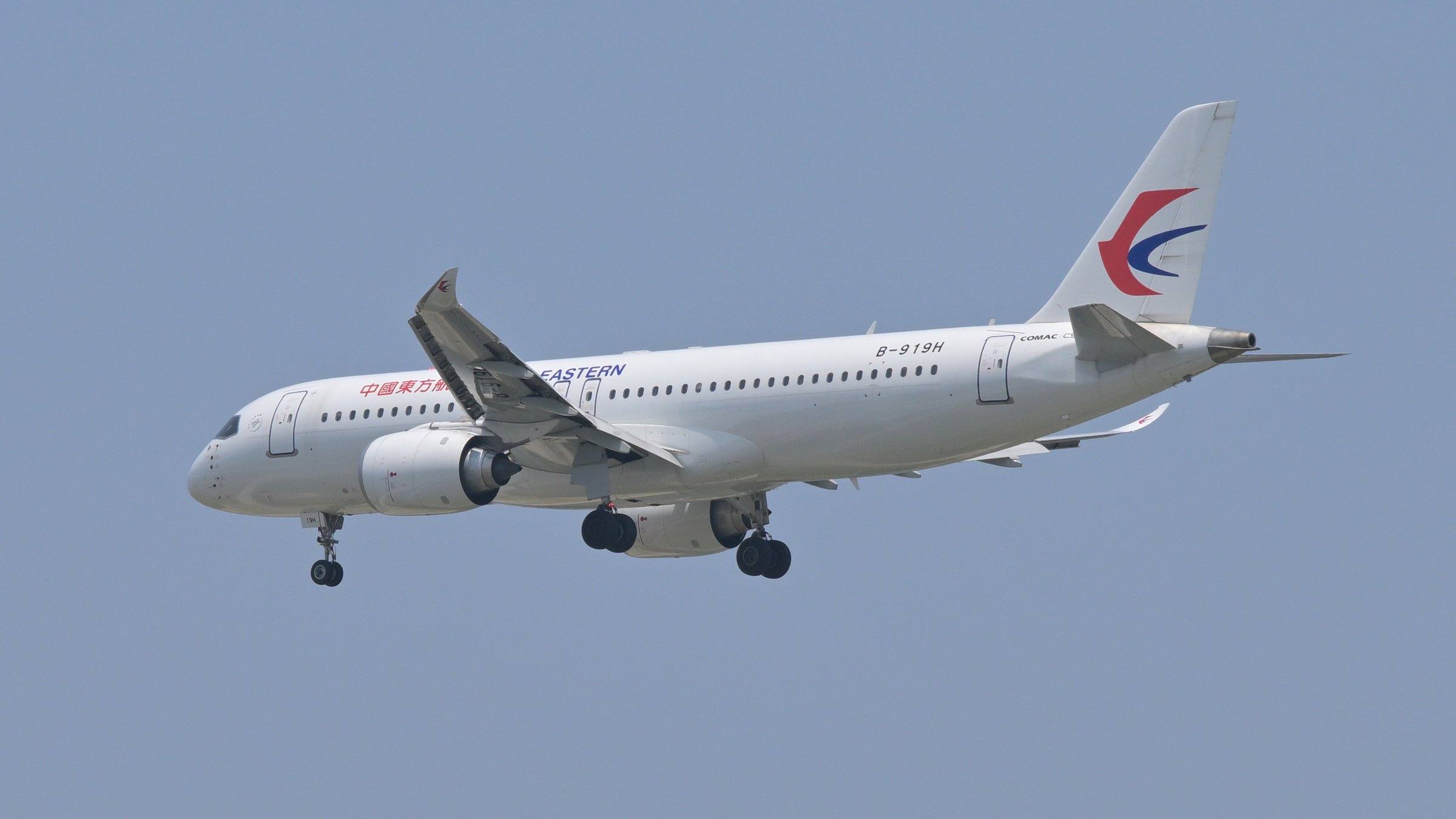
China's first electric commercial aircraft flew with two pilots and an engineer aboard in Binzhou on 14 November, after 19 flights with nobody on board. COMAC claims a 400 km range, but it has published nothing about the CATL-backed battery that decides whether that figure holds.
By Charjin Editorial Desk4 minutes10 sources
Can I fly on China's electric airliner yet, and does its battery deliver the range COMAC claims?
The short answer. No. The CE-25A is a test aircraft: China's aviation regulator has only accepted the application for a type certificate, and COMAC has given no date for passenger service. The 400 km range is COMAC's claim, and neither COMAC nor its battery partner CATL has published the battery's capacity, weight or chemistry.
What the flight does and does not show
- The CE-25A flew with two pilots and a flight-test engineer on 14 November in Binzhou, Shandong, after 19 uncrewed autonomous flights since 2 February.
- COMAC claims 19 seats, a 10-tonne maximum take-off weight, a 300 km/h cruise at 2,400 m and a 400 km range. None of these has been independently measured.
- The crewed flight covered 60.4 km in 16 minutes 38 seconds in the air, about 15% of the claimed range.
- CATL is named as a development partner, but the battery's size, weight and chemistry are unpublished. CATL's 2023 claim of up to 500 Wh/kg was a cell figure for a different product launch.
- The Civil Aviation Administration of China has accepted the type-certificate application. That starts the airworthiness review; it is not an approval.
What happened in Binzhou
COMAC's CE-25A, a 10-tonne electric aircraft built for flights between cities, made its first flight with people on board on Saturday 14 November in Binzhou, Shandong province. Two pilots and a flight-test engineer were aboard, and COMAC said the aircraft worked normally and all performance indicators met expectations.1,2
The aircraft first flew on 2 February 2026 with nobody on board, and it has made 19 uncrewed autonomous validation flights since. State broadcaster CCTV called the new flight the aircraft's first crewed 'intelligent' flight.1,2
COMAC, China's state-owned aircraft maker, developed the CE-25A with battery maker CATL, Shanghai Jiao Tong University and other partners, and calls it its first electric commercial aircraft.1,3,5
What COMAC claims for the CE-25A
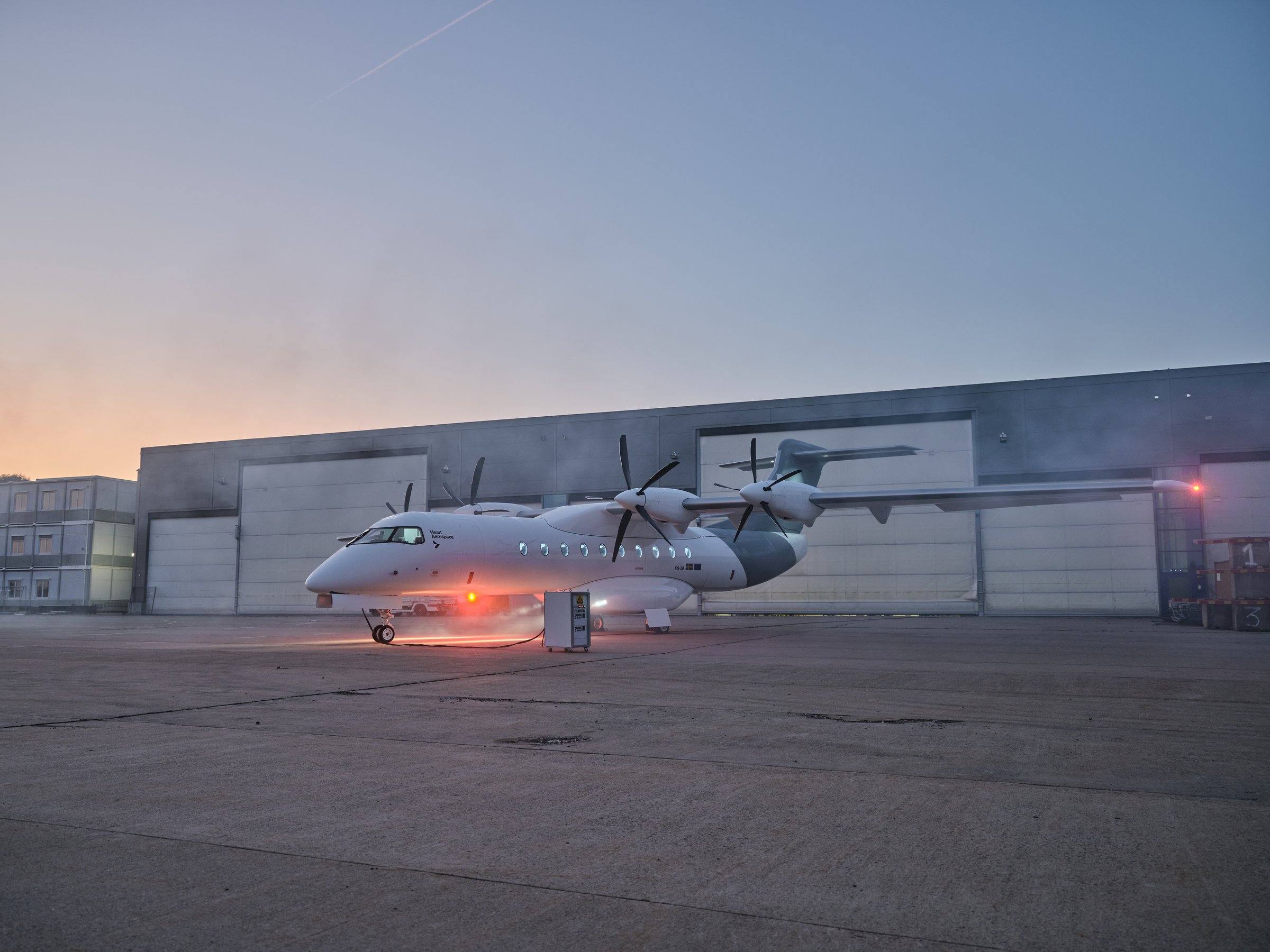
COMAC's figures are 19 passengers, a maximum take-off weight of 10 tonnes, a cruising speed of 300 km/h, a cruising altitude of 2,400 m and a range of 400 km. These are the maker's design figures, published with the flight announcement; no independent test has checked any of them.1,2
The name sets out the ambition. According to CCTV, 'E' stands for electric and '25' signals that the aircraft is being designed to CCAR-25, China's airworthiness rules for transport-category aircraft, the same category as large airliners. The propulsion is a distributed system of electric ducted fans mounted on the wing.2
Photographs of the full-size aircraft first appeared on Chinese social media on 28 October, showing the registration B-0EFH, a T-tail and ten fans above the wings, five on each side. COMAC had not confirmed the aircraft at that point. A CE-25A demonstrator had been shown at the China International Import Expo in 2023, where a placard listed a range of 400 to 500 km.4,5,7
The battery nobody has described
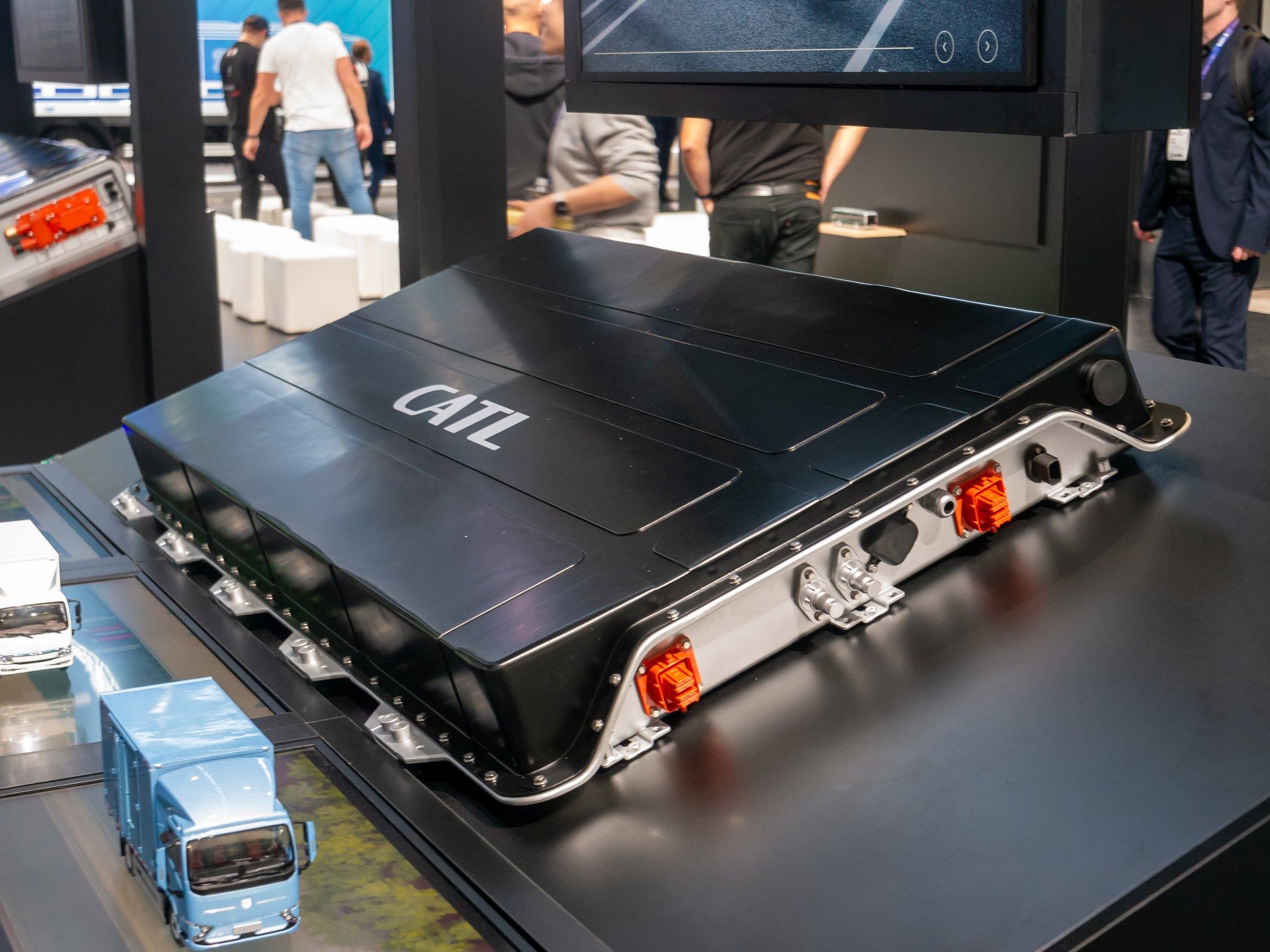
For an electric aircraft, the battery sets the range, the payload and the safety case. Xinhua, CCTV and The Paper all name CATL as a development partner, but none of the official reports gives the battery's capacity, weight, chemistry or energy density. Electrek notes that neither COMAC nor CATL has said which battery the aircraft uses.1,2,3,4
The link between the two companies is long-standing. In April 2023 CATL launched what it called a condensed battery, claiming an energy density of up to 500 Wh/kg, and said it was working with partners on electric passenger aircraft and testing to aviation-grade safety and quality requirements. Electrek reports that COMAC, CATL and Shanghai Jiao Tong University formed a joint venture for electric aircraft that July, with registered capital of CNY 600 million.6,4
Shanghai Jiao Tong University's own account of a November 2023 forum with COMAC Times Aviation, which co-developed the CE-25A's propulsion research, records a CATL cell research manager presenting on high-energy-density batteries for aviation. It gives no figures. The research that won a 2026 first prize from the Chinese Aeronautical Society was for the distributed ducted-fan propulsion system.8,3
What the test-flight numbers show
CCTV gave unusually precise numbers for the crewed flight: 57 minutes 46 seconds for the whole test, of which 16 minutes 38 seconds were in the air, covering 60.4 km. Charjin's arithmetic: that is an average of about 218 km/h in the air, below the 300 km/h cruise COMAC quotes. The airborne time includes take-off, climb and landing, so the average is not a measure of cruising speed.2,1
The distance flown was about 15% of the claimed 400 km range. A full 400 km at the stated cruising speed would take about 80 minutes, roughly five times as long as the airborne part of this flight. COMAC has not said how much charge the battery used, so the flight tells us nothing yet about whether the range figure holds.2,1
For scale, CATL's 2023 claim of up to 500 Wh/kg would mean at most 500 kWh in every tonne of cells. That is a cell-level marketing figure from a product launch, not a published specification for this aircraft, and COMAC has not said how much of the 10-tonne take-off weight is battery.6,1
How it compares with Heart Aerospace's X1
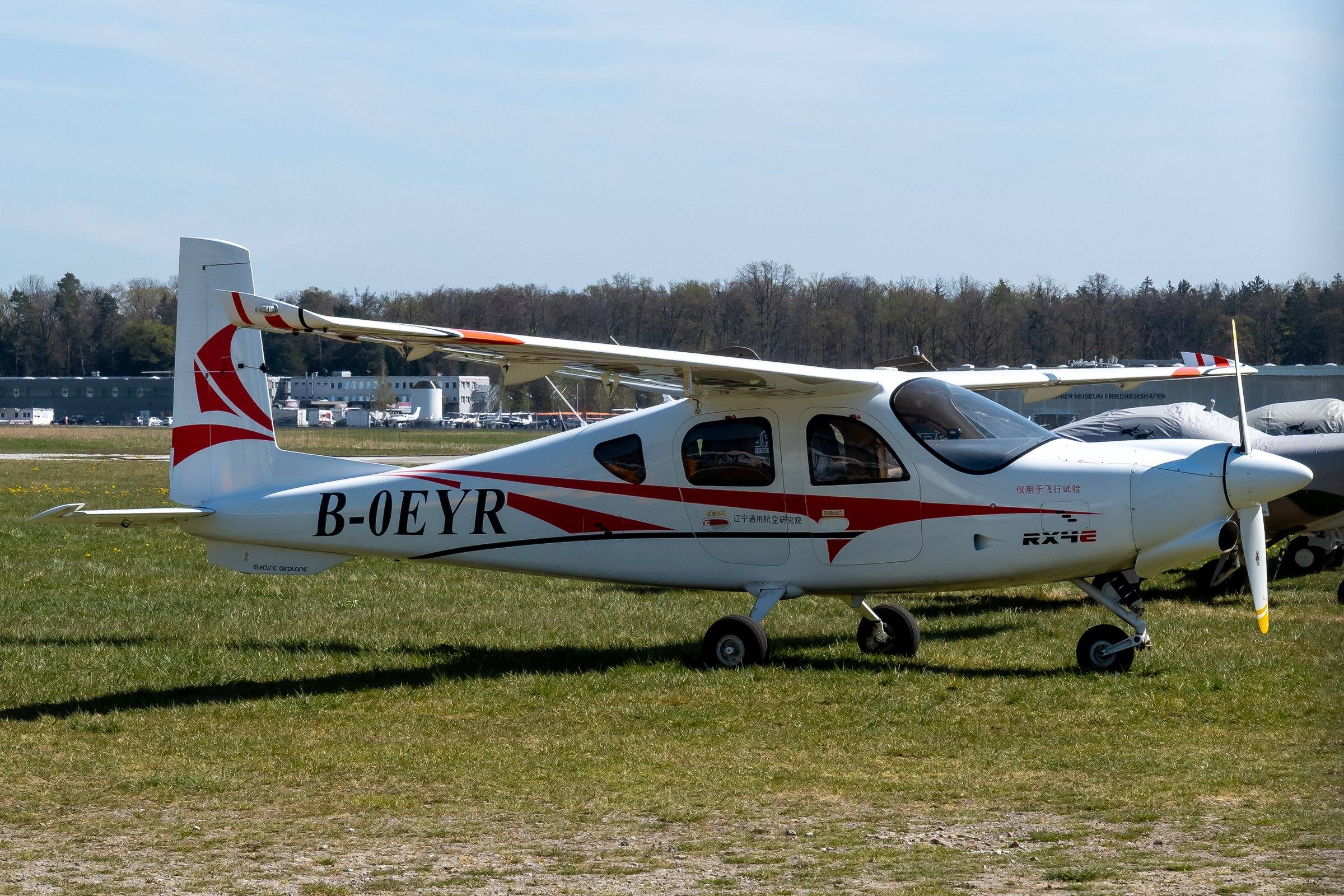
The closest Western project is Heart Aerospace's X1, which made a 27-minute piloted first flight from Plattsburgh, New York, on 12 August 2026. Heart says the X1 weighs more than 25,000 pounds at take-off (about 11.3 tonnes) and calls it the world's largest electric aircraft. The company put the electricity for that flight at about $5.9
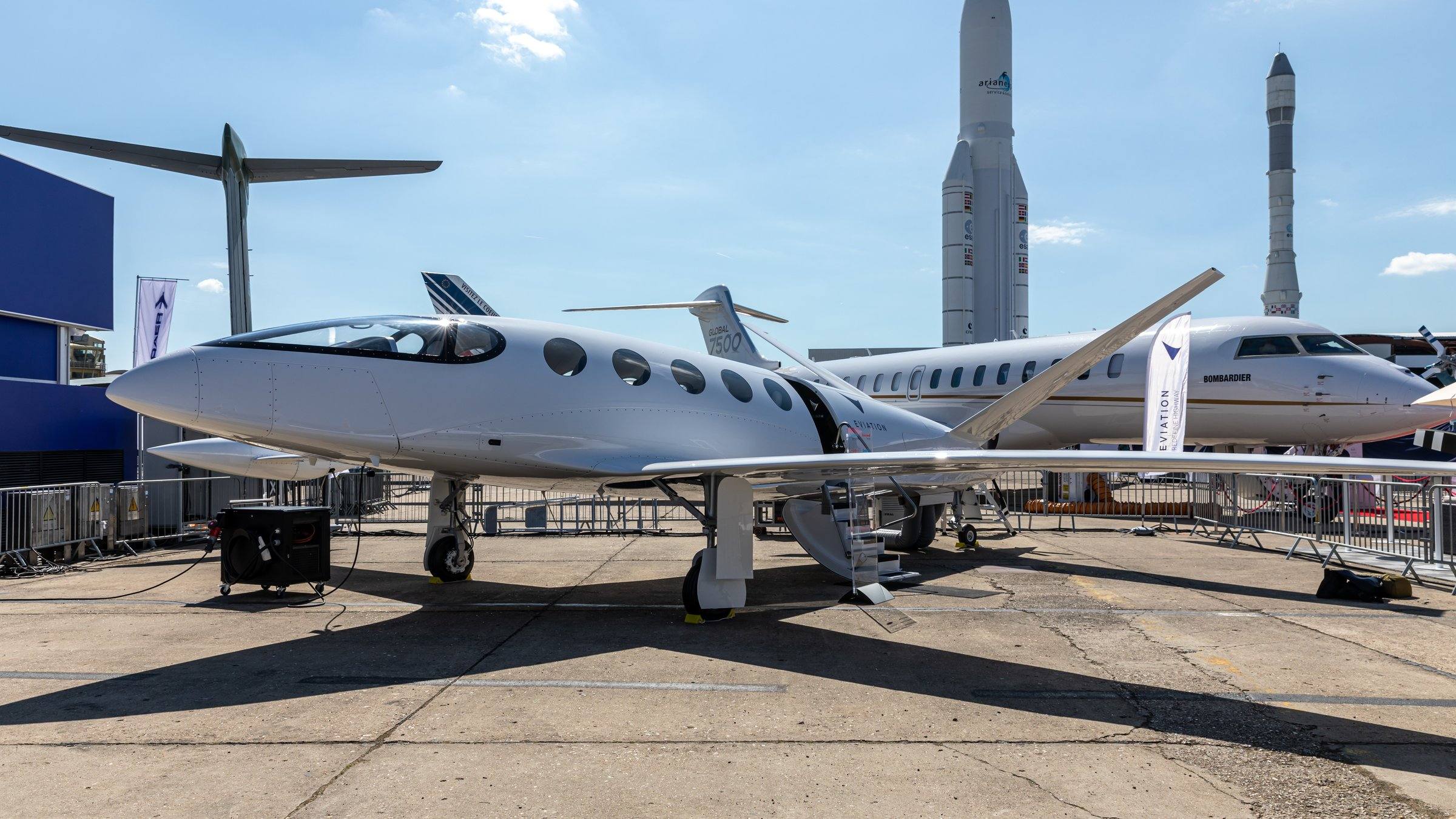
The aircraft are similar in weight, but the plans differ. Heart's production model, the ES-30, is a 30-seat hybrid-electric airliner with flight tests planned for 2028 and service in 2031, with United Airlines, Air Canada and JSX as customers. COMAC is presenting the CE-25A as a fully electric 19-seater and has given no service date. Earlier attempts show how long the road is: Eviation's nine-passenger Alice flew in September 2022, and Electrek reports that the company laid off most of its staff in early 2025.9,4,1
What is still unknown, and what to watch
The Civil Aviation Administration of China has accepted COMAC's application for a type certificate. That opens the airworthiness review; it does not mean the aircraft is approved to carry passengers, and no route, airline or launch date has been announced.1,2
Readers should also note where the details come from. By 15 November, COMAC's own company news page had not posted an item about the flight; the figures above come from COMAC's statement as carried by the state news agency Xinhua and by CCTV. The maker's 2023 range of 400 to 500 km has also narrowed to a single 400 km figure.10,1,2,4
The details that matter most are still missing: battery capacity and weight, the chemistry, how the pack is protected against fire, how fast it can be recharged between flights, and how much range is left after reserves. For readers following CATL's battery work for cars, the aircraft is worth watching because CATL tied its condensed battery to aviation from the start. Until COMAC or CATL publishes figures, treat the 400 km range as a design claim.1,4,6
Common questions
When can passengers fly on the CE-25A?
No date has been given. China's aviation regulator has accepted the application for a type certificate, which starts the certification review, and COMAC has not named a launch customer or route.
Does the CE-25A use CATL's 500 Wh/kg condensed battery?
That is not confirmed. CATL is named as a development partner, and in 2023 it tied its condensed battery to electric passenger aircraft, but neither company has said which battery the CE-25A carries.
How far did the aircraft fly on its first crewed flight?
According to CCTV, it covered 60.4 km in 16 minutes 38 seconds in the air, within a test lasting 57 minutes 46 seconds in all. That is about 15% of the 400 km range COMAC claims.
Evidence register
The material behind the conclusion. Bracketed numbers in the text point here.
- 01
reference accessed 15 November 2026
China's independently developed 10-tonne electric aircraft completes first piloted flight
Xinhua. Xinhua's report of COMAC's statement: date and place of the flight, crew, 19 uncrewed flights since 2 February, COMAC's specifications, CATL and Shanghai Jiao Tong University as partners, and the CAAC's acceptance of the type-certificate application.
- 02
reference accessed 15 November 2026
Science and Technology Daily (CCTV News). CCTV News report (in Chinese) giving the test duration, airborne time and distance, the cruise altitude, the meaning of the CE-25A name and the wing-mounted ducted-fan propulsion.
- 03
reference accessed 15 November 2026
CE-25A 完成首次有人驾驶智能飞行,相关成果获中国航空学会科学技术奖一等奖
The Paper. The Paper (in Chinese): COMAC's partners, and the 2026 first prize for the distributed ducted electric propulsion research co-developed by COMAC's Beijing research centre and COMAC Times Aviation.
- 04
reference accessed 15 November 2026
China's electric airliner era starts with a 19-seat plane and 400 km of range
Electrek. Registration B-0EFH, five fans per wing, the 28 October photographs, the 2023 import-expo placard, the unconfirmed battery, the 2023 joint venture, reserve requirements and Eviation's history.
- 05
reference accessed 15 November 2026
China's Comac May Have Built Electric Aircraft Demonstrator
AIN. Photographs posted on Weibo on 28 October appeared to show the CE-25A with ten ducted fans, and COMAC had not verified them.
- 06
manufacturer accessed 15 November 2026
CATL. CATL's April 2023 release claiming up to 500 Wh/kg and saying it was working with partners on electric passenger aircraft to aviation-grade requirements.
- 07
primary accessed 15 November 2026
北研中心召开2024年工作会议暨第二届职工代表大会第十三次会议
COMAC Beijing Civil Aircraft Technology Research Center. COMAC's Beijing Civil Aircraft Technology Research Center (in Chinese) records that the CE-25A demonstrator was shown at the China International Import Expo.
- 08
primary accessed 15 November 2026
上海交通大学与商飞时代航空有限公司新能源航空专家论坛暨商飞时代技术委员会成立大会举行
Shanghai Jiao Tong University. Shanghai Jiao Tong University (in Chinese): the November 2023 forum with COMAC Times Aviation, the joint electric-propulsion laboratory and a CATL presentation on aviation batteries, with no figures.
- 09
manufacturer accessed 15 November 2026
Heart Aerospace completes first flight of world's largest electric aircraft
Heart Aerospace. Date, place and length of the X1's first flight, its take-off weight, the electricity cost, and the ES-30's seats, timeline and customers.
- 10
primary accessed 15 November 2026
COMAC. COMAC's company news listing (in Chinese), checked on 15 November 2026, carried no item about the CE-25A's crewed flight.
No corrections recorded. Last checked 15 November 2026.