ReportBatteries and supply chain
Ford says 2021 Mustang Mach-Es kept 92% of their battery after five years. What that means for a used one, and what to check
Ford's data on more than 36,000 first-year Mach-Es in the US and Canada shows little battery loss, even past 100,000 miles. For a used-car buyer the bigger questions are the recall history, the warranty clock and how far the individual car sits from the average.
By Charjin Editorial Desk3 minutes11 sources
Should battery wear put me off a used 2021 Mustang Mach-E?
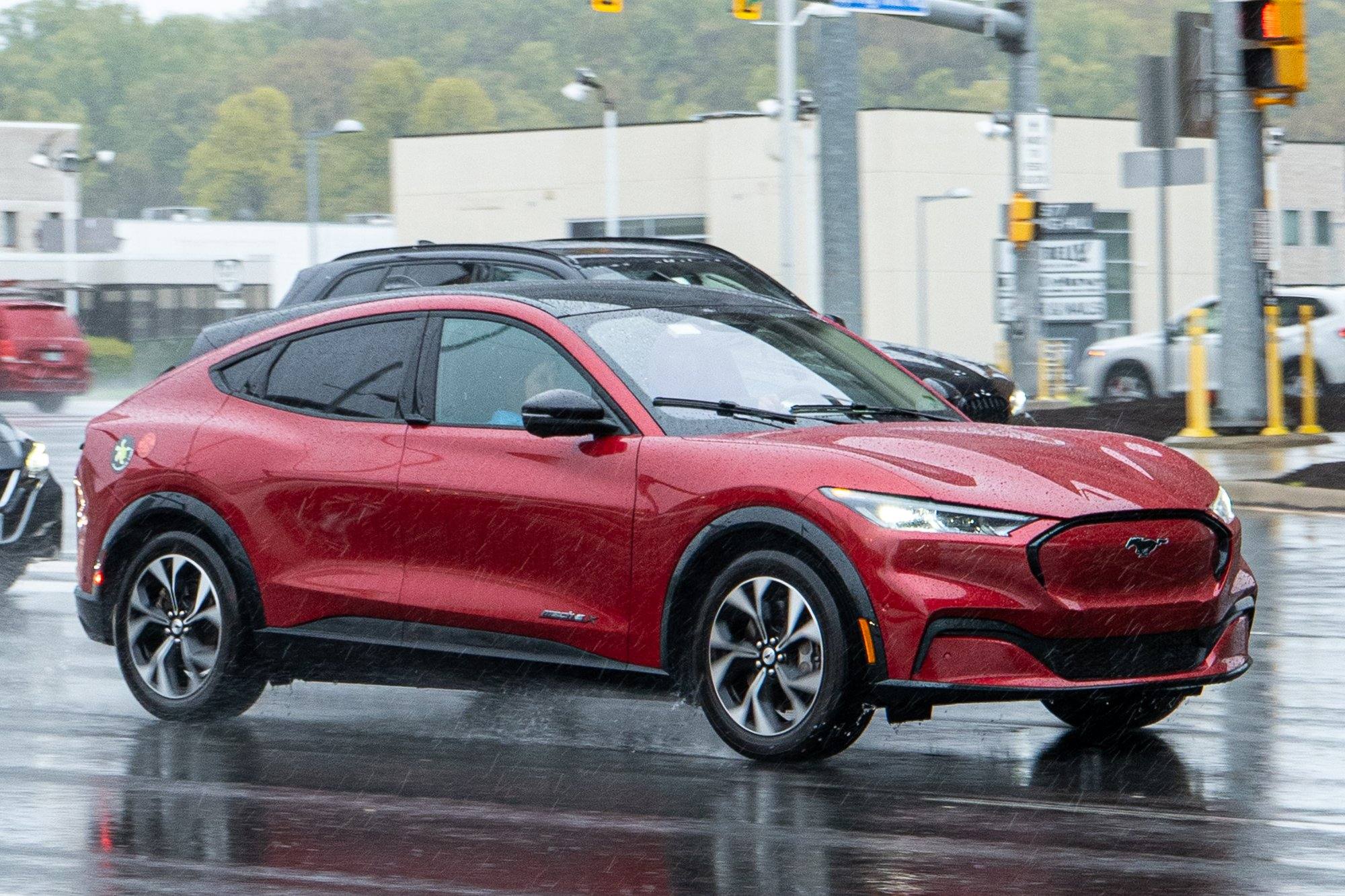
The short answer. Not on Ford's figures: the first-year cars averaged 92% battery health after about five years, and those past 100,000 miles averaged better than 91%. Check the individual car's battery health, its contactor recall repair and how much of the 8-year, 100,000-mile battery warranty is left.
What matters for buyers in the US and Canada
- Ford reports 92% average battery health across more than 36,000 2021 Mach-Es, with 95% of cars between 87% and 97%.
- At 91% health a 300-mile 2021 Extended Range RWD works out at about 273 rated miles, if range falls in step with capacity.
- Extended-range 2021 and 2022 cars need the junction box replacement under recall 23V-687; check the VIN.
- The data is Ford's own and covers only nickel-based 2021 packs, not the LFP batteries used in some later Mach-Es.
What Ford published
On 9 November 2026 Ford released battery state-of-health data for every 2021 Mustang Mach-E sold to retail and fleet customers in the US and Canada, about 36,000 cars. The figures are from Ford's connected-vehicle data as of August 2026, after an average 5.2 years of ownership, and measure usable battery capacity.1,2
The average was 92%, and 95% of the cars sat between 87% and 97%. More than 2,000 cars past 100,000 miles averaged better than 91%. A group of more than 30 past 200,000 miles averaged 88%. The Driven, writing for metric readers, puts the 100,000-mile mark at about 160,000 km.1,3,4,5
Motor1 reports that Ford designs its packs to keep 90% at 100,000 miles. Every car in the study uses a nickel-cobalt-manganese battery; InsideEVs notes that Ford introduced lithium iron phosphate packs to the Mach-E only from the 2023 model year, so the results do not describe those cars.2,3
What the numbers leave out
This is a carmaker grading its own product, and Ford has not published its method beyond the description above. Recurrent, which tracks range in owners' cars, finds the average electric car keeps 95% of its range after five years, but warns that range is not battery health, because carmakers can release reserved capacity to hold range steady.1,9
The independent tester Aviloo measured a median 92.5% for the Mach-E at about 150,000 km, against 93.8% for the Hyundai Ioniq 5 and 88.9% for the Tesla Model 3. Its three-minute test plugs into the diagnostic port and uses a statistical model, so its figures are not directly comparable with Ford's. Aviloo also found gaps of up to 13.5 points between the best and worst examples of one model.10
What it means for range
Charjin applied Ford's averages to the EPA ratings for the 2021 versions, assuming range falls in step with usable capacity. At 91%, the 300-mile Extended Range RWD comes to about 273 miles and the 270-mile Extended Range AWD and GT to about 246. The 230-mile standard-range RWD drops to about 209 and the 211-mile AWD to about 192.1,6
At 88%, the figure for the highest-mileage group, the Extended Range RWD would be near 264 miles. These are rated miles. Recurrent's Mach-E guide puts range at about 77% of normal at 32°F, so in cold weather the loss from ageing is the smaller of the two.1,6,11
The recall and the warranty
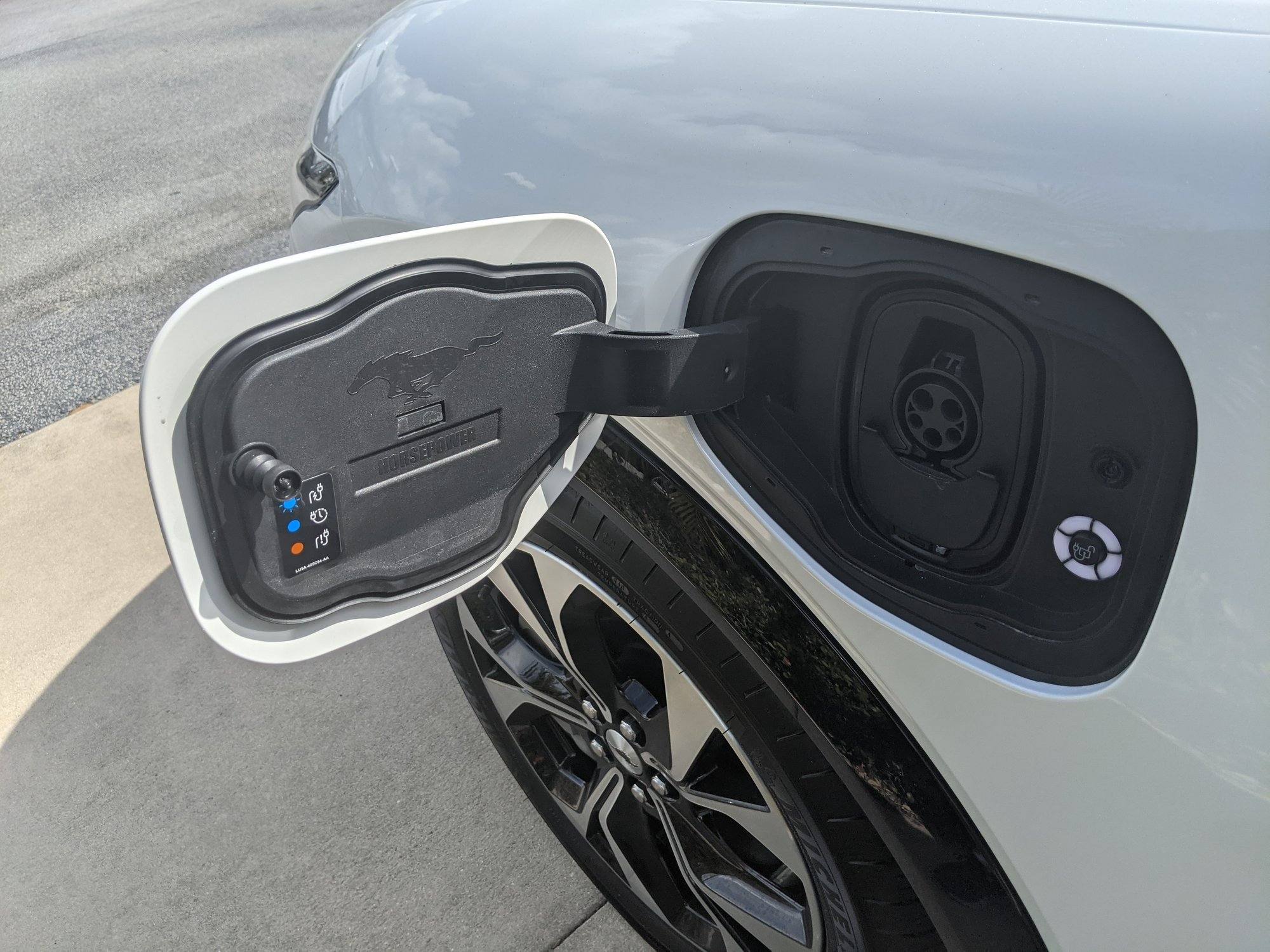
On 2021 and 2022 extended-range cars the bigger battery risk is a hardware fault. Under recall 23V-687, filed with NHTSA in October 2023 for 34,762 cars, the main battery contactors may overheat and cut drive power. Dealers replace the high-voltage battery junction box free, including on cars that had only the earlier software fix.8,11
Ford covers hybrid and electric components, the high-voltage battery included, for 8 years or 100,000 miles from the warranty start date, whichever comes first. The Ford page Charjin checked gives no capacity threshold, so ask for the warranty booklet. A car whose warranty started in 2021 is covered until some time in 2029 at most, and any car past 100,000 miles is already outside it.7,11
What to check before you buy
Ask for a battery health reading on the car itself, since the spread between cars is as important as the average. Enter the VIN on NHTSA's recall lookup and ask for proof that the junction box was replaced. Confirm the warranty start date and the mileage.1,8,10
Ford's advice for keeping a pack healthy is to charge at Level 2 at home for daily driving, save DC fast charging for when it is needed, precondition while plugged in and park in shade in summer. It says nickel-based packs like the 2021 car's generally do not need frequent full charges. As with other US battery recalls, the VIN lookup is the final word on whether work is outstanding.1,8
Common questions
Is Ford's 92% figure independently verified?
No. It comes from Ford's own connected-vehicle data. Aviloo's separate tests put the Mach-E at a median 92.5% at about 150,000 km, using a different method.
Does the data apply to a 2023 or later Mach-E?
Not directly. The study covers 2021 cars with nickel-cobalt-manganese batteries, and some later Mach-Es use lithium iron phosphate packs.
How long is the Mach-E battery warranty?
Ford's warranty page gives 8 years or 100,000 miles from the warranty start date, whichever comes first, for hybrid and electric components including the high-voltage battery.
Evidence register
The material behind the conclusion. Bracketed numbers in the text point here.
- 01
manufacturer accessed 17 November 2026
Ford Motor Company (From the Road). Ford's state-of-health data for about 36,000 2021 Mach-Es in the US and Canada as of August 2026: 92% average, 87–97% spread, over 91% past 100,000 miles, 88% past 200,000 miles, method and charging advice.
- 02
reference accessed 17 November 2026
Ford Tested 36,000 Mustang Mach-E Batteries. Here's How They Held Up After 100,000 Miles
InsideEVs. Confirms Ford's figures, the average 55,000 miles and 5.2 years, and that LFP packs reached the Mach-E only from the 2023 model year.
- 03
reference accessed 17 November 2026
Ford: Mustang Mach-E Batteries Age Better Than Expected
Motor1. Reports Ford's design target of 90% health at 100,000 miles and that the studied cars use NCM batteries.
- 04
reference accessed 17 November 2026
After 2 Billion Miles, Ford Releases Mach-E Battery Report Card
Carscoops. Independently reports the 92% average, the 87–97% spread and the 100,000 and 200,000-mile groups.
- 05
reference accessed 17 November 2026
Ford Mustang Mach-E batteries retain over 91 per cent of capacity after 160,000 km
The Driven. Reports the same Ford figures in kilometres for Australian readers.
- 06
data accessed 17 November 2026
2021 Ford Mustang Mach-E: EPA range by version
US Department of Energy and EPA (fueleconomy.gov). EPA ranges for the 2021 versions: 230 miles RWD, 211 AWD, 300 RWD Extended, 270 AWD Extended, 305 California Route 1, 270 GT, 260 GT Performance.
- 07
manufacturer accessed 17 November 2026
Ford Pro. Hybrid and electric component coverage, including the high-voltage battery, lasts 8 years or 100,000 miles from the warranty start date, whichever occurs first; no capacity threshold is stated.
- 08
primary accessed 17 November 2026
Recall 23V687000: Ford Mustang Mach-E high-voltage battery main contactors
National Highway Traffic Safety Administration. Covers 34,762 2021–2022 extended-range Mach-Es, report received 13 October 2023; contactors may overheat and cut drive power; dealers replace the junction box free, including cars fixed under 22V-412.
- 09
research accessed 17 November 2026
What we can say about your EV's range after one billion miles
Recurrent. Average EV keeps 97% of range after three years and 95% after five; range retention is not battery health, and buffer release can mask capacity loss.
- 10
reference accessed 17 November 2026
These EVs retain their battery best, largest-ever study finds
Electrek. Aviloo's study of more than 500,000 tests: Mach-E median 92.5% at 150,000 km, Ioniq 5 93.8%, Model 3 88.9%; OBD-based statistical method; up to 13.5% gap within one model.
- 11
reference accessed 17 November 2026
Used Ford Mustang Mach-E & Battery Health (Real-world Data)
Recurrent. Lists the 8-year, 100,000-mile battery warranty, about 77% range at 32°F, and the junction box replacement as the remedy for the 2021–2022 contactor recall.
No corrections recorded. Last checked 17 November 2026.