ReportCharging and infrastructure
Florida wants its federal EV-charger money for air-taxi pads
Florida's transport department plans to spend its remaining NEVI charging funds on 32 charging sites for electric air taxis, arguing that private firms have already covered its highways. For drivers, the plan means no new state-funded road chargers, and public rapid charging there costs about three times as much per kilometre as charging at home.
By Charjin Editorial Desk3 minutes10 sources

Does Florida's plan change anything for people driving electric cars there?
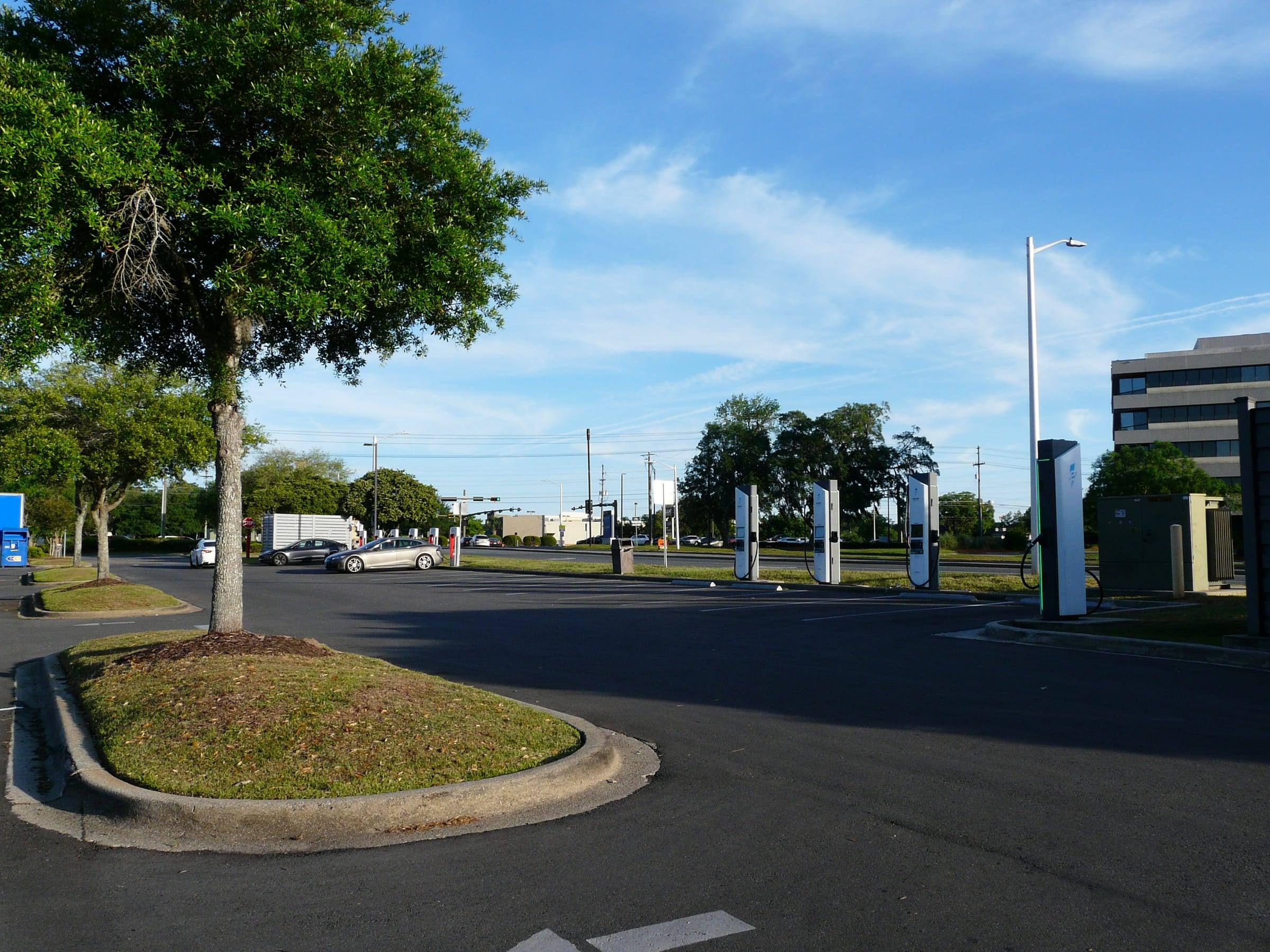
The short answer. It means the state's NEVI money would not pay for new public car chargers; it would pay for charging at air-taxi vertiports instead, if federal officials approve. Drivers will keep relying on privately built networks, where rapid charging costs about three times as much per kilometre as home charging at Florida's average household rate.
Three facts behind the Florida plan.
- FDOT's September 2025 plan budgets $5.6 million per site for 32 air-taxi charging sites, using federal money meant for EV charging.
- Federal guidance lets a state spend off the highway corridors once it certifies them fully built out; whether vertiports qualify has not been tested in public.
- For a 2024 VW ID.4 Pro, FPL's public rapid chargers cost about $8.33 per 100 km, against about $2.78 at Florida's average home electricity price.
What Florida is proposing
The Florida Department of Transportation's NEVI deployment plan, dated September 2025, says private companies have built enough chargers along the state's designated corridors without public money. It says FDOT will not spend the funds on everyday passenger vehicles and will instead put them into charging for electric vertical take-off and landing aircraft, as part of an intercity "Aerial Highway Network".1
The plan estimates $5.6 million to design and install the charging equipment at each site and lists 32 sites over five annual tranches, with Florida adding a 20% match. The plan only became public in July 2026, when the Miami Herald obtained it through a records request.1,4,6
Why the rules may allow it
NEVI money must first go to chargers along designated alternative-fuel corridors, with stations no more than 50 miles apart and four ports of at least 150 kW. Interim guidance issued in August 2025 says that once a state determines, and the Secretary certifies, that its corridors are fully built out, the money can be used on any public road or in other publicly accessible locations. The same guidance gives states more freedom to decide when that point is reached.2,3
Two outlets report that the Federal Highway Administration has accepted that Florida's corridors are fully built out and is expected to approve the new plan. Neither reports a final decision, and Charjin found no published approval. The Southern Alliance for Clean Energy argues that sites such as private airports and condominium rooftops are not publicly accessible and has asked federal officials to reject the plan.4,5,6
How much money is left
Florida's NEVI formula allocation was about $198 million over five years. Congress clawed back just over $503 million of unspent NEVI funding from 30 states and territories in a January 2026 budget law. The Southern Alliance for Clean Energy puts Florida's share of that cut at $44.6 million, leaving $153.4 million, and says the state had spent none of its allocation.3,4,7
The plan's own spending table predates that cut and adds up to $190 million. That means the 32-site programme would need to shrink or find other funding unless the figures are revised. Charjin could not confirm Florida's exact remaining balance from a federal document.1,4
What drivers have now
FDOT counted 452 rapid-charging stations and 1,708 Level 2 stations on its corridors that were public, open around the clock and usable by all cars as of August 2025. It says public charging ports in the state have more than doubled in four years. About a third of Floridians live in multi-unit housing, according to the Southern Alliance, which is where public charging matters most.1,4
The aircraft side is less mature. As of August 2026, no eVTOL company had full Federal Aviation Administration approval to carry paying passengers on scheduled routes, according to The Next Web.5
What charging costs in Florida
Charjin's worked example uses a 2024 Volkswagen ID.4 Pro, which the EPA rates at 29.8 kWh per 100 miles combined, or about 18.5 kWh per 100 km. The utility FPL charges $0.45 per kWh plus taxes and fees on its public EVolution rapid chargers in 2026, rising to $0.49 by 2029. That works out at about $8.33 per 100 km, or $13.40 per 100 miles.8,10
Florida's average residential electricity price was 15.03 cents per kWh in July 2026, a preliminary federal figure. At that rate the same car costs about $2.78 per 100 km to charge at home, roughly a third of the rapid-charging cost. FPL says many of its public Level 2 chargers are free, which narrows the gap for drivers who can charge slowly while parked.8,9
What to watch
The next step is a federal decision on the plan, and whether it treats vertiport chargers as EV charging infrastructure in publicly accessible places. Florida drivers should also watch whether the eventual sites include charging for road vehicles; the plan says such chargers may be added at passenger parking by private industry, which is not a commitment.1,2
Common questions
Is Florida taking away existing chargers?
No. The plan concerns federal money that has not yet been spent. Existing privately funded chargers are unaffected.
Has the federal government approved the air-taxi plan?
Reports say federal officials have accepted that Florida's corridors are built out, but Charjin found no published approval of the plan itself as of 18 October 2026.
How was the home charging cost calculated?
We multiplied the EPA's combined consumption for a 2024 ID.4 Pro (about 18.5 kWh per 100 km) by Florida's July 2026 average residential price of 15.03 cents per kWh. Your own tariff and car will give a different figure.
Evidence register
The material behind the conclusion. Bracketed numbers in the text point here.
- 01
primary accessed 18 October 2026
National Electric Vehicle Infrastructure Deployment Plan, September 2025
Florida Department of Transportation. FDOT's plan to redirect NEVI funds to eVTOL charging: 32 sites, $5.6 million per site, spending table and corridor charger counts (copy obtained by the Miami Herald and published by the Southern Alliance for Clean Energy).
- 02
primary accessed 18 October 2026
Federal Highway Administration, via GovInfo. Interim final guidance: funds may go to any public road or publicly accessible location once corridors are certified fully built out.
- 03
primary accessed 18 October 2026
Florida Department of Transportation. Florida's estimated $198 million allocation and the corridor siting and power requirements for NEVI stations.
- 04
reference accessed 18 October 2026
NEVI Funds and Flying Cars: Florida's EV Charging Plan Under Fire
Southern Alliance for Clean Energy. Florida's $44.6 million rescission and $153.4 million balance, unspent funds, multi-unit housing share and the case against the plan.
- 05
reference accessed 18 October 2026
Florida wants to spend $198 million in federal EV charger money on air taxi landing pads
The Next Web. Reports FHWA acceptance of Florida's built-out corridors, pending approval and eVTOL certification status.
- 06
reference accessed 18 October 2026
Florida Wants To Spend $197 Million Of EV Charger Money On Flying-Car Pads Near Golf Courses
Carscoops. Reports the Miami Herald records request and FHWA's view that the corridors are built out.
- 07
research accessed 18 October 2026
Out of juice: what's next for NEVI
Atlas Public Policy. Just over $503 million of NEVI funding rescinded from 30 states and territories in a January 2026 budget law.
- 08
primary accessed 18 October 2026
Electric vehicles: frequently asked questions
Florida Power & Light. FPL EVolution public rapid-charging price schedule for 2026 to 2029 and free public Level 2 charging.
- 09
data accessed 18 October 2026
US Energy Information Administration. Florida residential average of 15.03 cents per kWh in July 2026 (preliminary).
- 10
data accessed 18 October 2026
2024 Volkswagen ID.4 Pro fuel economy data
US Department of Energy and EPA, fueleconomy.gov. EPA combined consumption of 29.8 kWh per 100 miles used in the worked cost example.
No corrections recorded. Last checked 18 October 2026.