AnalysisHybrids and plug-in hybrids
Plug-in hybrids that are rarely charged: why T&E wants a 15-litre fuel tank cap
A new Transport & Environment report finds that plug-in hybrids registered in 2024 emitted close to six times their official CO2 figures on the road. Its answer is to steer incentives towards models built to be charged, including a fuel tank of no more than 15 litres.
By Charjin Editorial Desk5 minutes11 sources
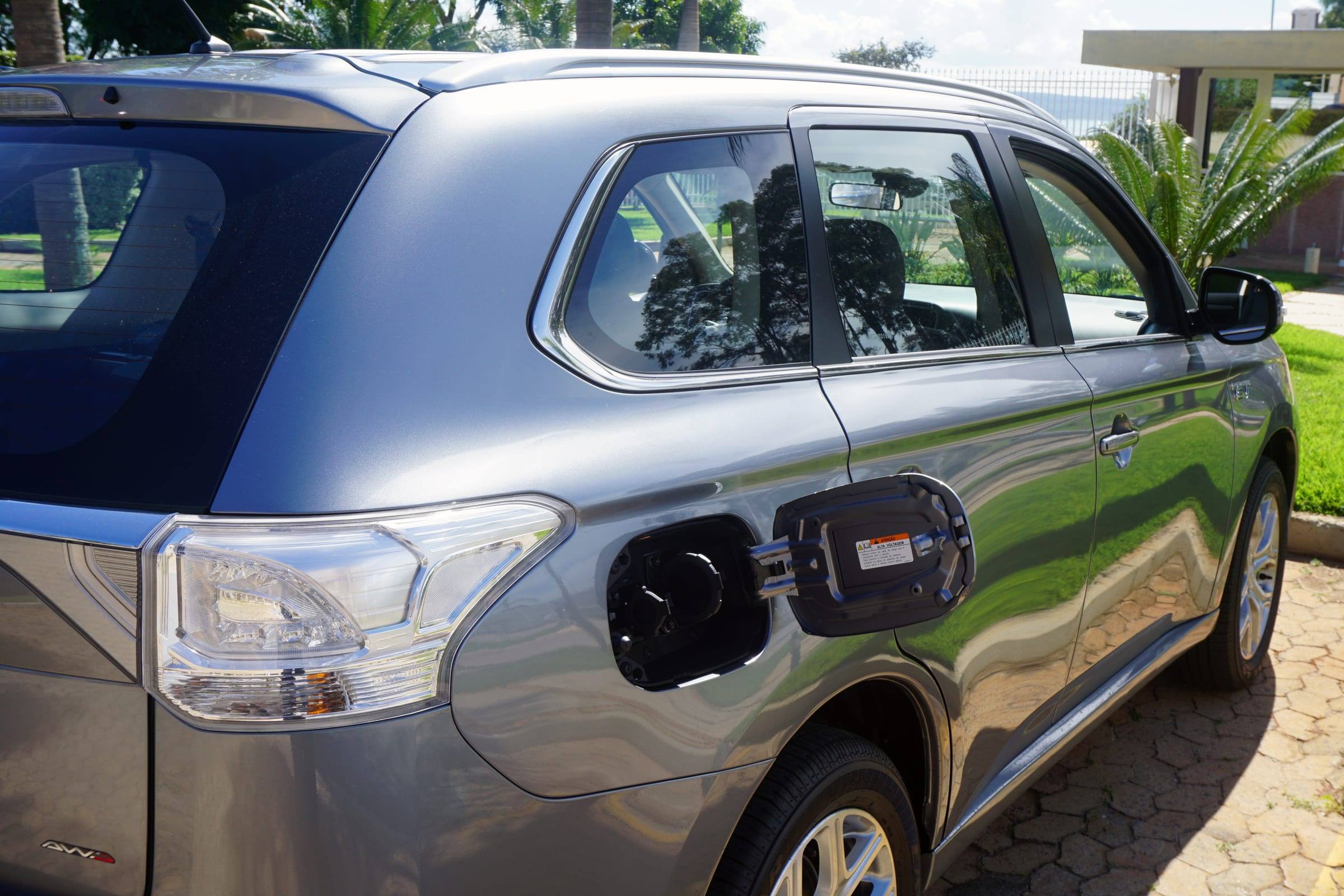

Does a plug-in hybrid really cut fuel use if you rarely charge it?
The short answer. Not by much. EU fuel-meter data for cars registered in 2024 show plug-in hybrids covering only 27% of their distance on electricity alone and emitting just 14% less CO2 than petrol, diesel and conventional hybrid cars, against an 83% reduction on paper. T&E's proposed 15-litre tank cap is a policy idea for incentives, not a rule, so buyers who will not charge daily should treat the official figure as a best case.
What the new data means if you are choosing a plug-in hybrid.
- The official WLTP CO2 figure assumes far more electric driving than owners actually do; the real-world gap for 2024 registrations was roughly six-fold.
- Electric range alone is a weak guide. Models whose electric motor is strong relative to the engine did much better on the road.
- A 15-litre tank cap, minimum 200 km real-world electric range and DC charging above 100 kW are T&E proposals for tax and type-approval incentives. None is law.
What the report found
Transport & Environment (T&E), the Brussels-based clean transport campaign group, published "Still smoking: the PHEV emissions scandal continues" on 15 October 2026. It analyses real-world fuel data that the European Environment Agency (EEA) collects from plug-in hybrids registered in 2024. On average, their real-world CO2 emissions were nearly six times their official WLTP values, up from roughly five times for 2023 registrations.1,2,9,11
T&E's September analysis of the same EEA release put the 2024 averages at 145 gCO2/km on the road against 24 g/km on paper, based on fuel monitors in about 220,000 plug-in hybrids. Real-world emissions rose by about 5% from 2023 while official figures fell by about 15%. Conventional combustion cars averaged 169 g/km, so plug-in hybrids came out only 14% lower in practice, against an 83% gap in the official numbers.1,3,8
The trend is not new. The European Commission's first report on this data, published in March 2024, found that plug-in hybrids first registered in 2021 emitted on average 3.5 times their type-approval CO2. It attributed the gap mainly to cars not being charged and driven electrically as often as the official test assumes.4
Where the numbers come from
Since January 2021 every new car and small van in the EU that can run on liquid fuel must carry an on-board fuel consumption monitor (OBFCM). The device records lifetime fuel use and distance. For plug-in hybrids it also logs distance in charge-depleting mode with the engine on and off, fuel used in that mode and the grid energy put into the battery.4,5
Manufacturers read the meters over the air or at dealer visits, and from 2023 member states also read them at periodic technical inspections. The data go to the EEA, which links them to each car's laboratory figures and publishes anonymised raw and aggregated files a year later. EU law asks the Commission to propose a method for using this data to adjust carmakers' CO2 results from 2030, with a report due by 31 December 2026.5
The figures carry caveats. T&E is a campaign group, and its own annex notes that some brands can be over- or under-represented in a given year's sample, naming BMW in 2024. Weighting by registrations narrows the 2024 gap from 6.1 times to 5.3 times, but the upward trend remains.1
Why the gap is widening
The official CO2 figure for a plug-in hybrid depends on the utility factor, an assumed share of driving done on electricity that rises with tested electric range. T&E's reading of the 2024 data is that cars covered 27% of their distance in pure electric mode, and that grid electricity supplied 30% of their energy. The utility factor in force for 2025 and 2026 assumes 56%.1
Even when the battery was supplying power, the engine ran for about a third of charge-depleting kilometres. Real-world emissions in that mode averaged 63 gCO2/km, about 2.8 L/100 km, against 6 g/km in the official figure.1,2
Longer electric range has not closed the gap on its own. Average tested range rose from 58 km in 2021 to 75 km in 2024, and the share of new plug-in hybrids above 70 km rose from 13% to 49%. Those longer-range cars were heavier and had more powerful engines, emitted about 200 g/km once the battery was empty, and accounted for more than half of the 2024 gap.1
The stronger signal was motor power. Plug-in hybrids whose electric motor had more than 1.25 times the engine's power averaged 108 gCO2/km on the road, compared with 227 g/km for those below 0.5. The average ratio was 0.7 and has barely moved since 2021.1
The 15-litre tank proposal
T&E wants tax rules and type approval to favour what it calls well-designed plug-in hybrids. Its criteria are an electric motor with at least three times the engine's power, DC charging above 100 kW, at least 200 km of real-world electric range by 2030 with the car defaulting to electric drive, and a fuel tank of 15 litres or less. Its 2025 report put the average plug-in hybrid tank at about 51 litres.1,6
The logic is that a small tank gives drivers a reason to plug in. T&E calculates that 15 litres at 6.7 L/100 km, the average it found for range-extender cars once the battery is depleted, would give about 220 km of engine-only driving, roughly matching the electric range it wants.1,6
The proposal sits alongside a fight over the utility factor itself. The EU's second correction is due for new type approvals on 29 November 2026 and all new cars on 29 November 2027. For a car with 100 km of tested range it lowers the assumed electric share from about two-thirds to 44%. T&E says freezing it at the current level would understate real-world emissions by 56%.1,2,7
What a smaller tank would mean in practice
Charjin worked the numbers using only T&E's inputs: 6.7 L/100 km in engine mode, 12,730 km a year and EU petrol at €1.86 a litre, the March to October 2026 average. A 51-litre tank covers about 760 km between fills and costs about €95 to fill. A 15-litre tank covers about 224 km and costs about €28.1,6
For a driver who never charges, that is the difference between about 17 and about 57 stops a year at the pump, for the same fuel bill of roughly €1,590. The small tank changes the hassle of not charging, not the cost of each kilometre. For a driver who charges every night and makes a few long trips, the extra stops would only come on those trips.
T&E's cost estimate points the same way. At 2026 fuel prices it calculates that the average 2024 plug-in hybrid costs €1,810 a year to run, against €1,130 implied by the official figures used at the time of sale. That gap of €680 falls to €515 under the utility factor in force since 2025.1,2
How to judge a plug-in hybrid now
The best predictor is your own charging. If you can charge at home or work and most of your days fit within the real electric range, a plug-in hybrid can do much of its work on electricity. If you cannot, a conventional hybrid or an electric car may suit you better than the official CO2 figure suggests.1
Check the electric motor's power against the engine's, not only the range. T&E names the BYD Seal U DM-i as the 2024 model with the highest ratio, 1.64, and a 20% gap against the corrected WLTP basis. BYD's European page still advertises up to 1,080 km of combined range alongside a 70 km-plus electric range, so even the best-scoring car would sit far from a 15-litre design.1,10
Company car drivers should also note that tax perks often follow the official number. Companies registered 71% of new EU plug-in hybrids in the first half of 2026, and 24 of 27 member states give them a tax advantage, but only 12 set a threshold of 50 gCO2/km or lower. Whether any government adopts a tank limit is unknown; none has announced one.1
Common questions
Is a 15-litre fuel tank limit for plug-in hybrids now law?
No. It is one of four criteria Transport & Environment proposes for targeting tax incentives and type-approval rules at better-designed plug-in hybrids. No EU or national rule requires it.
What is the utility factor?
It is the assumed share of driving done on electricity, used to calculate a plug-in hybrid's official CO2 figure. It rises with tested electric range. The EU began correcting it in 2025, and a second step is due for new type approvals on 29 November 2026.
Where does the real-world data come from?
From on-board fuel consumption monitors fitted to new EU cars since 2021. Manufacturers and, since 2023, inspection centres read them and report to the European Environment Agency, which publishes anonymised data.
Does a longer electric range guarantee lower real-world emissions?
No. In the 2024 data, plug-in hybrids with more than 70 km of range had a larger gap to their official figures, partly because they were heavier and had more powerful engines. A strong electric motor relative to the engine was the better predictor.
Evidence register
The material behind the conclusion. Bracketed numbers in the text point here.
- 01
research accessed 18 October 2026
Still smoking: the PHEV emissions scandal continues (full report, 15 October 2026)
Transport & Environment. Source of the 2024 real-world gap, electric-driving shares, range and power-ratio analysis, cost estimate, tax survey and the 15-litre tank proposal.
- 02
research accessed 18 October 2026
Misleading plug-in hybrid emissions figures risk cheating consumers, T&E warns
Transport & Environment. T&E's release summarising the report: six-fold gap, 14% versus 83%, €680 extra cost and the November 2026 correction.
- 03
research accessed 18 October 2026
Plug-in hybrids emit six times, on average, what official tests claim - new EU data
Transport & Environment. Gives 145 versus 24 gCO2/km for 2024 registrations, the 169 g/km combustion-car average and the sample of about 220,000 cars.
- 04
primary accessed 18 October 2026
European Commission. Establishes the OBFCM requirement from 2021 and the 3.5-fold gap for plug-in hybrids registered in 2021.
- 05
data accessed 18 October 2026
Real-world emissions from cars and vans: statistical metadata
European Environment Agency. Describes what the OBFCM dataset records for plug-in hybrids, how it is collected and the 2026 deadline for a Commission report on using it.
- 06
research accessed 18 October 2026
Smoke screen: the growing PHEV emissions scandal (October 2025)
Transport & Environment. T&E's earlier report giving the average plug-in hybrid tank of about 51 litres and 6.7 L/100 km for range extenders with a depleted battery.
- 07
primary accessed 18 October 2026
Commission Regulation (EU) 2023/443 of 8 February 2023 amending Regulation (EU) 2017/1151
EUR-Lex, Official Journal of the European Union. Legal basis for the two-step revision of plug-in hybrid utility factors, the second step drawing on OBFCM data.
- 08
reference accessed 18 October 2026
Plug-in hybrids emit six times more than claimed and are getting worse, study finds
The Driven. Independent report of the 2021 to 2024 series of real-world and WLTP figures from the EEA data.
- 09
reference accessed 18 October 2026
The fix for plug-in hybrids that don't get plugged in? Smaller gas tanks, new report argues
InsideEVs. Independent report, 18 October 2026, confirming the 15-litre proposal and headline findings.
- 10
manufacturer accessed 18 October 2026
BYD Europe. BYD Europe's claims of 70 km-plus electric range, up to 1,080 km combined range and 6.4 L/100 km.
- 11
reference accessed 18 October 2026
Plug-in hybrids generate more emissions than previously thought
Sustainability Online. Independent report of the October 2026 findings, including the 56% understatement under a freeze.
No corrections recorded. Last checked 18 October 2026.