AnalysisClean energy and the grid
Dutch net metering ends on 1 January. What a home battery is worth per kWh in 2027, and why the payback is still long
From 1 January 2027 Dutch solar owners can no longer offset exported power against what they buy, and home battery sales have doubled in nine months. On official 2027 tax rates and CBS price data, each kilowatt-hour a battery keeps at home is worth roughly 19 cents more than exporting it, which still leaves a typical battery with a payback of well over a decade.
By Charjin Editorial Desk4 minutes6 sources
Does a home battery pay for itself in the Netherlands once net metering ends?
The short answer. It helps more than before, but slowly. On 2027 energy tax and recent average prices, keeping a solar kilowatt-hour at home is worth about 19 cents more than exporting it at the legal minimum, so a household that shifts 1,400 kWh a year saves roughly €270, before battery losses. Against a fixed battery from about €4,000, that is a payback of around 15 years.
What to know before you buy
- Net metering ends for everyone on 1 January 2027, with no phase-out. Exported power must then earn at least 50% of the supply price before taxes until 2030.
- A kilowatt-hour you use yourself avoids the supply price plus energy tax of 8.80 cents (10.65 cents with VAT) in 2027. Dutch network charges are a fixed yearly fee, so they are not saved.
- Milieu Centraal says a home battery will most likely not pay for itself on bill savings today, and advises against plug-in batteries for fire-safety reasons.
- Check your supplier's 2027 feed-in payment and feed-in charges, which must be shown per kWh on the bill from 1 January, before sizing a battery.
What changes on 1 January
Under the salderingsregeling, a Dutch household could set every kilowatt-hour its panels sent to the grid against a kilowatt-hour it bought later. The government's own example is a home that exports 2,500 kWh in summer and uses the same amount from the grid in winter, offsetting all of it. The cabinet first planned to phase this out from 2025, then chose to end it in one step on 1 January 2027.1
From that date, exported power earns a feed-in payment instead. Until 2030 it must be at least 50% of the bare supply tariff, the price before energy tax and VAT. Suppliers may also levy feed-in charges, but the government says these may only cover the cost of handling the returned power, and the competition authority ACM supervises them.1
A ministerial regulation published in September adds one rule that helps comparison. From 1 January 2027 the total feed-in charge on a household bill must be expressed in euros per exported kilowatt-hour, and offers must say how it is calculated. ACM had asked for a single calculation method for all suppliers, which the minister did not adopt.5
Why batteries are selling now
Sunergy Research, a Dutch supplier that serves solar owners, says residential battery sales more than doubled between January and September 2026. Installations of systems up to 5 kWh were more than four times higher in September than in January, and plug-in batteries became the largest residential category. These are one company's figures, not national statistics.6
The logic is simple. Milieu Centraal, the Dutch consumer information body on energy, puts the average share of solar power a household uses itself at about 30%. Every exported kilowatt-hour that a battery holds back for the evening is one the household no longer has to buy at full price.4
The value of one kilowatt-hour in 2027
The Ministry of Finance's 2027 tax table sets energy tax on electricity at 8.80 cents per kWh before VAT for the first 10,000 kWh, which is 10.65 cents with 21% VAT. CBS, the national statistics office, puts the average variable supply price on standard contracts at 12.29 cents per kWh before VAT in September 2026, or 14.87 cents with VAT. The September figures are provisional.2,3
Using those figures, a kilowatt-hour a household uses itself in 2027 avoids about 25.5 cents: 14.87 cents of supply plus 10.65 cents of tax. CBS lists the network charge as a fixed sum per year, so using less grid power does not reduce it. The legal floor for an exported kilowatt-hour, at half the September supply price before taxes, would be about 6.1 cents.2,3,1
The gap is therefore about 19.4 cents per kilowatt-hour moved from export to own use, before battery charging losses. Any feed-in charge widens it, and a supplier that pays above the floor narrows it. This is Charjin's calculation on September prices; supplier tariffs for 2027 will differ.1,2,3
A worked example for a ten-panel home
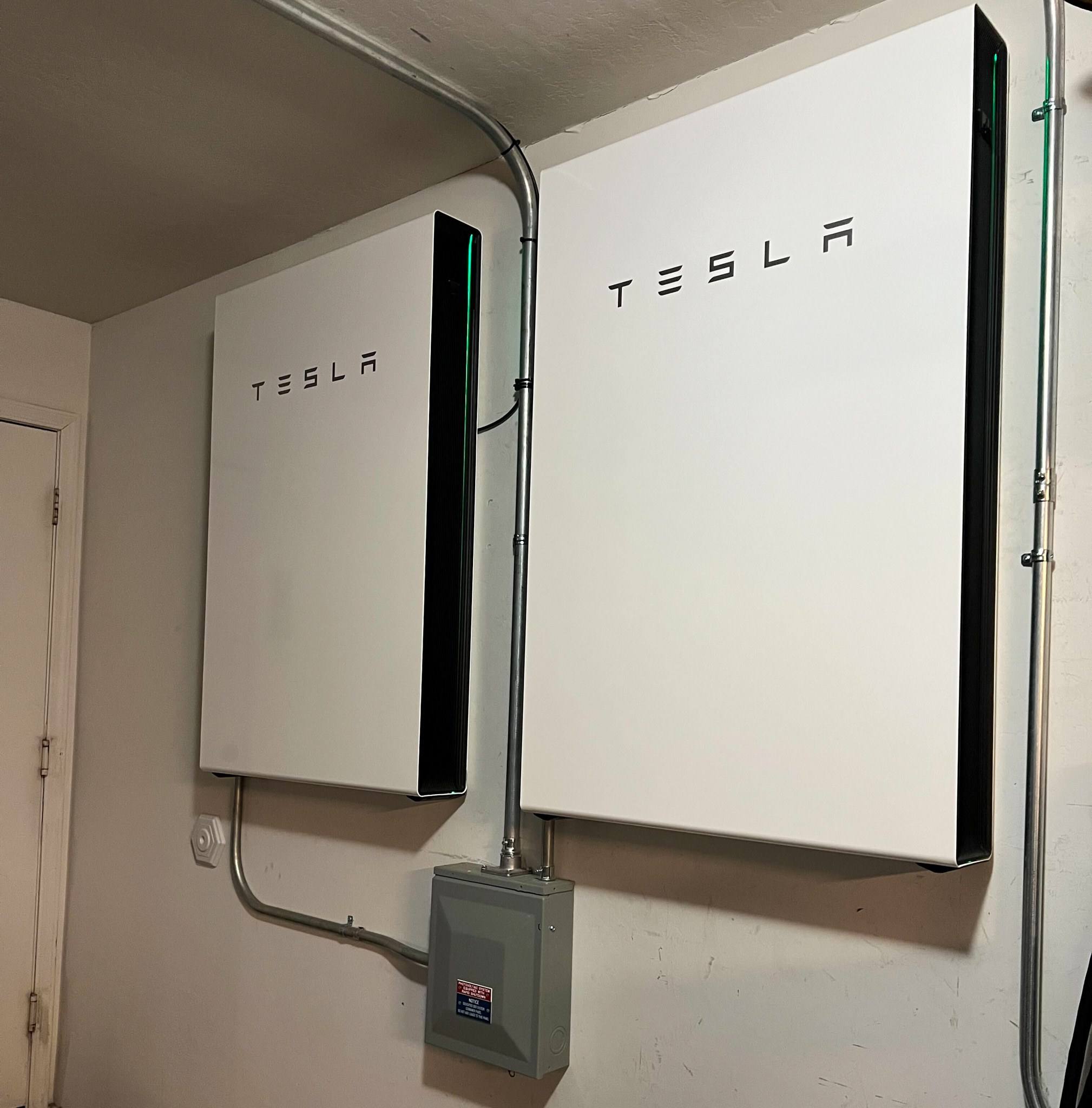
Milieu Centraal says ten panels produce about 3,500 kWh a year. At 30% own use, the household uses 1,050 kWh directly and exports 2,450 kWh. Sunergy says a battery could lift own use to about 70%, or 2,450 kWh, which would move 1,400 kWh a year from export to own use.4,6
At 19.4 cents each, those 1,400 kWh are worth about €272 a year before losses. Sunergy's guide puts permanently installed batteries from about €4,000 and plug-in units, typically around 5 kWh, from about €1,000. At €4,000, the simple payback is close to 15 years, at the top of the 2 to 15 year range Sunergy quotes.6
The seasons limit the gain. Milieu Centraal's example shows ten panels producing about 15 kWh on an average June day, more than a 6 kWh battery can hold, but only about 2.5 kWh on an average December day, when there is little surplus to store. A battery that is full by noon in summer and nearly idle in winter will move fewer kilowatt-hours than its size suggests.4
What Milieu Centraal advises
Milieu Centraal's position is cautious. It says a home battery will most likely not be earned back through bill savings at present, that this also holds for larger batteries used to trade on energy markets, and that there is no national subsidy. It describes an average 6 kWh battery with inverter and installation as costing a few thousand euros, with prices expected to fall.4
On plug-in batteries, now the largest category in Sunergy's figures, Milieu Centraal is more direct. It does not yet recommend them, because power can flow into one circuit from both the grid and the battery and overheat the wiring. Under the NEN 1010 installation standard, installers connect a battery to its own group in the meter cupboard. It also advises a ventilated location away from escape routes, with a smoke and carbon monoxide detector nearby.4,6
What to check before buying
Start with data. Milieu Centraal suggests sizing a battery to evening and night use, which a P1 reader on the smart meter can measure. Then ask your supplier for its 2027 feed-in payment and the per-kWh feed-in charge, which must appear on bills from 1 January.4,5
Households on dynamic contracts face a different sum. CBS puts the average variable supply price on dynamic contracts at 17.00 cents per kWh before VAT in September 2026, against 12.29 cents on standard contracts. Milieu Centraal notes that larger batteries can buy power when it is cheap and sell it when it is dear, but gives no figures for the return and says the result depends on factors that change quickly and are hard to predict.3,4
What is still unknown matters. The 50% floor runs only until 2030, and the government page does not say what applies after that. Sunergy expects variable grid tariffs from 2029, which could change how much a battery earns, but that is its forecast rather than a decided rule.1,6
Common questions
Does net metering end gradually?
No. The government ended the original phase-out plan and stops net metering in one step on 1 January 2027 for all households with solar panels.
How much will I be paid for exported solar power from 2027?
At least 50% of your supplier's supply price before taxes, until 2030. Suppliers may deduct feed-in charges, which from 1 January must be shown per exported kWh on your bill.
Is there a subsidy for home batteries?
Milieu Centraal says there is no national subsidy for home batteries.
Are plug-in batteries safe?
Milieu Centraal does not yet recommend them, because a plug-in battery and the grid can feed the same circuit and overheat the wiring. It advises a battery on its own group in the meter cupboard, installed under NEN 1010.
Evidence register
The material behind the conclusion. Bracketed numbers in the text point here.
- 01
primary accessed 9 November 2026
Rijksoverheid (Government of the Netherlands). Dutch government page (in Dutch) confirming that net metering stops on 1 January 2027, the minimum feed-in payment of 50% of the bare supply tariff until 2030, and the limits on feed-in charges supervised by ACM.
- 02
primary accessed 9 November 2026
Fiscale sleuteltabel 2027 (incl. correctie tarieven energiebelasting)
Ministerie van Financiën. Ministry of Finance tax table for the 2027 Tax Plan (in Dutch, September 2026) setting electricity energy tax at 8.80 euro cents per kWh before VAT for 0 to 10,000 kWh.
- 03
data accessed 9 November 2026
Gemiddelde energietarieven voor consumenten (table 85592NED)
Centraal Bureau voor de Statistiek (CBS). CBS monthly average consumer energy prices (in Dutch); September 2026 variable electricity supply price of €0.1229 per kWh before VAT and €0.1487 with VAT, provisional, with the network charge given in euros per year.
- 04
reference accessed 9 November 2026
Thuisbatterij: zonne-energie opslaan
Milieu Centraal. Dutch consumer energy information body (in Dutch) on battery costs, likely payback, the 30% average own use, seasonal output, the absence of a subsidy, and its advice against plug-in batteries under NEN 1010.
- 05
reference accessed 9 November 2026
Solar Magazine. Dutch trade publication (in Dutch, 4 September 2026) reporting the ministerial regulation requiring feed-in charges per exported kWh on household bills from 1 January 2027, and the ACM advice that was not adopted.
- 06
reference accessed 9 November 2026
Dutch residential battery market surges ahead of net metering phaseout
ESS News. Reports Sunergy Research's figures on battery sales from January to September 2026, the 70% own-use estimate, price ranges, payback range and its expectation of variable grid tariffs from 2029.
No corrections recorded. Last checked 9 November 2026.